
Tobacco Hornworm
Manduca sexta · also called tobacco hornworm, tomato worm, hornworm
Quick answer
The tobacco hornworm (Manduca sexta) is a large green caterpillar with seven white diagonal side stripes and a curved red tail horn. It feeds on tomato, pepper, tobacco, and other nightshades, quickly stripping leaves and scarring fruit. The horn cannot sting, and the caterpillar is harmless to people. It grows into a large hawk (sphinx) moth.
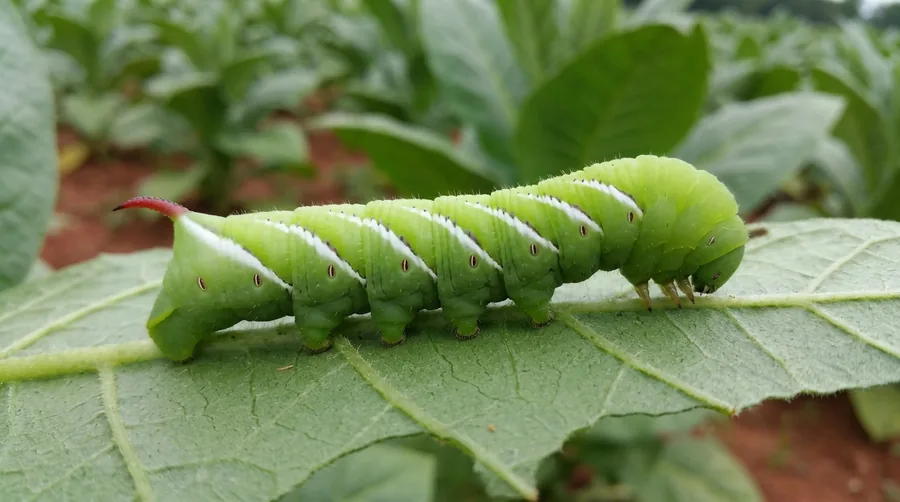
Large green tobacco hornworm with white diagonal stripes and a red tail horn on a tomato stem
Recommended Products


What it does
Tobacco hornworms are big, hungry caterpillars that feed mostly at the tops and interiors of plants, often unseen until leaves vanish. A few can defoliate a tomato plant in days and gouge the fruit. They blend perfectly with the foliage; their dark droppings on lower leaves often reveal them. Handled, they may thrash and clamp, but they cannot bite or sting.
Where it lives
They feed on plants in the nightshade family, so home vegetable gardens and tobacco, tomato, and pepper fields are the usual settings. Adults, large sphinx or hawk moths, hover at flowers at dusk. The tobacco hornworm is common across the southern and central US, overlapping with the similar tomato hornworm farther north.
How it breeds
There are usually two generations a year, more in the warm South. The moth lays round green eggs singly on leaf undersides. Caterpillars hatch and feed for three to four weeks through several instars, reaching three to four inches, then drop and pupate in the soil. The pupa overwinters, and the moth emerges to start the next generation.
What it eats
The caterpillars eat the leaves, stems, and fruit of nightshades, mainly tomato, pepper, eggplant, potato, and tobacco. Adult moths feed on nectar and pollinate flowers. They do not attack unrelated crops or anything in the home.
Identification
The caterpillar is bright green, up to three or four inches, with seven diagonal white side stripes and a curved red or reddish horn at the rear. The similar tomato hornworm has V-shaped white marks and a dark horn. The adult is a large gray-brown hawk moth. Chewed leaves, bare stems, and dark droppings point to hornworms.
Signs of an infestation
- Large sections of leaves and stems stripped from tomato or pepper
- Dark, barrel-shaped droppings on lower leaves and the ground
- Big green caterpillars with white stripes and a tail horn
- Scarred or chewed fruit on nightshade plants
- Hovering hawk moths at flowers at dusk
Prevention tips
- Inspect nightshade plants often, checking for droppings and stripped leaves
- Handpick hornworms and drop them in soapy water
- Till the soil after harvest to expose and destroy the pupae
- Encourage and spare the parasitic braconid wasps that attack them
- Rotate crops and remove volunteer nightshade weeds
Professional solutions
Hornworms rarely need professional treatment in a home garden; handpicking is very effective because they are large and few. If numbers are high, a biological spray such as Bt (Bacillus thuringiensis) or spinosad controls young caterpillars, following the label. Leave hornworms that carry white, rice-like cocoons on their backs, since parasitic wasps are killing them for you.
Health & safety
Tobacco hornworms are harmless to people and pets. Despite the menacing red horn, they cannot sting, bite, or inject venom; the horn is a harmless fleshy spike. They spread no disease and do not irritate skin. The only real harm is to garden and crop plants, which a few caterpillars can defoliate surprisingly fast.
Relevant Products


Frequently asked questions
Does the hornworm's horn sting?
No. The red horn at the tail of a tobacco hornworm is a harmless, soft spike, not a stinger. The caterpillar cannot sting, bite, or inject venom, and it is safe to pick off by hand. The horn is just for show and possibly to deter predators.
What are the white things on my hornworm?
Those white, rice-like projections are the cocoons of parasitic braconid wasps whose larvae have been feeding inside the hornworm. It is beneficial: leave that caterpillar in place, since it is dying and will release more wasps that attack other hornworms in your garden.
How do I get rid of tomato hornworms?
Handpicking is the most effective method, since the caterpillars are large and usually few; drop them in soapy water. Watch for dark droppings to find them. For heavier infestations, Bt or spinosad sprays control young caterpillars, and tilling after harvest destroys the overwintering pupae in the soil.
Fact-checked by Morgan Vance, Editorial Director (editorial review, not a professional pest-control or medical sign-off). Last reviewed June 26, 2026. We correct anything a reader shows us is wrong — see our corrections policy.