
Tomato Hornworm
Manduca quinquemaculata · also called tomato hornworms, hornworm
Quick answer
The tomato hornworm (Manduca quinquemaculata) is a large green caterpillar with white V-shaped marks and a dark tail horn that feeds on tomato, pepper, and eggplant. Big and hungry, it can strip a plant's leaves and scar fruit quickly. It is the larva of the five-spotted hawk moth and does not bite or sting people.
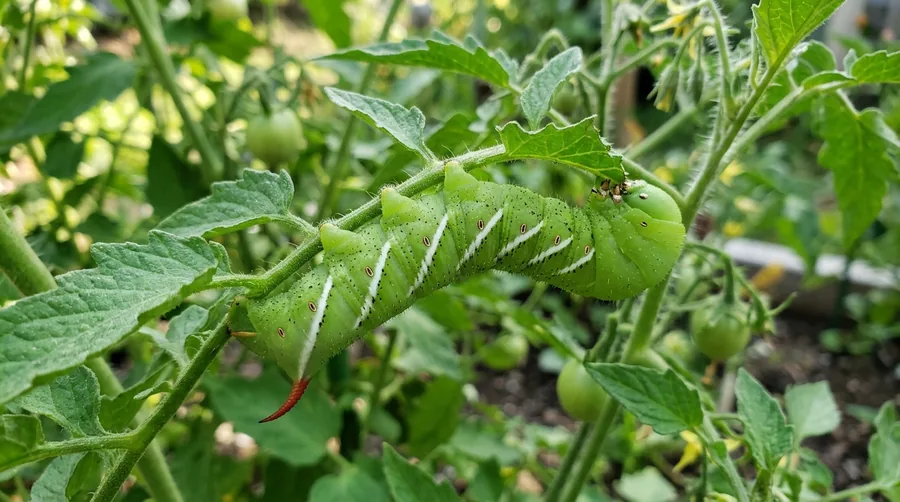
Large green tomato hornworm with white V-shaped marks and a dark tail horn on a tomato stem
Recommended Products


What it does
Tomato hornworms feed voraciously, chewing leaves, stems, and fruit of tomato-family plants. A few large caterpillars can defoliate a plant within days, and their green color blends in so well that gardeners often notice the bare stems and dark droppings before they spot the worm itself.
Where it lives
A common garden pest nationwide, it lives on tomato, pepper, eggplant, potato, and tobacco plants through summer. The caterpillars stay on their host plants, while the pupal stage overwinters in the soil below, emerging as adult hawk moths the following season.
How it breeds
The adult, a large gray five-spotted hawk moth, lays single greenish eggs on leaf undersides. Larvae feed and grow for three to four weeks through several stages, then burrow into the soil to pupate. There are one to two generations a year, with more in warmer regions and the pupa overwintering in the ground.
What it eats
Tomato hornworms feed on plants in the nightshade family, tomato, pepper, eggplant, potato, and tobacco, eating leaves, stems, and fruit.
Identification
Mature larvae are large, up to 3-4 inches, bright green, with a series of white V-shaped or L-shaped marks along the sides and a single dark horn at the tail. The similar tobacco hornworm has diagonal white stripes and a red horn. The adult moth has a 4-5 inch wingspan.
Signs of an infestation
- Large sections of leaves and stems chewed bare
- Dark green or black pellet-shaped droppings on leaves and soil
- Scarring or chewed holes on green fruit
- A large green horned caterpillar on stems
- White rice-like cocoons on a hornworm's back (parasitic wasps)
Prevention tips
- Inspect tomato plants every few days, checking leaf undersides
- Hand-pick caterpillars and drop them in soapy water
- Till the soil in fall and spring to destroy overwintering pupae
- Leave parasitic wasps alone, they naturally control hornworms
- Encourage birds and beneficial insects in the garden
Professional solutions
Tomato hornworms are one of the easiest garden pests to control by hand, so professional help is rarely needed. For larger plantings, a Bt (Bacillus thuringiensis) product labeled for caterpillars is effective and low-risk; a local extension office can advise on identification and timing if damage is heavy.
Health & safety
Despite the menacing horn, tomato hornworms cannot sting or bite, and they carry no disease that affects people or pets, so they are harmless to handle. The only real damage is to garden plants, where a few large caterpillars can quickly defoliate tomatoes and scar the fruit.
Relevant Products


Frequently asked questions
Does the tomato hornworm's horn sting?
No. The horn at the tail is completely harmless, it cannot sting, bite, or inject anything. Tomato hornworms are safe to pick off by hand. The horn is just a defensive-looking decoration to deter predators.
Should I kill a hornworm with white cocoons on its back?
No, leave it. Those white rice-like cocoons are the pupae of parasitic braconid wasps that have killed the hornworm from within. Letting them mature releases more wasps that control future hornworms naturally.
How do I get rid of tomato hornworms naturally?
Hand-picking is the most effective method: check plants every few days and drop the caterpillars in soapy water. Tilling soil in fall destroys overwintering pupae, and a Bt product controls larger outbreaks without harming beneficial insects.
Fact-checked by Morgan Vance, Editorial Director (editorial review, not a professional pest-control or medical sign-off). Last reviewed July 31, 2026. We correct anything a reader shows us is wrong — see our corrections policy.