
Corn Earworm
Helicoverpa zea · also called tomato fruitworm, cotton bollworm, sorghum headworm
Quick answer
The corn earworm (Helicoverpa zea) is a striped caterpillar that is one of the most damaging US crop pests. The larva of a tan night-flying moth, it bores into corn ear tips, tomato fruit, and cotton bolls, feeding on the crop and letting in mold. It causes no harm to people and is a major agricultural, not household, concern.
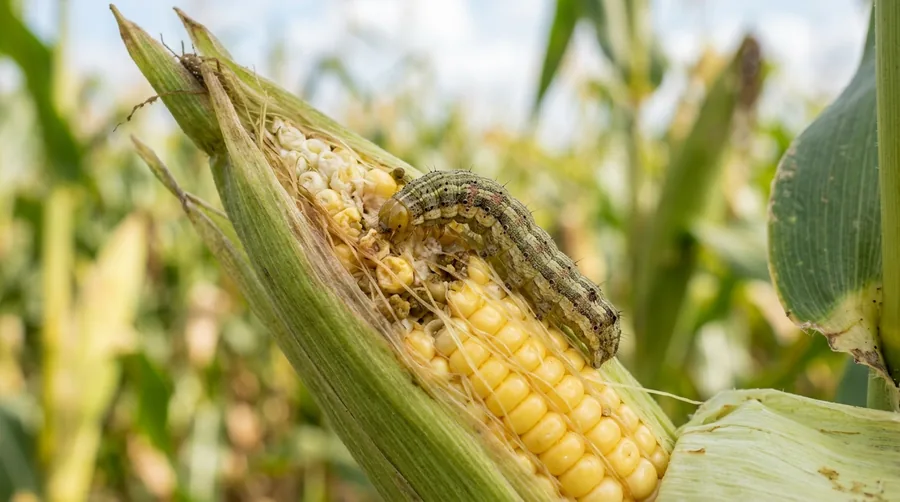
Striped corn earworm caterpillar feeding on kernels at the tip of a corn ear
Recommended Products


What it does
Corn earworm larvae hatch on the crop and quickly bore into a protected feeding site: the tip of a corn ear, a tomato or pepper fruit, or a cotton boll. They feed on kernels, seeds, and flesh, and are cannibalistic, so usually only one large larva is found per ear. Their damage also opens the way for mold and rot.
Where it lives
A wide-ranging pest, it attacks corn (its best-known host), tomatoes, cotton, sorghum, beans, and many other crops in fields and gardens nationwide. It overwinters as a pupa in the soil in the southern US and cannot survive hard northern winters, so northern crops are colonized each year by moths migrating up from the South.
How it breeds
A female moth lays hundreds of single, dome-shaped eggs, often on fresh corn silk. Larvae feed for two to four weeks through several stages, then drop to pupate in the soil. Multiple overlapping generations occur each season, with more generations in the warm South than in the North.
What it eats
Larvae eat the reproductive parts of many crops, corn kernels and silk, tomato and pepper fruit, cotton bolls, sorghum heads, and legume pods.
Identification
Mature larvae reach about 1.5 inches and vary widely in color, from green to pink to brown, with alternating light and dark lengthwise stripes and a rough, bristly-looking skin under magnification. The adult is a buff to tan moth with a dark spot on each forewing.
Signs of an infestation
- A single fat caterpillar and frass at the tip of a corn ear
- Chewed kernels and moldy, damaged ear tips
- Boreholes and hollowed cavities in tomatoes or peppers
- Round entry holes in cotton bolls
- Dome-shaped eggs on fresh corn silk
Prevention tips
- Plant early to avoid peak late-season moth flights
- Choose corn varieties with tight, long husks
- Pick and destroy infested fruit and ears promptly
- Till soil after harvest to disrupt overwintering pupae in the South
- Use pheromone traps to time control to moth flights
Professional solutions
At field scale, corn earworm is managed with the help of a local extension agent or agronomist, who can monitor moth flights with pheromone traps and recommend labeled insecticides or Bt crop varieties timed to egg-laying. Once larvae bore inside the ear or fruit, they are protected from sprays, so timing is critical.
Health & safety
Corn earworms do not bite, sting, or transmit any disease to people, so there is no direct health risk, and finding one in sweet corn or a tomato is harmless. The concern is crop loss: feeding damage and the mold that follows reduce yield and quality.
Relevant Products


Frequently asked questions
Is it safe to eat corn with a corn earworm in it?
Yes. Corn earworms carry no human disease. Simply cut away the damaged tip and any chewed or moldy kernels, and the rest of the ear is fine to eat. The worm is a crop-quality issue, not a food-safety hazard.
What is the difference between a corn earworm and a fall armyworm?
Corn earworms feed mainly at the ear tip and are smooth-striped, while fall armyworms often feed down into the ear from the side and have an inverted white Y on the head and four dark dots on the rear segment.
Fact-checked by Morgan Vance, Editorial Director (editorial review, not a professional pest-control or medical sign-off). Last reviewed May 13, 2026. We correct anything a reader shows us is wrong — see our corrections policy.