
Cutworm
Noctuidae (Agrotis spp. and others) · also called cutworms, black cutworm, variegated cutworm
Quick answer
Cutworms are plump, gray-brown caterpillars, the larvae of night-flying moths, that hide in soil by day and cut down young seedlings at the base after dark. They curl into a tight C when disturbed. Several species attack vegetables, corn, and turf across the US. They do not bite or sting people and damage only plants.
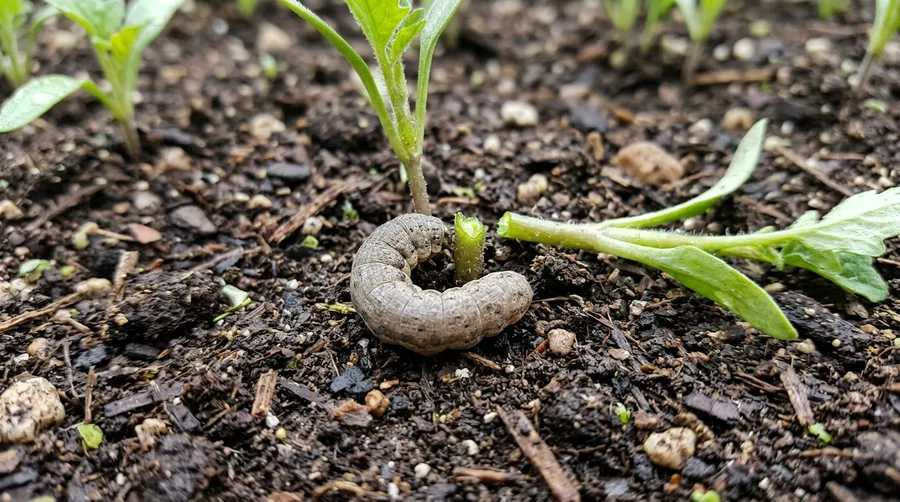
Plump gray-brown cutworm curled into a C shape in garden soil beside a cut seedling
Recommended Products


What it does
Cutworms feed at night, chewing through the stems of young plants right at the soil line and toppling them, which is how they earn their name. By day they hide curled up in the top inch of soil or under debris. A single cutworm can cut off several seedlings in a night, and 'climbing' species also feed on foliage and fruit.
Where it lives
These soil-dwelling larvae are found in gardens, crop fields, and lawns nationwide, favoring weedy or recently tilled ground. Depending on the species, they overwinter as larvae or pupae in the soil, or the migratory black cutworm arrives on spring storms from the South, targeting freshly planted seedlings.
How it breeds
Adult moths lay eggs on low plants, weeds, or soil debris. The larvae feed and grow through several stages over several weeks, then pupate in the soil. Most species produce one to a few generations a year, with the greatest damage in spring when tender seedlings are emerging.
What it eats
Cutworms feed on the stems and leaves of many young plants, corn, beans, tomatoes and other vegetables, plus turfgrass and various weeds.
Identification
Mature larvae are plump, up to about 2 inches, and dull gray, brown, or black, often with a greasy or gritty-looking skin and faint stripes or spots. The tell-tale trait is that they curl into a tight C shape when disturbed. The adults are drab 'miller' moths.
Signs of an infestation
- Young seedlings cut off cleanly at or near the soil line
- Wilted or missing transplants in a row
- Plump caterpillars curled in the soil near damaged plants
- Chewed foliage or fruit from climbing cutworms
- Damage that appears overnight in spring
Prevention tips
- Place cardboard or foil collars around transplant stems
- Clear weeds and till soil weeks before planting to expose larvae
- Delay planting slightly to avoid peak spring larvae
- Handpick caterpillars at night or dig near damaged plants
- Keep a weed-free, debris-free border around beds
Professional solutions
Cutworms in a home garden are usually managed with stem collars, cleanup, and hand-picking. For repeated field or turf damage, a local extension agent or agronomist can identify the species, assess whether numbers justify treatment, and recommend labeled soil-directed insecticides applied in the evening when larvae are active.
Health & safety
Cutworms do not bite, sting, or spread any disease to people or pets, so they pose no household or health risk. The harm is agricultural and horticultural, the loss of seedlings and young plants cut down at the base, which can require replanting.
Relevant Products


Frequently asked questions
What is cutting my seedlings off at the ground?
Cutworms are the usual culprit when seedlings are severed cleanly at the soil line overnight. Dig gently in the top inch of soil near the damaged plant and you will often find a plump caterpillar curled into a C.
How do I protect seedlings from cutworms?
Slip a collar of cardboard, a toilet-paper tube, or foil around each transplant stem, pushed an inch into the soil, to block cutworms. Clearing weeds and tilling well before planting also removes eggs and larvae.
Fact-checked by Morgan Vance, Editorial Director (editorial review, not a professional pest-control or medical sign-off). Last reviewed July 7, 2026. We correct anything a reader shows us is wrong — see our corrections policy.