
White Grub
Scarabaeidae (Phyllophaga, Cyclocephala, and others) · also called white grubs, lawn grubs, grub worms
Quick answer
White grubs are the plump, C-shaped, cream-colored larvae of scarab beetles like June beetles, chafers, and Japanese beetles. Living in soil, they chew grass roots and cause brown, dead lawn patches that peel back like carpet. A common turf and garden pest nationwide, they do not harm people but can ruin a lawn.
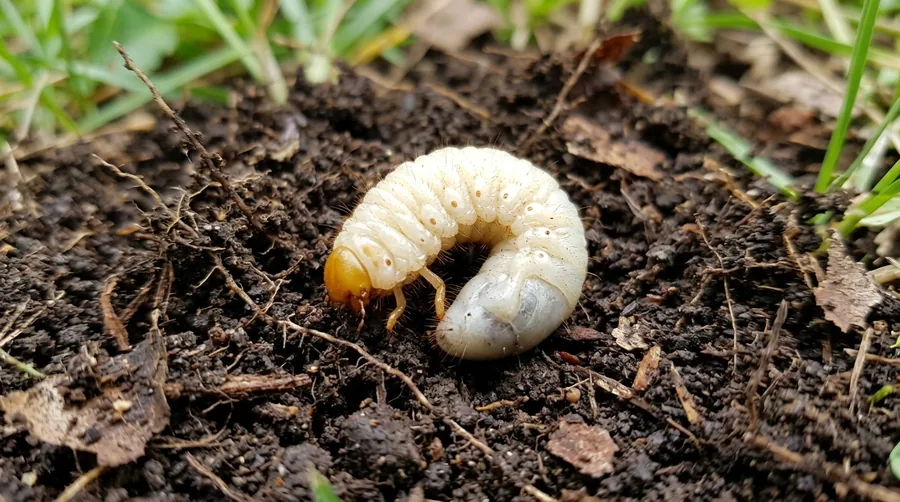
White C-shaped grub with a brown head curled in soil beneath lifted lawn turf
Recommended Products


What it does
White grubs feed underground on grass and plant roots, severing them so the turf can no longer take up water. This produces irregular brown, wilting patches that lift up like a loose carpet because the roots are gone. The grubs also draw digging skunks, raccoons, and birds, which tear up the lawn to eat them, adding to the damage.
Where it lives
The larvae of several scarab beetles (May and June beetles, masked chafers, European chafers, and Japanese beetles), white grubs live in the soil of lawns, pastures, gardens, and turf nationwide. They stay in the root zone during feeding periods and burrow deeper in the soil to escape cold winters and hot, dry summers.
How it breeds
Adult beetles lay eggs in the soil of lawns in summer. The grubs hatch and feed on roots through late summer and fall, move deeper to overwinter, then feed again in spring before pupating. Most species complete one generation a year, though some June beetles take two to three years.
What it eats
White grubs feed on the roots of turfgrass and many other plants; the adult beetles they become feed on foliage, flowers, and fruit above ground.
Identification
White grubs are plump, soft, and C-shaped, from about 1/2 to over 1 inch, creamy white with a tan or brown head and three pairs of small legs near the front. The pattern of hairs on the underside of the tail end (the raster) distinguishes the species; most homeowners simply see a curled white grub.
Signs of an infestation
- Irregular brown, wilting patches in the lawn
- Turf that pulls up easily like a loose carpet
- Spongy feel underfoot from severed roots
- Skunks, raccoons, or birds digging up the lawn
- C-shaped white grubs in the soil when turf is lifted
Prevention tips
- Water and mow properly to keep turf vigorous and root-deep
- Check grub counts before treating; a few grubs are normal
- Time any control to young grubs in late summer
- Consider milky spore or beneficial nematodes for grubs
- Reduce heavy summer irrigation that attracts egg-laying beetles
Professional solutions
Small numbers of grubs are normal and need no action. When counts are high and turf is being damaged, a local extension office or lawn-care professional can confirm the species and recommend correctly timed control, biological options like beneficial nematodes, or labeled grub-control products applied when the young grubs are feeding near the surface.
Health & safety
White grubs do not bite, sting, or carry any disease affecting people or pets, so they are harmless to handle. The damage is to lawns and plants, dead turf from root feeding, worsened by animals digging for the grubs, which can require reseeding or resodding affected areas.
Relevant Products


Frequently asked questions
How do I know if grubs are killing my lawn?
Look for irregular brown patches that lift up like carpet because the roots are chewed away, a spongy feel underfoot, and digging by skunks or birds. Peel back the turf; finding several C-shaped white grubs per square foot confirms it.
How many grubs are too many?
A few grubs are normal in healthy turf and need no treatment. Damage usually appears when counts reach roughly 5 to 10 or more per square foot, depending on grass health and species. Checking counts before treating avoids unnecessary pesticide use.
Fact-checked by Morgan Vance, Editorial Director (editorial review, not a professional pest-control or medical sign-off). Last reviewed July 22, 2026. We correct anything a reader shows us is wrong — see our corrections policy.