
Wireworm
Elateridae (click beetle larvae) · also called wireworms, click beetle larvae
Quick answer
Wireworms are the slender, shiny, orange-brown larvae of click beetles that live in soil for years, feeding on seeds, roots, and tubers. They hollow out planted seeds, tunnel into potatoes, and kill seedlings, causing thin, patchy stands. A widespread soil pest of many crops, they are harmless to people and hard to control once established.
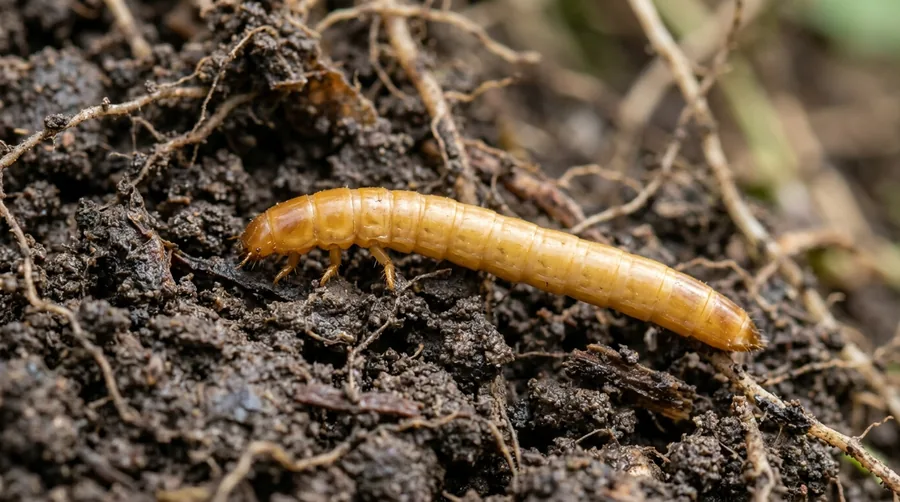
Slender shiny orange-brown wireworm larva in soil next to a damaged seed potato
Recommended Products


What it does
Wireworms live in the soil and feed on germinating seeds, roots, and underground stems and tubers. They bore into planted seeds and hollow them out before they sprout, tunnel into potatoes and root crops, and chew seedling roots, producing gaps and thin, uneven stands. They move up and down in the soil with temperature and moisture.
Where it lives
Found nationwide, wireworms are especially common in fields recently converted from sod, grass, or pasture, since the beetles prefer to lay eggs in grassy ground. They live entirely in the soil across gardens, crop fields, and turf, staying deeper in hot or dry conditions and rising to feed near the surface in spring and fall.
How it breeds
Adult click beetles lay eggs in the soil, often in grassy or weedy ground. The larvae, the wireworm stage, feed and grow slowly over two to six years depending on the species before pupating in the soil and emerging as adults. This long larval life is why infestations persist across several seasons.
What it eats
Wireworms feed on the seeds, roots, tubers, and underground stems of many crops, including corn, potatoes, small grains, and various vegetables.
Identification
Wireworms are slender, hard-bodied larvae from about 1/2 to 1.5 inches, shiny yellow to orange-brown, and stiff, like a piece of wire. The adults are elongated brown or black click beetles that snap and flip themselves upright with an audible click when placed on their backs.
Signs of an infestation
- Poor, patchy, or thin seedling stands
- Hollowed-out or missing planted seeds
- Narrow tunnels bored into potatoes and root crops
- Wilted or dead seedlings with chewed roots
- Hard, wiry larvae found when digging in the soil
Prevention tips
- Avoid planting susceptible crops right after sod or grass
- Rotate to less-preferred crops in infested fields
- Cultivate soil to expose larvae to predators and drying
- Use bait stations to detect wireworms before planting
- Manage grassy weeds that support egg-laying beetles
Professional solutions
Wireworms are difficult to control once established because they live deep in the soil for years, so prevention and rotation matter most. For field crops, a local extension agent or agronomist can help scout with bait traps before planting and recommend labeled seed treatments or soil insecticides where risk is high, since rescue treatments after planting rarely work.
Health & safety
Wireworms do not bite, sting, or carry any disease that affects people or pets, so they present no household or health risk. The damage is agricultural, hollowed seeds, tunneled tubers, and thin crop stands, which reduces yield and the quality of root crops like potatoes.
Relevant Products


Frequently asked questions
What is tunneling into my potatoes underground?
Wireworms are a common cause of narrow tunnels bored through potatoes and other root crops. These shiny, wiry, orange-brown larvae live in the soil and feed on tubers, roots, and seeds, and are most numerous in ground recently in grass or sod.
Why are wireworms so hard to get rid of?
They spend two to six years as larvae deep in the soil, protected from most treatments, so a single season of control rarely clears them. Rotation, cultivation, and avoiding susceptible crops after sod are more reliable than trying to kill established larvae.
Fact-checked by Morgan Vance, Editorial Director (editorial review, not a professional pest-control or medical sign-off). Last reviewed June 12, 2026. We correct anything a reader shows us is wrong — see our corrections policy.