
Click Beetle
Family Elateridae · also called click beetles, skipjack, elater
Quick answer
Click beetles (family Elateridae) are elongate, hard-bodied brown or black beetles famous for the clicking snap they use to flip upright when overturned. Adults are harmless insects that occasionally wander indoors toward lights. Their soil-dwelling larvae, called wireworms, feed on seeds and roots and can damage crops. They do not bite or infest homes.
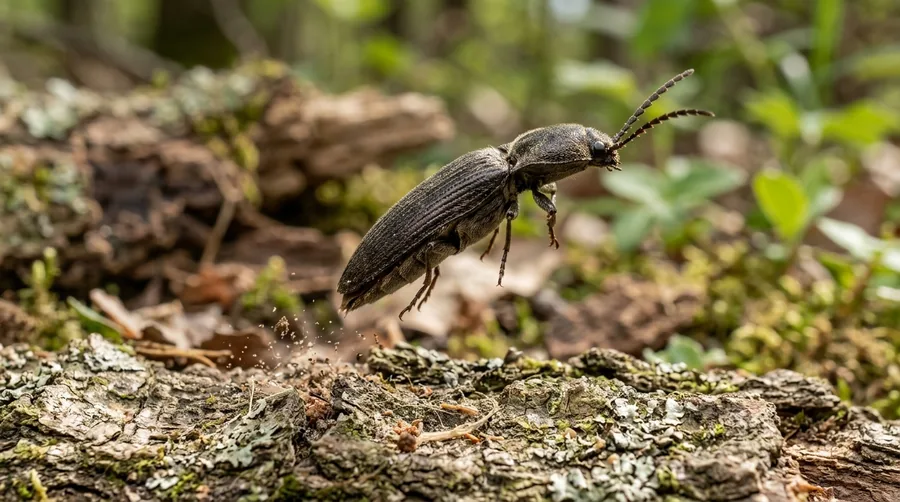
Elongate brown click beetle on a wooden surface
Recommended Products


What it does
Click beetles are named for a remarkable trick: flipped onto their backs, they snap a hinge between body segments to launch into the air with an audible click and land upright. Adults are harmless and occasionally wander indoors toward lights. The soil-dwelling larvae, called wireworms, feed on seeds and roots and can be crop pests.
Where it lives
Adults live in fields, gardens, woodlands, and around lights, and sometimes stray indoors as accidental invaders. The larvae, wireworms, live in soil and in decaying wood, where they feed and develop, often for years. Many click beetle species are found throughout the US in a variety of habitats.
How it breeds
Females lay eggs in soil, and the slender, hard-bodied wireworm larvae feed underground on roots, seeds, and organic matter, developing slowly over one to several years. They pupate in the soil and emerge as adults. The long larval stage is why wireworms can persist in fields season after season.
What it eats
Adults feed little, taking some nectar, pollen, or foliage; the wireworm larvae feed on seeds, roots, tubers, and decaying plant material in the soil, and can damage crops such as corn and potatoes.
Identification
Adults are elongate and parallel-sided, 12-30 mm, usually brown, gray, or black, with the ability to click and flip upright. The eyed click beetle is a large species with two big false eyespots. Wireworms are slender, shiny, yellow-brown, and tough-bodied, living in the soil.
Signs of an infestation
- Elongate beetles found indoors near windows or lights
- An audible click as a beetle flips itself upright
- Poor seed germination or damaged roots and tubers in gardens
- Hard, shiny yellow-brown wireworms turned up in soil
Prevention tips
- Seal gaps and screens to keep wandering adults out
- Reduce outdoor lighting that draws adults toward the house
- Vacuum or sweep up the occasional indoor beetle
- Manage garden soil and rotate crops where wireworms damage roots
Professional solutions
Adult click beetles indoors are harmless accidental invaders that need no treatment beyond exclusion and removal. Wireworm damage in gardens or fields is a soil and crop issue managed through cultural practices and, for farms, targeted advice. A pest professional is rarely needed; a garden or extension resource is more useful for persistent wireworm problems.
Health & safety
Click beetles do not bite, sting, or spread disease, and they cause no damage to homes, so they present no health risk indoors. They are harmless novelties known for their clicking jump. Any concern is agricultural, where wireworm larvae can reduce crop stands by feeding on seeds and roots.
Relevant Products




Frequently asked questions
Why do click beetles make a clicking sound?
They have a hinge-and-spine mechanism between two body segments. When a click beetle is on its back, it snaps this hinge to fling itself into the air with a loud click, flipping over to land on its feet. It is an escape and righting trick, and it is completely harmless.
Are click beetles harmful?
No. Adult click beetles do not bite, sting, spread disease, or damage your home. They are harmless insects that occasionally wander indoors toward lights. Their larvae, called wireworms, can damage crops in soil, but the adults you see indoors are just a nuisance.
How do I keep click beetles out of the house?
Because they are accidental invaders drawn to light, sealing gaps around doors and windows, repairing screens, and reducing outdoor lighting keeps most out. Simply vacuum or sweep up any that get inside; no insecticide treatment is needed for the occasional indoor beetle.
Fact-checked by Morgan Vance, Editorial Director (editorial review, not a professional pest-control or medical sign-off). Last reviewed July 24, 2026. We correct anything a reader shows us is wrong — see our corrections policy.