Powderpost Beetle
Lyctus spp. · also called powder post beetle, lyctid beetle, wood borer
Quick answer
Powderpost beetles (Lyctus and related genera) are small, reddish-brown to black wood-boring beetles whose larvae reduce seasoned hardwood to a fine, flour-like powder. They attack flooring, furniture, framing, and paneling, leaving tiny round exit holes. Second only to termites among US wood pests, active infestations often need professional treatment.
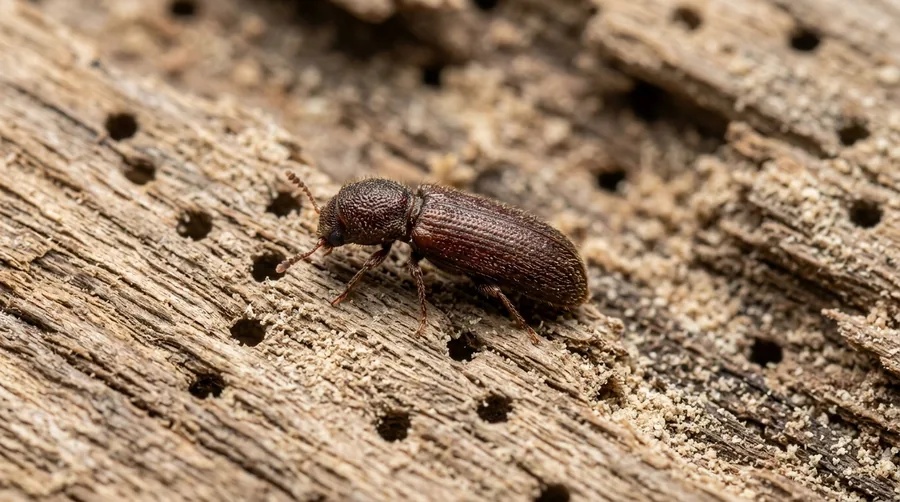
Small reddish-brown powderpost beetle beside round exit holes and fine wood powder in hardwood
Recommended Products


What it does
Powderpost beetles are wood-borers whose larvae tunnel through seasoned wood, packing their galleries with an extremely fine, flour-like powder. The larvae do all the damage over months to years, and the first sign is often the round exit holes and powder that appear when adults chew their way out. Infestations can persist and re-infest suitable wood.
Where it lives
They attack dry, seasoned wood indoors and in stored lumber, favoring hardwoods with the right starch and moisture content. Common targets include flooring, furniture, cabinets, paneling, trim, tool handles, and structural framing. True powderpost beetles prefer hardwoods such as oak, ash, hickory, and bamboo; related borers attack other wood types.
How it breeds
Females lay eggs in the pores or cracks of bare wood, and the larvae bore inward and feed for months to over a year. After pupating near the surface, adults chew out, leaving small round holes, then mate and lay eggs in the same or nearby wood, allowing an infestation to build over successive years.
What it eats
The larvae feed on the starch, sugar, and cellulose in seasoned wood; true powderpost beetles target the sapwood of pored hardwoods, while related species attack softwoods and bamboo.
Identification
Adults are small, 2-7 mm, elongate, and reddish-brown to black, but are rarely seen. The telltale signs are tiny round exit holes, about the size of a pinhead, and the fine, talc-like powder that sifts out. The powder's flour-like texture distinguishes these beetles from coarser-frass borers.
Signs of an infestation
- Tiny round exit holes in hardwood floors, trim, or furniture
- Piles of fine, flour-like powder beneath or beside the wood
- Fresh powder reappearing after you clean it away, indicating activity
- Weakened or crumbling wood in advanced infestations
Prevention tips
- Use kiln-dried, properly stored lumber for construction and repairs
- Seal or finish bare wood surfaces to deter egg-laying
- Control indoor humidity and moisture that favor infestation
- Inspect firewood, antiques, and used furniture before bringing them in
Professional solutions
Small, isolated infestations in a piece of furniture can sometimes be managed by replacing or treating the item, but active infestations in flooring or structural wood usually call for a professional. Pros identify the beetle and extent, apply borate wood treatments or targeted control, and in serious cases recommend fumigation. Prompt assessment prevents years of spreading damage.
Health & safety
Powderpost beetles do not bite, sting, or spread disease, so there is no direct health risk. The concern is structural: their larvae can seriously weaken hardwood flooring, furniture, and framing over time. Among US wood pests they are often ranked second only to termites for the damage they cause to seasoned wood.
Relevant Products




Frequently asked questions
How do I know if I have powderpost beetles?
The classic signs are small round exit holes in hardwood, roughly pinhead-sized, and piles of very fine, flour-like powder beneath them. If you clean away the powder and fresh powder returns, the infestation is active. The damage is usually in seasoned hardwood floors, trim, furniture, or framing.
Are powderpost beetles as bad as termites?
They are often ranked second only to termites for damage to seasoned wood, though they typically work more slowly and in more localized areas. Left untreated over years they can seriously weaken hardwood flooring and structural timber, so active infestations should be assessed promptly.
Can I treat powderpost beetles myself?
A single infested piece of furniture can sometimes be replaced, frozen, or treated, but active infestations in flooring or structural wood generally need a professional. Pros can apply borate treatments or, in severe cases, fumigation, and confirm which wood is affected so the problem does not keep spreading.
Fact-checked by Morgan Vance, Editorial Director (editorial review, not a professional pest-control or medical sign-off). Last reviewed May 30, 2026. We correct anything a reader shows us is wrong — see our corrections policy.