
June Beetle
Phyllophaga spp. · also called June bug, May beetle, May bug
Quick answer
June beetles (Phyllophaga species), also called May beetles or June bugs, are robust reddish-brown to black scarab beetles that fly clumsily toward lights on early-summer nights. Their white, C-shaped grub larvae live in soil and chew grass and plant roots, damaging lawns and crops. Adults are harmless nighttime nuisances.
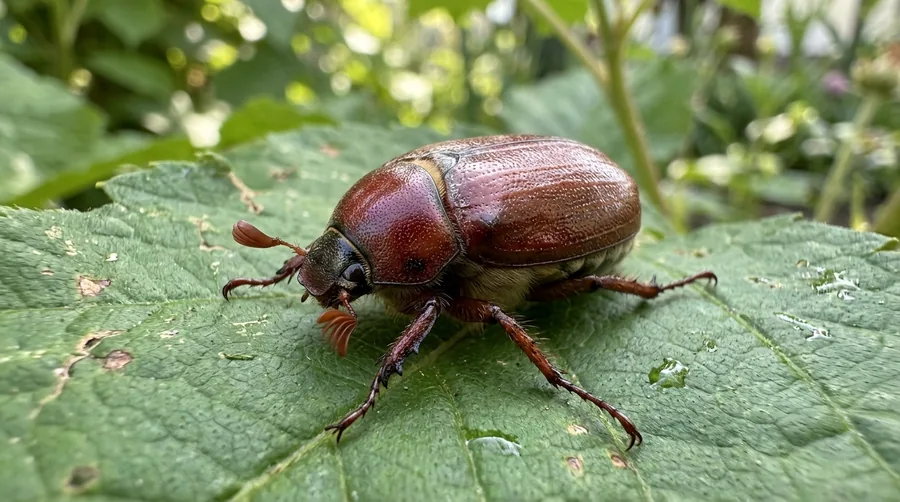
Robust reddish-brown June beetle resting on a leaf at night
Recommended Products


What it does
Adult June beetles are night-active and fly clumsily toward lights on warm early-summer evenings, often bumping into windows and screens and gathering under porch lights. They feed on foliage but do limited harm as adults. The real damage comes from their larvae, white grubs that feed on roots underground.
Where it lives
Adults rest in soil and on plants by day and fly at night from late spring into midsummer. The grub larvae live in the soil of lawns, pastures, gardens, and crop fields, feeding on roots. Various June beetle species occur throughout the US, and grubs are a common cause of patchy lawn decline.
How it breeds
Females lay eggs in the soil, and the C-shaped white grubs feed on roots, often over one to three years depending on the species, before pupating and emerging as adults. Because the cycle can span multiple years, grub populations and lawn damage can vary from season to season.
What it eats
Adults chew on the leaves of trees, shrubs, and crops, usually causing minor damage; the grub larvae feed on the roots of grasses and other plants in the soil.
Identification
Adults are robust scarab beetles, about 12-25 mm, shiny reddish-brown to black, with an oval, heavy-bodied shape. The larvae are plump, white to cream, C-shaped grubs with a brown head and visible legs, found in soil beneath damaged turf. In the South, the metallic green June beetle is a related look-alike.
Signs of an infestation
- Large brown beetles swarming lights and windows on summer nights
- Clumsy beetles bumping into screens after dark
- Patches of lawn that wilt, brown, or lift easily from grub-damaged roots
- White C-shaped grubs in the soil under loose turf
Prevention tips
- Reduce nighttime outdoor lighting that attracts adults
- Keep turf healthy and appropriately watered to tolerate some grub feeding
- Check root zones of thinning lawn patches for grubs
- Encourage natural predators and consider grub-targeted lawn care when damage is high
Professional solutions
Adult June beetles need no control beyond reducing lights, and a few grubs in a healthy lawn are normal. Where grub feeding causes widespread turf loss, timing matters: treatments work best on young grubs in mid- to late summer. A lawn-care professional can confirm grub counts and time any treatment to the vulnerable stage.
Health & safety
June beetles do not bite, sting, or spread disease, and they cause no damage to homes, so they pose no health risk. Adults are a harmless nighttime nuisance around lights, while the grubs' impact is limited to lawn and plant roots. Their clumsy flying is startling but not dangerous.
Relevant Products


Frequently asked questions
Why are June bugs attracted to lights?
Like many night-flying insects, adult June beetles orient to light and are drawn to porch lights, windows, and lamps on warm early-summer evenings. They fly clumsily and often crash into screens and walls. Reducing outdoor lighting is the simplest way to cut down on the nightly swarms.
Do June bugs damage lawns?
The adults do little harm, but their larvae, white grubs, feed on grass roots in the soil and can cause patchy, wilting turf that lifts easily. A few grubs in a healthy lawn are normal; widespread damage may warrant checking grub counts and treating young grubs in late summer.
Do June bugs bite?
No. June beetles do not bite or sting people or pets and carry no disease. Their spiny legs can feel prickly if one lands on you, and they are startling when they blunder into lights and windows, but they are entirely harmless.
Fact-checked by Morgan Vance, Editorial Director (editorial review, not a professional pest-control or medical sign-off). Last reviewed July 14, 2026. We correct anything a reader shows us is wrong — see our corrections policy.