Chinch Bug
Blissus spp. · also called chinch bugs, hairy chinch bug, southern chinch bug
Quick answer
Chinch bugs (Blissus species) are tiny black-and-white insects that suck sap from grasses, injecting a toxin that browns lawns in irregular sun-baked patches often mistaken for drought. Hairy chinch bugs damage northern turf and southern chinch bugs attack St. Augustinegrass. They harm lawns and crops, not people.
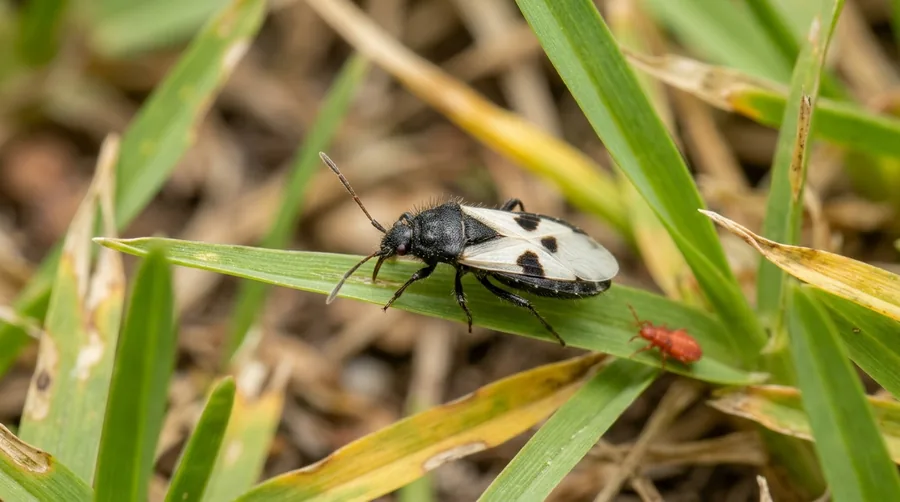
Tiny black chinch bug with folded white wings at the base of browning lawn grass
Recommended Products


What it does
Chinch bugs cluster at the base of grass plants and use piercing mouthparts to suck sap while injecting a toxin that blocks water movement, turning turf yellow then brown. Damage spreads outward in irregular, sun-baked patches and is often mistaken for drought. They thrive in hot, dry weather and open, sunny lawns.
Where it lives
They live in turfgrass and grain crops. Hairy chinch bugs damage cool-season lawns in the Northeast and Midwest, while southern chinch bugs attack St. Augustinegrass in the Southeast and Gulf region. They shelter in thatch and grass at the soil line and overwinter as adults in debris and lawn edges.
How it breeds
Overwintered adults become active in late spring, and females lay eggs on grass and in thatch. Nymphs hatch bright red-orange with a pale band and darken as they mature. Warm regions may see two to several generations a season, and populations can explode quickly in hot, dry summers.
What it eats
Chinch bugs feed on the sap of grasses, including lawn turfgrasses such as St. Augustine, Zoysia, and bluegrass, as well as cereal grain crops in agricultural settings.
Identification
Adults are tiny, about 3-4 mm, black with folded whitish wings that show a small dark triangular mark. Nymphs are much smaller and range from bright red-orange with a white band to dark as they grow. A close look at the thatch on a warm day usually reveals them moving.
Signs of an infestation
- Irregular yellow-to-brown patches in sunny lawn areas
- Turf that does not green up after watering, unlike drought
- Tiny black-and-white bugs and red nymphs in the thatch
- Damage spreading outward from the edges of dead patches
Prevention tips
- Reduce thatch buildup with proper mowing and dethatching
- Water and fertilize appropriately to avoid stressed, drought-weakened turf
- Choose chinch-bug-resistant grass varieties where available
- Inspect sunny lawn edges in early summer to catch outbreaks early
Professional solutions
Confirm chinch bugs before treating, since the damage looks like drought. Cultural care, reducing thatch, sensible watering, and resistant grasses, prevents most problems. For active infestations, targeted lawn insecticides applied to affected zones can help. A lawn-care professional can confirm the pest and time treatment to the vulnerable nymph stage.
Health & safety
Chinch bugs do not bite or sting people, spread human disease, or damage buildings, so they pose no risk to health. Their impact is limited to lawns and grain crops, where feeding can brown and kill large areas of turf if outbreaks are left unchecked.
Relevant Products


Frequently asked questions
How do I know if chinch bugs are killing my lawn?
Chinch bug damage shows up as irregular yellow-to-brown patches in the sunniest, driest parts of the lawn that do not recover after watering, unlike true drought. Part the grass at the edge of a dying patch on a warm day and look for tiny black-and-white bugs and reddish nymphs in the thatch.
Do chinch bugs bite people or pets?
No. Chinch bugs feed only on grass and grain plants and do not bite or sting people or animals, nor do they spread disease. They are purely a turf and crop pest, and pose no direct health risk to your household.
What is the best way to prevent chinch bug damage?
Keep turf healthy: reduce thatch, water and fertilize sensibly to avoid stressed grass, and choose resistant varieties where available. Inspect sunny lawn areas in early summer so you can catch and treat an outbreak while numbers are still low.
Fact-checked by Morgan Vance, Editorial Director (editorial review, not a professional pest-control or medical sign-off). Last reviewed May 29, 2026. We correct anything a reader shows us is wrong — see our corrections policy.