Hairy Chinch Bug
Blissus leucopterus hirtus · also called chinch bug, hairy chinch bugs, lawn chinch bug
Quick answer
The hairy chinch bug (Blissus leucopterus hirtus) is a tiny black-and-white true bug that damages lawns across the Northeast and Midwest. It sucks sap from grass and injects a toxin, leaving irregular yellow-to-brown patches in sunny, dry areas each summer. It harms turf, not people, and does not bite or enter homes.
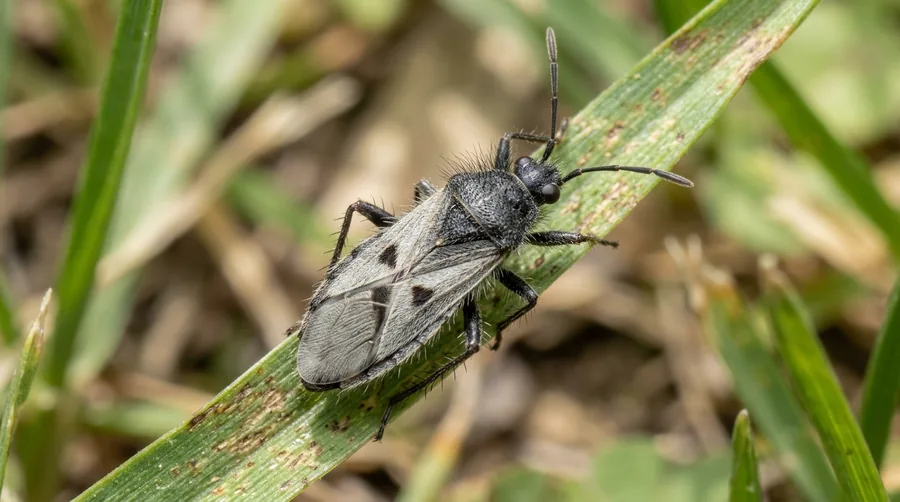
Tiny black-and-white hairy chinch bug on grass blades above sun-scorched brown turf
Recommended Products


What it does
Chinch bugs use piercing-sucking mouthparts to draw sap from grass stems and crowns while injecting a toxin that disrupts water movement, causing the grass to yellow, wilt, and die. They concentrate in sunny, dry areas and spread outward as feeding intensifies through summer, producing expanding irregular dead patches often mistaken for drought.
Where it lives
They infest cool-season lawns, especially the sunny edges near driveways, sidewalks, and south-facing slopes, feeding at the thatch and soil line. Turfgrasses like fine fescue, perennial ryegrass, and Kentucky bluegrass are favored. The hairy chinch bug is a major lawn pest across the northeastern and midwestern US.
How it breeds
Adults overwinter in thatch and debris, then lay eggs in spring on grass. Bright red-orange nymphs with a pale band hatch and feed as they molt, darkening with each stage. There are usually two generations a year in much of the region, with damage peaking in the hot, dry stretch of mid to late summer.
What it eats
Both nymphs and adults feed exclusively on grasses, sucking sap from the crowns, stems, and lower blades of turf. The toxin they inject while feeding is what causes the disproportionate browning relative to their tiny size.
Identification
Adults are about 3-4 mm, black with folded white wings marked by a small dark triangle, and reddish legs. Nymphs are smaller and bright red-orange with a white band across the back, darkening as they mature. Parting the grass at the edge of a browning patch on a warm day often reveals them scurrying at the soil line.
Signs of an infestation
- Irregular yellow-to-brown patches in sunny lawn areas
- Damage that expands outward during hot, dry weather
- Small black-and-white bugs and red-orange nymphs at the soil line
- Turf that does not green up after watering
- Bugs visible when grass is parted at a patch edge
Prevention tips
- Keep lawns well watered during hot, dry spells to reduce stress
- Dethatch to remove the thatch layer where bugs shelter
- Overseed with endophyte-enhanced grass varieties that resist chinch bugs
- Mow at a proper height and avoid excess nitrogen fertilizer
- Monitor sunny lawn edges in midsummer for early activity
Professional solutions
For confirmed, spreading infestations, a lawn-care professional can verify chinch bugs (versus drought or disease) and apply an EPA-registered turf insecticide timed to active nymphs, alongside cultural fixes like dethatching and irrigation. Correct diagnosis matters, since brown patches have many causes; treating the wrong problem wastes product and money.
Health & safety
Hairy chinch bugs pose no health risk to people or pets. They do not bite, sting, spread disease, or enter homes; they are strictly a turfgrass pest. The only 'damage' is to the lawn. If a turf insecticide is used, follow the label and keep people and pets off until it has dried or per label directions, and call Poison Control at 1-800-222-1222 for any exposure.
Relevant Products


Frequently asked questions
How do I know if brown lawn patches are chinch bugs or drought?
Chinch bug damage appears as irregular patches in sunny areas that expand in hot, dry weather and do not green up after watering. Confirm by parting the grass at a patch edge on a warm day; you should see tiny black-and-white bugs and red-orange nymphs scurrying at the soil line.
Do chinch bugs come into the house or bite people?
No. Hairy chinch bugs are lawn pests that feed on grass. They do not bite people or pets, do not spread disease, and do not infest homes. The concern is entirely turf damage, so control focuses on the lawn, not the house.
Fact-checked by Morgan Vance, Editorial Director (editorial review, not a professional pest-control or medical sign-off). Last reviewed July 22, 2026. We correct anything a reader shows us is wrong — see our corrections policy.