
Sod Webworm
Crambinae spp. · also called sod webworms, lawn moth, lawn webworm
Quick answer
Sod webworms are the caterpillars of small buff-colored lawn moths. They live in silk-lined tunnels in the thatch and chew grass blades at night, creating ragged brown patches in lawns. The adult moths flush up in a zigzag as you walk across the grass. They damage turf but do not harm people.
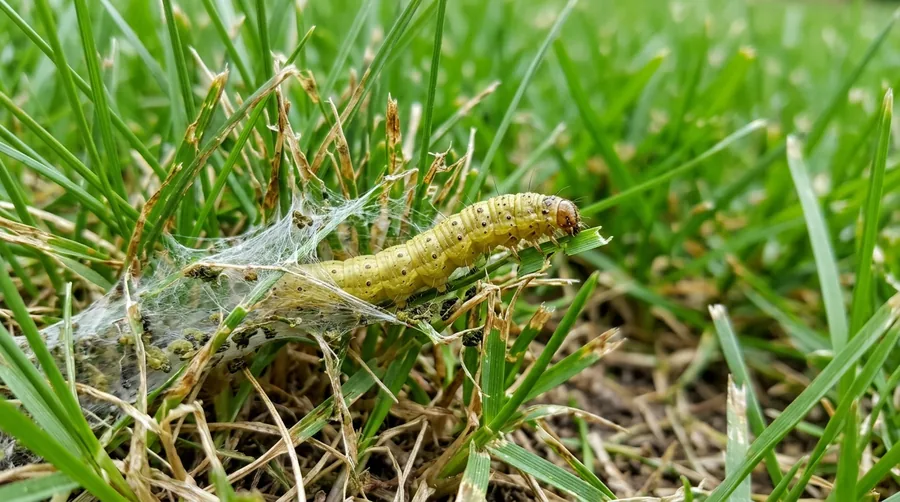
Gray-tan sod webworm caterpillar curled in the thatch of a home lawn
Recommended Products


What it does
Sod webworms feed as caterpillars, hiding by day in silk-lined tunnels in the thatch and coming out at night to chew grass blades. Their feeding thins the turf and creates small, ragged brown patches that enlarge as the larvae grow. The adult moths do no damage; they only fly and lay eggs.
Where it lives
Sod webworms live in home lawns, golf courses, and other turf across the US, favoring sunny, well-drained areas and hot, dry summers. The larvae shelter in the thatch layer at the soil surface; the small buff moths rest in shrubs and grass edges by day. Damage is common in mid to late summer.
How it breeds
Adult moths fly at dusk and scatter eggs over the lawn as they go. Larvae hatch, build silk-lined tunnels in the thatch, and feed for several weeks before pupating. There are commonly two or more generations a year in much of the US, so damage can appear from early summer into fall.
What it eats
Sod webworm larvae eat grass: the blades, stems, and crowns of lawn and turf grasses such as bluegrass, fescue, ryegrass, and bentgrass. The adult moths do not feed on turf and take only water or nectar, so all lawn damage comes from the caterpillars.
Identification
Larvae are slender caterpillars up to about 3/4 inch, gray to tan with dark spots, curling up when disturbed. Adults are small, buff or dull-gray lawn moths that hold their wings tightly and have snout-like mouthparts. A telltale sign is moths flushing up and flying in a zigzag as you cross the lawn.
Signs of an infestation
- Small ragged brown patches that grow and merge
- Chewed, notched grass blades near the soil
- Silk-lined tunnels and green fecal pellets in the thatch
- Small buff moths zigzagging up as you walk the lawn
- Increased bird pecking as they hunt the larvae
Prevention tips
- Keep turf healthy with proper watering and balanced fertility
- Reduce heavy thatch that shelters the larvae
- Choose endophyte-enhanced grass varieties where suitable
- Mow at the recommended height for your grass type
- Water deeply and less often to favor strong roots
Professional solutions
Healthy, well-managed turf often outgrows light sod webworm damage. For heavier infestations, biological options like Bacillus thuringiensis or beneficial nematodes target larvae, and a lawn-care professional can apply an EPA-registered insecticide timed to young larvae and watered in per the label. Confirm webworms first, since other pests and drought cause similar browning.
Health & safety
Sod webworms do not bite, sting, or spread disease to people or pets, so they pose no health risk. They are strictly a turf pest: larval feeding thins lawns and creates brown patches, which is a cosmetic and lawn-health problem rather than a threat to people, structures, or food.
Relevant Products


Frequently asked questions
What is causing ragged brown patches in my lawn?
Sod webworms are one possibility, especially in mid to late summer. Look for chewed grass blades near the soil, silk-lined tunnels and green fecal pellets in the thatch, and small buff moths that zigzag up as you walk across the lawn.
Are the little moths flying over my lawn a problem?
The moths themselves do not damage grass, but they are the adult stage of sod webworms and are laying eggs. Seeing many of them zigzagging over the turf at dusk can be an early warning that damaging larvae will follow.
How do I get rid of sod webworms?
Keep the lawn healthy, since vigorous turf often recovers on its own. For real damage, treat young larvae with Bacillus thuringiensis or beneficial nematodes, or have a lawn professional apply an EPA-registered insecticide watered in per the label after confirming webworms are the cause.
Fact-checked by Morgan Vance, Editorial Director (editorial review, not a professional pest-control or medical sign-off). Last reviewed June 14, 2026. We correct anything a reader shows us is wrong — see our corrections policy.