
Fall Webworm
Hyphantria cunea · also called fall webworm moth, webworm
Quick answer
The fall webworm (Hyphantria cunea) is a native caterpillar that spins large silken webs over the ends of tree branches in late summer and fall. It feeds on more than 100 kinds of hardwood trees, and while the webs look alarming, the damage is mostly cosmetic and rarely harms an established tree's long-term health.
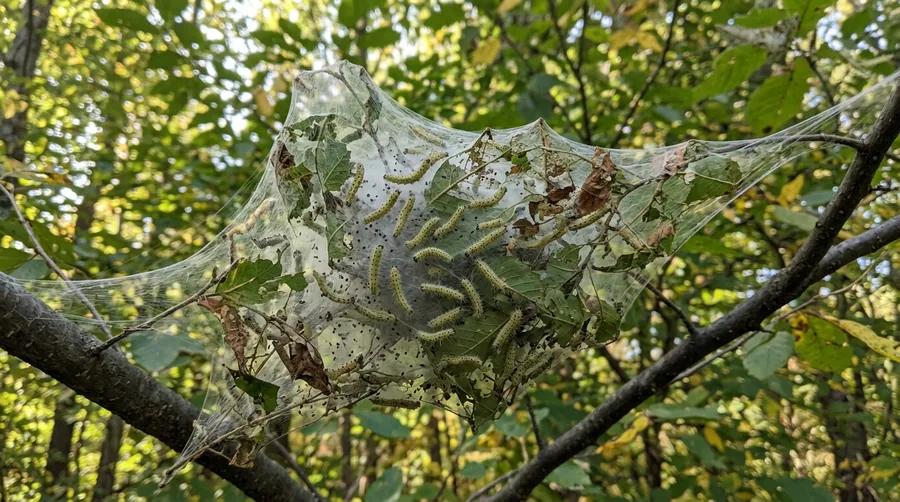
Silken fall webworm nest enclosing the end of a tree branch with caterpillars inside
Recommended Products


What it does
Fall webworm caterpillars feed together inside a communal web of silk that they spin over the tips of branches, expanding it to enclose more leaves as they eat. They stay within the protective webbing rather than marching out to feed. Because they appear late in the season, after trees have already stored energy for the year, their leaf-stripping rarely threatens a healthy tree.
Where it lives
The caterpillars live in their branch-end webs on a very wide range of deciduous trees, favoring pecan, walnut, hickory, birch, cherry, and many others. They occur in yards, orchards, roadsides, and woodlands across the United States and southern Canada, and are one of the most familiar late-season tree pests.
How it breeds
There are one to four generations a year, more in the South. Adults are mostly white moths that lay hair-covered egg masses on the undersides of leaves. Larvae hatch and feed communally for four to six weeks, then leave the web to pupate in bark crevices or leaf litter, overwintering as pupae before emerging the next season.
What it eats
The caterpillars eat the leaves of a broad range of deciduous hardwood trees, chewing the tissue and leaving webbed, skeletonized foliage. The adult moths do not feed on foliage. Feeding is concentrated at the branch tips inside the expanding web.
Identification
Larvae are about an inch long, pale yellow to greenish, covered in long white or tan hairs, with dark or orange spots and two rows of tubercles. The adult is a mostly white moth, sometimes with dark spots, about 1.5 inch wingspan. The key sign is the loose, dirty-white web at the ENDS of branches, unlike the eastern tent caterpillar's tighter web in branch crotches.
Signs of an infestation
- Loose silken webs enclosing the tips of branches
- Webbing full of leaf fragments, frass, and shed skins
- Skeletonized or chewed leaves inside the web
- Hairy pale caterpillars clustered within the webbing
- Webs enlarging outward along the branch through late summer
Prevention tips
- Prune out and destroy small webs while they are still low and reachable
- Break open or remove webs so birds and predators can reach the caterpillars
- Rake and dispose of leaf litter where pupae overwinter
- Tolerate light infestations, since they rarely harm the tree
- Avoid burning webs in the tree, which damages the wood more than the insects do
Professional solutions
Fall webworm rarely needs professional control because the damage is cosmetic and comes late in the season. For small trees, pruning out webs or spraying young larvae with Bacillus thuringiensis (Bt) works well. On tall shade trees where webs are unsightly or extensive, a certified arborist can reach and treat them safely; broadcast spraying of large trees is seldom worth it.
Health & safety
Fall webworms do not bite or sting, and their hairs are not meaningfully irritating to most people, so they pose essentially no health risk to people or pets. The impact is aesthetic and, at worst, minor stress to a tree from late-season leaf loss, which established trees almost always outgrow the following spring.
Relevant Products


Frequently asked questions
Are those webs in my tree fall webworms or tent caterpillars?
Location is the giveaway. Fall webworms build loose webs over the ENDS of branches in late summer and fall, enclosing the leaves they eat. Eastern tent caterpillars make tighter webs in the CROTCHES of branches in spring. Fall webworm damage is later in the season and mostly cosmetic.
Do I need to remove fall webworm nests?
Usually not for the tree's sake, since the damage is cosmetic and comes after trees have stored energy for the year. If the webs bother you, prune out small ones or open them so birds can feed. Never burn webs in the tree, which harms the wood more than the caterpillars do.
Will fall webworms kill my tree?
Almost never on an established, healthy tree. They defoliate branch tips late in the season, but the tree has already done most of its growing and leafs out normally the next spring. Only very small, young, or already-stressed trees face any real risk.
Fact-checked by Morgan Vance, Editorial Director (editorial review, not a professional pest-control or medical sign-off). Last reviewed August 8, 2026. We correct anything a reader shows us is wrong — see our corrections policy.