
Bagworm
Thyridopteryx ephemeraeformis · also called evergreen bagworm, common bagworm, bagworm moth
Quick answer
The bagworm (Thyridopteryx ephemeraeformis) is a moth caterpillar that builds and lives inside a spindle-shaped bag woven from silk and bits of its host plant. It feeds on arborvitae, juniper, cedar, spruce, and many trees, and heavy infestations can defoliate and kill evergreens. The camouflaged bags are often mistaken for cones.
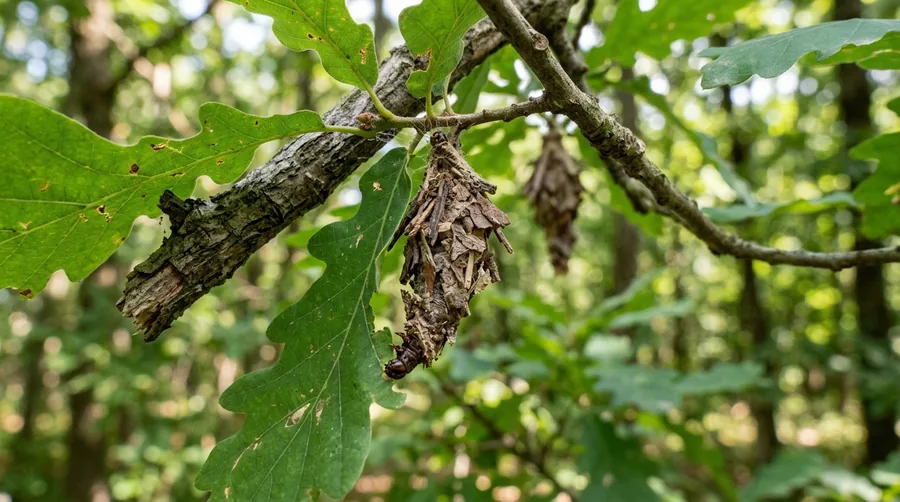
Spindle-shaped bagworm case covered in bits of evergreen needles hanging from an arborvitae branch
Recommended Products


What it does
Each caterpillar builds a tough, portable bag of silk camouflaged with fragments of the plant it eats, carrying it everywhere and pulling inside when disturbed. It feeds through an opening at the top, enlarging the bag as it grows. On evergreens, feeding strips needles branch by branch; because evergreens regrow slowly, sustained feeding can kill limbs or whole plants.
Where it lives
Bagworms attack more than 120 plant species but are most damaging on arborvitae, juniper, cedar, and spruce, and are also common on deciduous trees like maple and honeylocust. They are found on landscape and foundation plantings, hedges, and ornamentals, mainly in the eastern, southern, and midwestern United States.
How it breeds
There is one generation a year. Eggs overwinter inside the mother's old bag and hatch in late spring. Tiny larvae 'balloon' on silk threads to new plants, then feed and enlarge their bags all summer. In fall males emerge as small moths and mate with the wingless, larva-like females, which lay 500-1,000 eggs inside their bag and die.
What it eats
Bagworm caterpillars eat the foliage of their host plants, chewing needles of evergreens such as arborvitae and juniper or the leaves of deciduous trees. The wingless adult females do not feed. The bag itself is made of silk and incorporated plant material, not eaten.
Identification
The obvious sign is the bag: a tough, 1.5 to 2.5 inch spindle- or cone-shaped case covered in bits of needles or leaves, hanging from branches and often mistaken for a cone. The caterpillar inside is dark and rarely seen. Adult males are small, clear-winged, sooty moths; females never leave the bag and look grub-like.
Signs of an infestation
- Spindle-shaped bags hanging from branches, resembling small cones
- Brown, chewed, or bare patches of foliage on evergreens
- Bags moving slowly as caterpillars feed and drag them
- Thinning, dieback, or dead branches on arborvitae and juniper
- Clusters of old bags left on branches through winter
Prevention tips
- Handpick and destroy bags in fall and winter to remove overwintering eggs
- Inspect susceptible evergreens each spring for new, small bags
- Prune out and dispose of heavily infested branches
- Avoid moving infested nursery stock or plants to clean areas
- Encourage birds and parasitic wasps that feed on bagworms
Professional solutions
For small plantings, picking off and destroying bags is often enough. When larvae are young in early summer, Bacillus thuringiensis (Bt) or other labeled insecticides can be sprayed, but timing is critical and older larvae in tough bags resist treatment. For tall trees or severe infestations threatening valuable evergreens, a certified arborist or licensed applicator can treat effectively and safely.
Health & safety
Bagworms do not bite, sting, or carry disease, and they pose no risk to people or pets. The concern is plant health: because damaged evergreens recover slowly, a heavy, repeated infestation can permanently disfigure or kill arborvitae, juniper, and similar shrubs, making them the main pest of concern on those plants.
Relevant Products


Frequently asked questions
Are the little cones on my arborvitae actually bagworms?
Very likely. Bagworm cases are spindle-shaped, 1.5 to 2.5 inches long, and covered in bits of the plant's own foliage, so they blend in and look like small cones. If you tug one and it is firmly attached with silk, or you see it move, it is a bagworm, not a cone.
How do I get rid of bagworms?
Handpicking and destroying the bags in fall and winter removes the overwintering eggs and is very effective on small plants. If you spray, do it in early summer when larvae are young, using a product such as Bt; older larvae in tough bags are hard to kill. Large trees may need a professional.
Can bagworms kill my evergreens?
Yes. Evergreens like arborvitae and juniper regrow needles slowly, so heavy or repeated bagworm feeding can strip branches faster than the plant recovers and can kill limbs or the whole shrub. Catching and removing them early prevents this kind of lasting damage.
Fact-checked by Morgan Vance, Editorial Director (editorial review, not a professional pest-control or medical sign-off). Last reviewed May 30, 2026. We correct anything a reader shows us is wrong — see our corrections policy.