
Eastern Tent Caterpillar
Malacosoma americanum · also called eastern tent caterpillars, tent caterpillar, tent worm
Quick answer
The eastern tent caterpillar (Malacosoma americanum) builds silken tents in the forks of cherry, apple, and crabapple trees in early spring. The hairy, white-striped caterpillars emerge to feed on leaves, defoliating branches. They are mainly a cosmetic tree pest, but ingested caterpillars can cause pregnant mares to lose foals.
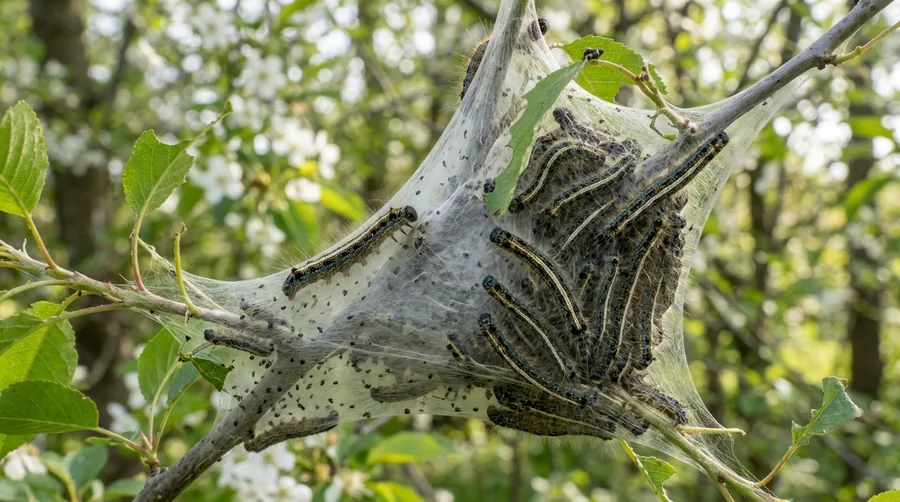
Hairy black-and-white striped eastern tent caterpillars on a silk tent in a tree fork
Recommended Products



What it does
These social caterpillars spin a conspicuous silk tent in the crotch of a branch and enlarge it as they grow, using it as a base. They leave the tent to feed on nearby leaves and return to shelter, so the tent stays in the branch fork rather than at the twig tips. Heavy feeding can strip branches but rarely kills established trees.
Where it lives
It is common in the eastern and central US in yards, orchards, roadsides, and woodland edges. Preferred host trees are wild cherry, apple, and crabapble, with tents built in the forks of their branches. Tents appear in early spring as the leaves emerge, then are abandoned once the caterpillars mature.
How it breeds
There is one generation a year. Eggs laid in a shiny band around a twig in summer overwinter and hatch in early spring as leaves open. Caterpillars feed for several weeks, disperse to pupate in cocoons, and emerge as tan-brown adult moths that mate and lay the next egg masses, restarting the cycle.
What it eats
Caterpillars feed on the leaves of wild cherry, apple, crabapple, and related trees, and occasionally other hardwoods. Feeding is concentrated in spring on these hosts, and healthy trees usually releaf after being defoliated, so lasting damage is uncommon.
Identification
Mature caterpillars are up to about 2.5 inches, hairy, black with a solid white stripe down the back, flanked by blue and brown markings and oval blue spots. The silk tent in a branch fork is the most recognizable sign. This species differs from fall webworm, which builds tents at branch tips in late summer.
Signs of an infestation
- Silk tents in the forks of cherry, apple, or crabapple trees
- Hairy, white-striped caterpillars near the tents in spring
- Defoliated branches around active tents
- Shiny dark egg bands encircling twigs
- Caterpillars wandering to pupate as they mature
Prevention tips
- Scout for and remove overwintering egg bands on twigs in winter
- Prune out or wipe away small tents early in spring
- Remove tents by hand (with gloves) on cool mornings when caterpillars are inside
- Keep host trees healthy so they recover from defoliation
- Use Bt on young caterpillars where treatment is warranted
Professional solutions
Most tents on smaller trees are handled by homeowners through pruning or removing them by hand, ideally early. An arborist or pest professional helps with large or hard-to-reach trees, valuable specimens, or where treatment such as Bt is preferred, ensuring safe removal without damaging the tree.
Health & safety
Eastern tent caterpillars do not bite or sting and pose little direct risk to people. One notable concern is for horses: caterpillars accidentally eaten in pasture or forage have been linked to Mare Reproductive Loss Syndrome, causing pregnant mares to lose foals, so horse owners should manage caterpillars near pastures.
Relevant Products


Frequently asked questions
What is the silk tent in my tree?
A silk tent in the fork of a cherry, apple, or crabapple tree in early spring is made by eastern tent caterpillars, which shelter in it and feed on nearby leaves. It differs from fall webworm, which builds loose webbing at branch tips in late summer.
Do eastern tent caterpillars kill trees?
Usually not. They can defoliate branches, but healthy, established trees typically releaf and recover, so the damage is mostly cosmetic. Repeated heavy defoliation can stress a tree, so removing tents early helps, especially on smaller or already-stressed trees.
Are eastern tent caterpillars dangerous to horses?
They can be an indirect risk. Caterpillars accidentally ingested with pasture or forage have been linked to Mare Reproductive Loss Syndrome, which causes pregnant mares to lose foals. Horse owners should manage tent caterpillars in and around pastures, especially during foaling season.
Fact-checked by Morgan Vance, Editorial Director (editorial review, not a professional pest-control or medical sign-off). Last reviewed July 4, 2026. We correct anything a reader shows us is wrong — see our corrections policy.