
European Crane Fly
Tipula paludosa · also called crane fly, leatherjacket, daddy longlegs (UK)
Quick answer
The European crane fly (Tipula paludosa) is a large, long-legged fly that looks like a giant mosquito but does not bite. Its larvae, called leatherjackets, are tough gray grubs that chew grass roots and crowns, thinning lawns and pastures. The adults are harmless; the soil-dwelling larvae cause the turf damage.
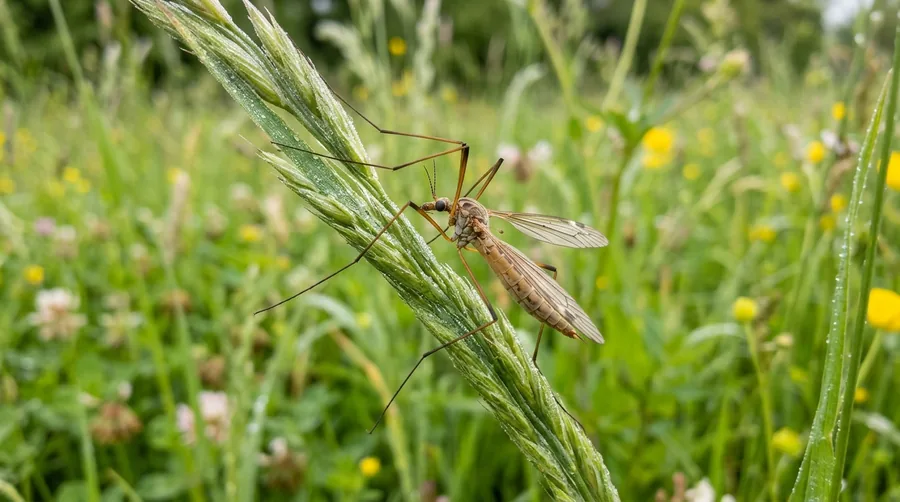
Long-legged brown European crane fly resembling a giant mosquito on a grass blade
Recommended Products


What it does
Adult crane flies are weak, clumsy fliers that live only a short time to mate and lay eggs; they do not feed on blood or, in most cases, feed at all. The damage is done by the larvae, or leatherjackets, which live in the soil and feed on grass roots, crowns, and blades, thinning and browning turf.
Where it lives
Larvae live in the top layer of moist soil under lawns, pastures, and grassy areas, and adults rest on walls, screens, and vegetation nearby. The European crane fly is invasive in the US, established in the Pacific Northwest and the Northeast and Great Lakes, favoring cool, damp regions with abundant turf.
How it breeds
There is one generation a year. Adults emerge and swarm in late summer and early fall, mate, and females lay eggs in turf. Larvae hatch and feed through fall, overwinter in the soil, and resume heavy feeding in spring, when turf damage is often worst, before pupating and emerging as the next generation of adults.
What it eats
Leatherjacket larvae feed on grass roots, crowns, and, at night, surface blades and seedlings, as well as decaying vegetation. Adults do little or no feeding, so despite their intimidating size they take neither blood nor crops.
Identification
Adults look like oversized mosquitoes, with a slender brownish-gray body around 25 mm and extremely long, fragile legs, but they lack biting mouthparts. Larvae are legless, gray-brown, tough-skinned grubs 30-40 mm long, tapered at both ends, found just below the turf surface. The larvae, not the adults, indicate a turf problem.
Signs of an infestation
- Swarms of large mosquito-like flies in late summer and fall
- Thinning, yellowing, or bare patches in the lawn by spring
- Tough gray-brown grubs in the top inch of soil
- Larvae on the surface at night or after heavy rain
- Birds and skunks digging in turf to feed on larvae
Prevention tips
- Improve lawn drainage and avoid overwatering that favors larvae
- Maintain a dense, healthy lawn that tolerates some feeding
- Dethatch and aerate to reduce favorable larval conditions
- Monitor turf in spring for larvae before deciding on treatment
- Encourage birds and natural predators that eat leatherjackets
Professional solutions
Only lawns with high larval counts and real damage warrant treatment. A lawn professional can sample the soil to confirm leatherjacket numbers and apply an EPA-registered turf insecticide timed to young larvae in fall, combined with cultural practices. Adults need no control, and treating without confirming larvae is unnecessary.
Health & safety
European crane flies are harmless to people and pets. Despite the 'mosquito hawk' nickname and a giant-mosquito look, adults do not bite, sting, or feed on blood, and they do not eat mosquitoes either; that is a myth. They spread no disease. The only impact is turf and pasture damage from the soil-dwelling larvae.
Relevant Products


Frequently asked questions
Do crane flies bite, and do they eat mosquitoes?
No on both counts. Adult European crane flies have no biting mouthparts, so they cannot bite people or pets, and despite the 'mosquito hawk' nickname they do not eat mosquitoes. They are harmless; the damage comes from their soil-dwelling larvae feeding on grass.
What are the gray grubs damaging my lawn?
Those tough, gray-brown, legless grubs are leatherjackets, the larvae of the European crane fly. They feed on grass roots and crowns from fall through spring, thinning and browning turf. Confirm counts by checking the top inch of soil before deciding whether treatment is warranted.
Fact-checked by Morgan Vance, Editorial Director (editorial review, not a professional pest-control or medical sign-off). Last reviewed July 19, 2026. We correct anything a reader shows us is wrong — see our corrections policy.