
Crane Fly
Tipula spp. (Tipulidae) · also called crane flies, mosquito hawk, daddy longlegs fly
Quick answer
Crane flies (family Tipulidae) are large, slow, long-legged insects that look like giant mosquitoes but do not bite or sting. Adults live only a few days and rarely feed. Their soil-dwelling larvae, called leatherjackets, can damage lawn and pasture roots. They are harmless to people and a frequent, alarming visitor indoors.
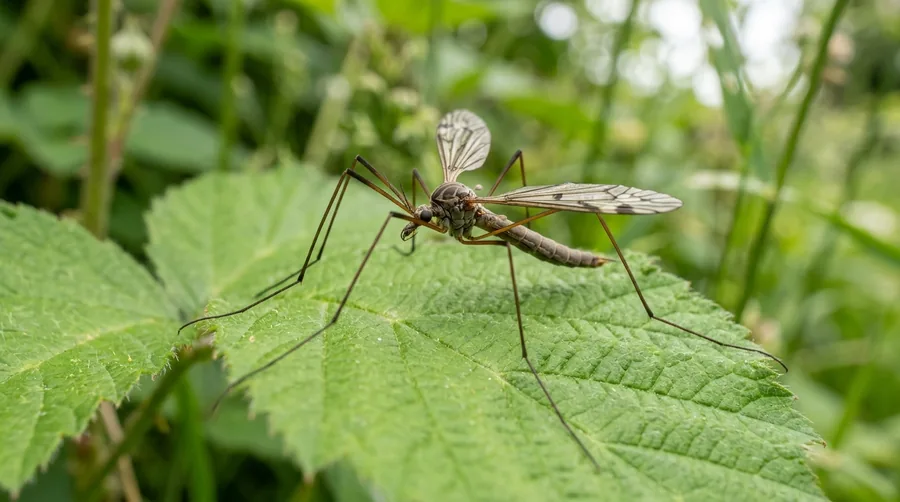
Large slender crane fly with extremely long legs resting on a window screen
Recommended Products


What it does
Adult crane flies are weak, clumsy fliers that drift toward lights and often bumble indoors, where they cling to walls and windows. They live only a few days, mate, lay eggs, and die, and most species do not feed as adults. Despite their intimidating size, they are completely harmless.
Where it lives
Adults rest in cool, damp, shaded vegetation near lawns, fields, streams, and wooded edges, and are drawn to porch lights at night. Larvae live in moist soil, turf, decaying leaves, and stream margins. Crane flies occur across the US; the invasive European crane fly is a notable lawn pest in the Pacific Northwest and Northeast.
How it breeds
Females lay eggs in moist soil or turf, often soon after emerging. Eggs hatch into tough-skinned larvae (leatherjackets) that feed on roots and organic matter through the cooler months, then pupate. Most species produce one generation per year, with adults emerging in a brief seasonal flush, often in late summer or fall.
What it eats
Most adult crane flies feed little or not at all, taking only water or nectar during their short lives. The larvae feed on decaying plant material, roots, and turf grasses in moist soil, which is where any real damage occurs.
Identification
Crane flies have a slender body 10-25 mm long with a single pair of narrow wings and six extremely long, fragile legs that break off easily. They resemble oversized mosquitoes but have no biting mouthparts and cannot bite. Larvae are gray-brown, legless, leathery grubs in the soil.
Signs of an infestation
- Large long-legged insects bumbling around lights
- Slow flies clinging to walls, screens, and windows
- Brown patches or thinning turf from larval feeding
- Grayish leatherjacket grubs found in lawn soil
- A seasonal surge of adults in late summer or fall
Prevention tips
- Reduce outdoor lighting or use bug-resistant bulbs at night
- Keep doors and windows screened to block adults
- Avoid overwatering lawns, which favors larvae
- Maintain healthy, well-drained turf to limit damage
- Simply capture and release the harmless adults indoors
Professional solutions
Adult crane flies need no treatment; they die within days on their own. Professional help is only occasionally warranted for lawns where invasive European crane fly larvae cause significant turf damage, confirmed by scouting the soil. In that case a turf specialist can advise on timing and any targeted larval treatment.
Health & safety
Crane flies are entirely harmless to people and pets. Contrary to a common myth, they are not venomous and do not bite or sting; adults have no functional biting mouthparts. There is no health risk. The only meaningful concern is cosmetic lawn damage from larvae in areas where they are abundant.
Relevant Products


Frequently asked questions
Are crane flies really giant mosquitoes that bite?
No. Crane flies are not mosquitoes and do not bite, sting, or feed on blood, and the myth that they are venomous is false. Most adults barely feed at all and live only a few days. They are completely harmless, if startling because of their size.
Do I need to get rid of crane flies?
Usually not. Adults die within days and pose no threat, so you can simply capture and release the ones that wander indoors. The only reason to act is if leatherjacket larvae are visibly damaging a lawn, which mainly affects certain regions like the Pacific Northwest.
What are leatherjackets?
Leatherjackets are the tough-skinned, gray-brown larvae of crane flies that live in moist soil and turf. They feed on grass roots and decaying matter and, in high numbers, can thin or brown a lawn. Most crane fly larvae, though, cause no noticeable damage.
Fact-checked by Morgan Vance, Editorial Director (editorial review, not a professional pest-control or medical sign-off). Last reviewed August 10, 2026. We correct anything a reader shows us is wrong — see our corrections policy.