Squash Bug
Anasa tristis · also called squash bugs, cucurbit bug
Quick answer
The squash bug (Anasa tristis) is a flat, grayish-brown shield-shaped insect and a major pest of squash, pumpkins, and other cucurbits. It pierces leaves and stems, injecting saliva that wilts and kills plants. It is a garden nuisance that does not bite people or infest homes.
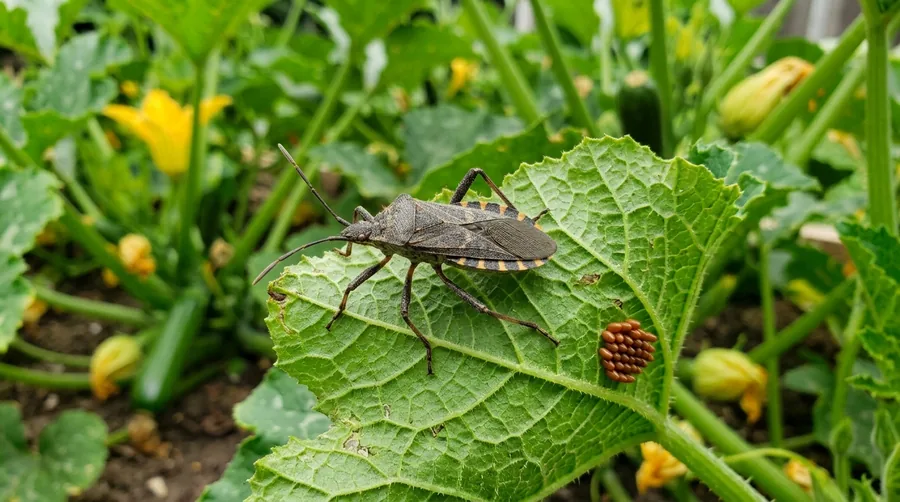
Flat grayish-brown squash bug on a squash leaf with orange bands along its abdomen
Recommended Products


What it does
Squash bugs feed in groups by piercing leaves, stems, and fruit and sucking sap, injecting saliva that disrupts the plant's water flow and causes leaves to wilt, yellow, and die back, a symptom called anasa wilt. They hide under leaves, mulch, and debris and move quickly when disturbed, releasing a sharp odor when crushed.
Where it lives
They live in vegetable gardens and on farms wherever cucurbits grow, sheltering under leaves, boards, mulch, and plant debris near the base of squash and pumpkin plants. Adults overwinter in protected spots such as dead leaves, wood piles, and under buildings, then return to gardens in early summer.
How it breeds
Overwintered adults mate in early summer and females lay clusters of shiny bronze-to-brick-colored eggs on the undersides of leaves, often in neat V-shaped patterns along veins. Eggs hatch in one to two weeks into pale nymphs that darken as they grow. There are usually one to two generations per year.
What it eats
Squash bugs feed on the sap of cucurbit plants, including squash, pumpkins, gourds, and to a lesser degree melons and cucumbers.
Identification
Adults are about 14-16 mm, flat-backed, and dark grayish-brown, often with alternating orange and brown bands along the edge of the abdomen. Nymphs are teardrop-shaped with a pale green to gray body and dark legs, and cluster together on leaves.
Signs of an infestation
- Clusters of shiny bronze eggs in V-patterns under leaves
- Wilting, yellowing, and dying squash or pumpkin leaves
- Groups of gray nymphs and flat brown adults on stems and leaf undersides
- A sharp odor when bugs are crushed or disturbed
Prevention tips
- Inspect leaf undersides and remove egg clusters and bugs by hand
- Clear plant debris, mulch, and boards where adults hide and overwinter
- Rotate cucurbit plantings and use row covers until flowering
- Grow squash on trellises and choose more resistant varieties where possible
Professional solutions
Squash bugs are a garden pest rather than a household one, and management is cultural: handpicking bugs and eggs, removing hiding spots, using row covers, and treating young nymphs early. Established adults are hard to kill. A garden-center or extension resource can advise on targeting nymphs, when control is most effective.
Health & safety
Squash bugs do not bite or sting people, spread human disease, or damage buildings, so they pose no direct health risk. Their impact is limited to garden and farm plants, where feeding can wilt and kill cucurbits. They can also transmit a bacterial plant disease, cucurbit yellow vine, between squash plants.
Relevant Products


Frequently asked questions
How do I get rid of squash bugs?
Focus on the young: check leaf undersides and scrape off the bronze egg clusters, handpick adults and nymphs into soapy water, and remove mulch and debris where they hide. Row covers protect plants early, and targeting small nymphs is far more effective than trying to kill tough adults.
Do squash bugs bite people?
No. Squash bugs feed only on plant sap and do not bite or sting humans or pets. They are strictly a garden pest of squash, pumpkins, and related crops, and pose no direct risk to people, though they can give off an unpleasant odor when crushed.
What damage do squash bugs cause?
By sucking sap and injecting saliva, they cause leaves to wilt, yellow, and die, a symptom known as anasa wilt, and heavy feeding can kill young plants. They can also spread cucurbit yellow vine disease between squash plants, compounding the damage.
Fact-checked by Morgan Vance, Editorial Director (editorial review, not a professional pest-control or medical sign-off). Last reviewed July 14, 2026. We correct anything a reader shows us is wrong — see our corrections policy.