
Western Conifer Seed Bug
Leptoglossus occidentalis · also called conifer seed bug, leaf-footed bug, leptoglossus
Quick answer
The western conifer seed bug (Leptoglossus occidentalis) is a large brownish insect with flattened, leaf-like hind legs that feeds harmlessly on pine and fir seeds. Each fall it wanders indoors to overwinter, alarming homeowners, but it does not bite, breed inside, damage the home, or spread disease.
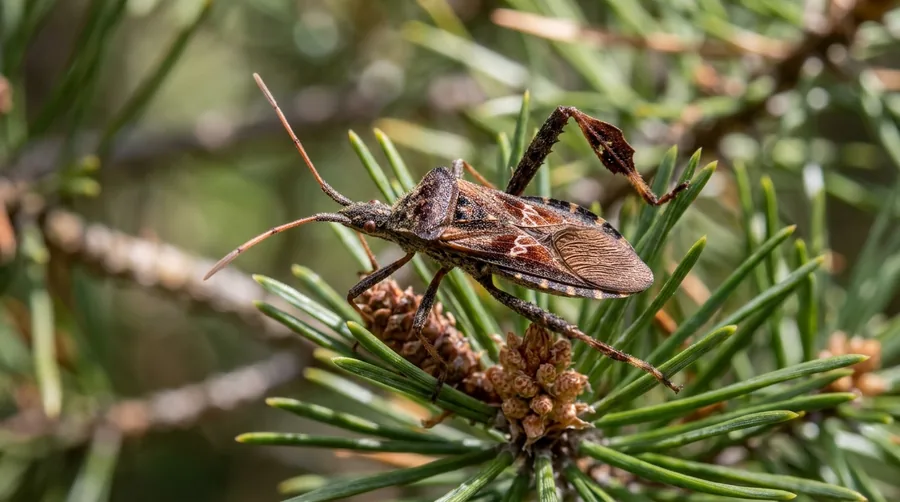
Reddish-brown western conifer seed bug showing flattened leaf-like hind legs on a window frame
Recommended Products
See the full ranking →


What it does
This bug spends the warm months feeding quietly on conifer seeds and is a strong but clumsy, buzzing flier. As temperatures drop in fall, adults seek sheltered places to overwinter and often blunder indoors. When handled or alarmed it may release a strong, piney, somewhat unpleasant odor.
Where it lives
Outdoors it lives on pine, fir, spruce, and other conifers. In fall it moves to protected sites and works into homes through gaps around windows, doors, siding, vents, and the roofline, then rests in attics, wall voids, and window frames until spring. Originally western, it is now widespread.
How it breeds
Adults overwinter in sheltered spots and become active in spring, when females lay rows of eggs on conifer needles. Nymphs feed on developing seeds through summer and mature into adults by late summer or fall. There is generally one generation per year.
What it eats
Nymphs and adults feed on the sap of developing seeds and cones of pines, firs, and other conifers; they do not feed on people, pets, food, or the structure of your home.
Identification
Adults are about 16-20 mm, dull reddish-brown, with a slightly flattened body and distinctive leaf-like flattened segments on the hind legs. Alarmed people sometimes mistake them for kissing bugs or stink bugs, but the flared hind legs and conifer-feeding habit set them apart.
Signs of an infestation
- Large brownish bugs indoors on walls or windows in fall and winter
- A piney or pungent odor when a bug is disturbed or crushed
- Bugs clustering on warm, sunny exterior walls in autumn
- Occasional buzzing fliers bumping into windows and lamps
Prevention tips
- Seal gaps around windows, doors, siding, and utility penetrations before fall
- Repair or install tight screens on windows, vents, and attic openings
- Use door sweeps and weatherstripping to close entry points
- Vacuum up any that get inside rather than crushing them
Professional solutions
This is a harmless occasional invader, and no chemical treatment is usually needed indoors. The most effective approach is exclusion, sealing the openings they use to get in, plus vacuuming up any that appear. For repeated heavy fall invasions, a professional can apply an exterior perimeter treatment to entry points.
Health & safety
The western conifer seed bug does not bite in the normal sense, sting, spread disease, or damage the home, so the health risk is essentially none. It can rarely poke defensively with its beak if pressed against skin, and its defensive odor is unpleasant but harmless. It is a nuisance, not a hazard.
Relevant Products




Frequently asked questions
Is the western conifer seed bug harmful?
No. It does not sting, spread disease, feed on people, or damage your house or food. It is simply a nuisance that wanders indoors in fall to overwinter. If disturbed it may give off a piney odor, but that is harmless.
Why are these bugs in my house in fall?
As the weather cools, adults look for sheltered places to spend the winter and often slip into homes through gaps around windows, siding, and the roofline. They do not breed indoors and will try to leave in spring.
How do I keep them out?
Exclusion works best: seal cracks and gaps around windows, doors, vents, and utility lines, and repair torn screens before fall. Vacuum up any that get inside. A perimeter treatment around entry points can help with heavy repeat invasions.
Fact-checked by Morgan Vance, Editorial Director (editorial review, not a professional pest-control or medical sign-off). Last reviewed June 18, 2026. We correct anything a reader shows us is wrong — see our corrections policy.