Harlequin Bug
Murgantia histrionica · also called harlequin cabbage bug, calico bug, fire bug
Quick answer
The harlequin bug (Murgantia histrionica) is a small, shield-shaped stink bug boldly patterned in black, red, and orange. A southern pest of cabbage, kale, and other cole crops, it sucks sap and injects toxic saliva that yellows and wilts plants. It harms gardens, not people or homes.
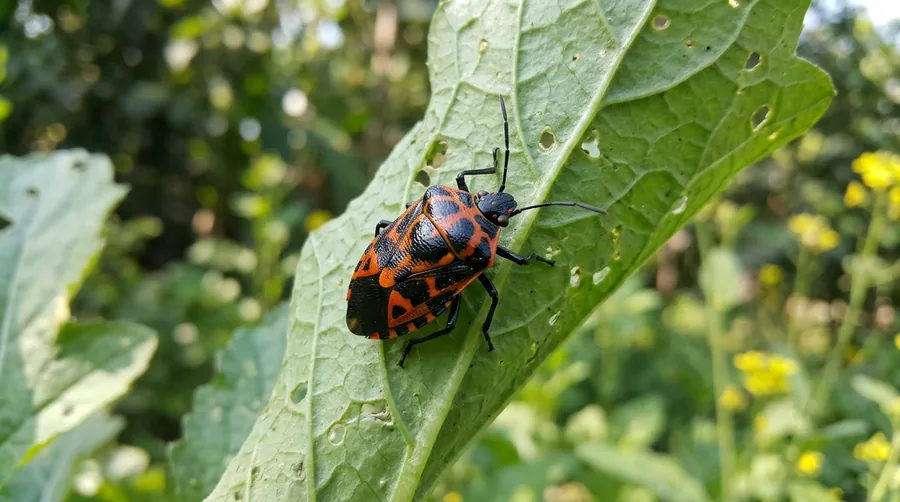
Shield-shaped harlequin bug boldly patterned in black, red, and orange on a cabbage leaf
Recommended Products


What it does
Harlequin bugs feed in groups on cole crops, piercing leaves and stems to suck sap and injecting saliva that leaves white or yellow blotches and causes wilting. Their bright coloring warns predators that they taste bad. They are most active in warm weather and can quickly build up on cabbage-family plants.
Where it lives
They live in vegetable gardens and farm fields on brassica crops and related weeds such as wild mustard. Primarily a southern pest, they cannot survive hard winters in the far north; where winters are mild, adults shelter in plant debris and garden trash and become active again as temperatures rise.
How it breeds
Females lay distinctive eggs that look like tiny white barrels ringed with black bands, standing in neat double rows on leaves. Nymphs hatch and feed in clusters, maturing through several stages. In warm southern regions there can be three or more generations per year, overlapping through the season.
What it eats
Harlequin bugs feed on the sap of cole crops such as cabbage, kale, collards, broccoli, cauliflower, mustard, and radish, along with related wild mustard-family plants.
Identification
Adults are about 8-11 mm, shield-shaped stink bugs boldly marked in black with red, orange, and yellow, making them easy to recognize. The barrel-shaped black-and-white striped eggs and the similarly colored, rounded nymphs are also distinctive and unlike most other garden pests.
Signs of an infestation
- White or yellow stippling and blotches on cabbage-family leaves
- Wilting or stunted cole crops during warm weather
- Barrel-shaped black-and-white eggs standing in rows on leaves
- Brightly colored black, red, and orange bugs clustered on plants
Prevention tips
- Remove and destroy crop residue and mustard-family weeds that harbor them
- Handpick adults, nymphs, and egg rows into soapy water
- Use trap crops of mustard to concentrate bugs for removal
- Cover young plants with row covers and rotate brassica plantings
Professional solutions
This is a garden and farm pest, controlled mainly through sanitation, handpicking, trap crops, and treating young nymphs when populations are high. Removing overwintering debris and weeds reduces the next season's numbers. A local extension service can recommend region-appropriate options for protecting cole crops when infestations are heavy.
Health & safety
Harlequin bugs do not bite or sting people, transmit human disease, or damage homes, so they present no health risk. Their bright warning colors signal a bad taste to predators, not danger to humans. The damage they cause is limited to garden and farm cole crops.
Relevant Products


Frequently asked questions
What plants do harlequin bugs attack?
They specialize in cole crops, the cabbage family, including cabbage, kale, collards, broccoli, cauliflower, mustard, and radish, plus related wild mustards. Their sap-feeding leaves white or yellow blotches and can wilt or kill young plants, especially in warm southern gardens.
Are harlequin bugs harmful to humans?
No. Harlequin bugs feed only on plants and do not bite, sting, or spread disease to people or pets. Their vivid black, red, and orange coloring warns predators that they taste unpleasant; it does not indicate any danger to humans.
How do I control harlequin bugs organically?
Handpick adults, nymphs, and the barrel-shaped eggs into soapy water, pull mustard-family weeds, and clear crop debris where they overwinter. Trap crops of mustard can lure and concentrate them for easy removal, and row covers protect young transplants.
Fact-checked by Morgan Vance, Editorial Director (editorial review, not a professional pest-control or medical sign-off). Last reviewed May 25, 2026. We correct anything a reader shows us is wrong — see our corrections policy.