
Spotted Wing Drosophila
Drosophila suzukii · also called SWD, spotted wing fruit fly, cherry vinegar fly
Quick answer
The spotted wing drosophila (Drosophila suzukii) is a small fruit fly from Asia that attacks ripening soft fruit, unlike common fruit flies that need rotting fruit. Females use a saw-like egg-layer to cut into healthy berries and cherries, and the larvae ruin the fruit from inside. It is harmless to people but a serious pest of home and commercial fruit.
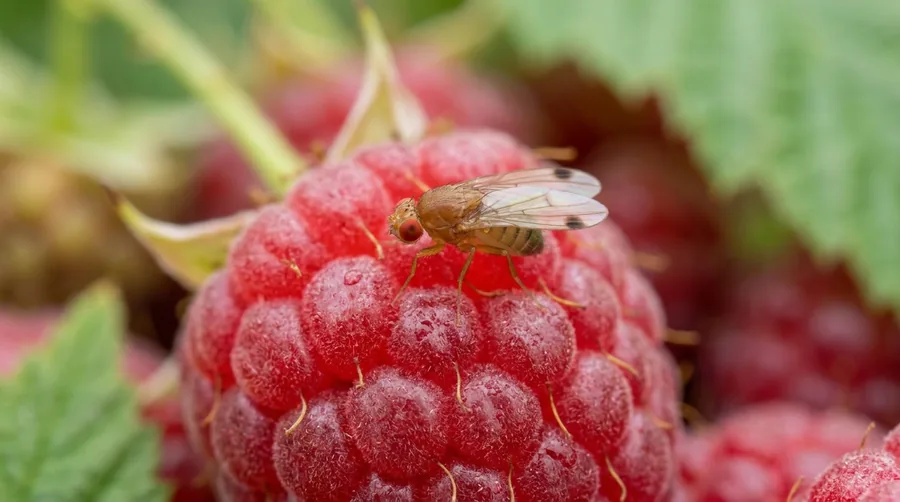
Small tan spotted wing drosophila fly with a dark spot on each wing tip on a ripe berry
Recommended Products



What it does
Unlike ordinary fruit flies that need overripe or rotting fruit, the spotted wing drosophila attacks sound, ripening fruit still on the plant. The female's serrated egg-laying organ saws into the skin of healthy berries and cherries to insert eggs. Larvae then feed inside, causing the fruit to soften, collapse, and rot, often before harvest.
Where it lives
This pest targets soft-skinned and stone fruit: blueberries, raspberries, blackberries, strawberries, cherries, and grapes, in home gardens, u-pick farms, and commercial orchards. Native to Asia, it spread across the US after arriving around 2008 and is now found in fruit-growing regions nationwide. Adults shelter in cool, shaded, humid spots.
How it breeds
Reproduction is rapid, with many overlapping generations a season, sometimes ten or more in warm areas. A female lays hundreds of eggs over her life, inserting them singly into ripening fruit. Eggs hatch in days, larvae feed inside for about a week, then pupate in or on the fruit. The cycle can complete in one to two weeks, so numbers explode.
What it eats
Larvae feed inside soft and stone fruit, consuming the flesh. Adults feed on fruit juices, nectar, and fermenting material. It is the egg-laying in healthy, ripening fruit, not just overripe fruit, that makes this species uniquely damaging.
Identification
Adults are tiny tan flies about a tenth of an inch with red eyes, like common fruit flies. The clue is the male's single dark spot near each wing tip; females lack spots but have a large, saw-toothed ovipositor visible under magnification. Small breathing tubes poking from fruit and soft, sunken, weeping spots on berries indicate infestation.
Signs of an infestation
- Soft, sunken, or weeping spots on ripening berries and cherries
- Tiny white maggots inside otherwise good-looking fruit
- Fruit collapsing or rotting faster than normal near harvest
- Small tan flies, some with wing spots, around fruit plants
- Larvae floating out when ripe fruit is soaked in salt water
Prevention tips
- Harvest ripe fruit promptly and often, leaving none to overripen
- Remove and destroy fallen, damaged, and overripe fruit
- Refrigerate picked fruit quickly to stop larval development
- Use fine insect netting over berry bushes and small fruit trees
- Hang vinegar or yeast-sugar traps to monitor and detect adults early
Professional solutions
Spotted wing drosophila is hard to control because it breeds so fast and attacks ripening fruit. Home growers rely on sanitation, netting, prompt harvest, and monitoring traps. For serious garden or farm losses, an advisor or licensed applicator can recommend labeled insecticides on a careful spray schedule that respects pre-harvest intervals and pollinator safety.
Health & safety
The spotted wing drosophila poses no health risk to people or pets; it does not bite, sting, or spread human disease, and accidentally eaten larvae are harmless if unpleasant to think about. The damage is economic and horticultural: it can destroy a large share of a berry or cherry crop, both in home gardens and on farms.
Relevant Products


Frequently asked questions
How is spotted wing drosophila different from regular fruit flies?
Ordinary fruit flies lay eggs in overripe or rotting fruit. Spotted wing drosophila attacks healthy, ripening fruit still on the plant, using a saw-like egg-layer to cut into the skin. That is why it causes real crop loss, ruining berries and cherries before you would normally see any spoilage.
Are the maggots in my berries dangerous to eat?
No. The tiny larvae are not harmful if accidentally eaten, though understandably off-putting. To check fruit, soak it in salt water and any larvae will float out. Picking fruit promptly, refrigerating it quickly, and removing overripe fruit all reduce infestation.
How do I protect my berries from spotted wing drosophila?
Harvest often so no fruit overripens, remove fallen and damaged fruit, and refrigerate your picks fast. Fine netting over bushes keeps females from laying eggs, and vinegar or yeast-sugar traps help you catch the flies early. Because it breeds so fast, sanitation and timing matter more than any single spray.
Fact-checked by Morgan Vance, Editorial Director (editorial review, not a professional pest-control or medical sign-off). Last reviewed July 1, 2026. We correct anything a reader shows us is wrong — see our corrections policy.