
Vegetable Leafminer
Liriomyza sativae · also called vegetable leafminer, serpentine leafminer, melon leafminer
Quick answer
The vegetable leafminer (Liriomyza sativae) is a tiny black-and-yellow fly whose larvae tunnel winding, whitish mines between the surfaces of leaves. It attacks tomatoes, melons, beans, and many vegetables and flowers, reducing vigor and marring appearance. Adults also stipple leaves while feeding. It is harmless to people but a widespread garden and crop pest.
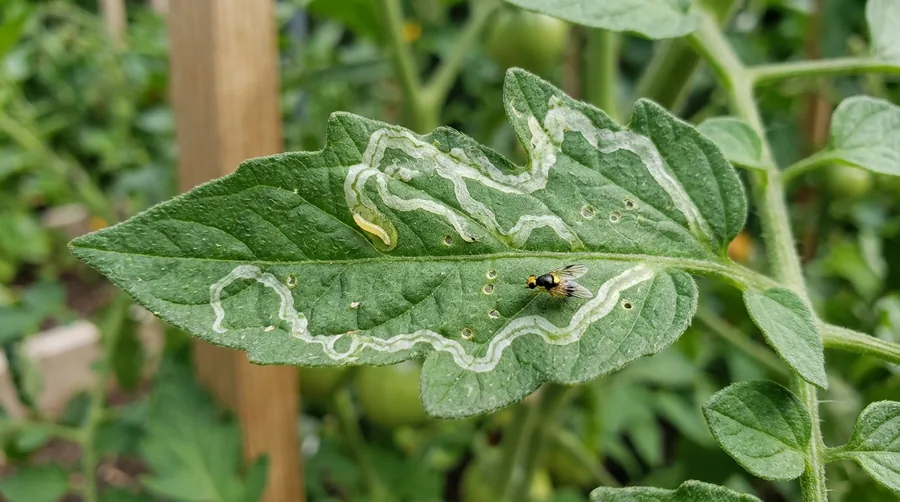
Winding white serpentine leaf mines made by vegetable leafminer larvae on a tomato leaf
Recommended Products


What it does
Vegetable leafminer larvae feed between the upper and lower leaf surfaces, cutting winding, pale tunnels that widen as the maggot grows. Heavy mining reduces photosynthesis, weakens plants, and can cause leaves to dry and drop. Adult females also puncture leaves with their egg-layer to feed on sap, leaving tiny pale speckles, and these punctures create egg sites.
Where it lives
This highly adaptable pest attacks many plant families: tomato, pepper, melon, squash, beans, peas, lettuce, and ornamentals, in gardens, greenhouses, and fields. Native to the Americas, it is most damaging in warm regions of the southern, south-central, and southwestern US, and year-round in greenhouses and mild climates.
How it breeds
The life cycle is short, giving many overlapping generations a year. Females insert eggs into leaf tissue. Larvae mine the leaf for one to two weeks, then cut a slit, drop, and pupate on the leaf or in the soil. Adults emerge within one to two weeks. In warm conditions, a generation can finish in as little as two to three weeks.
What it eats
Larvae eat the inner leaf tissue as they mine, while adult females also feed on the sap that wells up from leaf punctures. They feed on a very wide range of vegetables and flowering plants but do not attack roots, fruit interiors, or anything in the home.
Identification
The adult is a tiny fly, about a sixteenth of an inch, mostly black with yellow markings on the head and back. The clearest sign is the damage: narrow, winding, whitish or tan serpentine mines on leaves, plus fine pale stipple marks from adult feeding. The pale maggot can sometimes be seen at the growing end of a mine.
Signs of an infestation
- Winding, whitish serpentine trails across leaves
- Fine pale speckling from adult feeding punctures
- Yellowing, drying, or dropping of heavily mined leaves
- Tiny black-and-yellow flies around affected plants
- Reduced vigor and yield on tomatoes, melons, and beans
Prevention tips
- Inspect transplants and remove leaves with fresh mines
- Encourage parasitic wasps, the main natural control, by avoiding broad-spectrum sprays
- Remove and destroy heavily mined leaves and crop debris
- Use floating row covers on young plants where practical
- Keep plants healthy so they tolerate light mining
Professional solutions
Light leafminer damage is often tolerable, and preserving parasitic wasps usually keeps populations in check, so avoid unnecessary broad-spectrum insecticides that kill those beneficials. For serious garden or greenhouse infestations, an advisor or licensed applicator can recommend selective, labeled products such as those with translaminar action that reach the larvae inside the leaf.
Health & safety
The vegetable leafminer poses no health risk to people or pets; it does not bite, sting, or spread human disease. The harm is to plants: mined leaves lose vigor and can dry and drop, cutting the yield and appearance of vegetables and ornamentals. Lightly mined leafy greens are safe to eat once the affected leaves are trimmed away.
Relevant Products


Frequently asked questions
What makes the squiggly white lines on my plant leaves?
Those winding, pale trails are leaf mines made by leafminer larvae, often the vegetable leafminer, feeding between the leaf surfaces. Each line widens as the maggot grows. The mines are unsightly and reduce a leaf's vigor but do not make lightly affected leafy greens unsafe once you trim the damaged parts.
How do I control leafminers naturally?
Remove and destroy leaves with fresh mines, and avoid broad-spectrum sprays that kill the tiny parasitic wasps that are the leafminer's main natural enemy. Row covers protect young plants, and keeping plants healthy helps them shrug off light mining. Preserving beneficials usually keeps leafminers in check.
Are leafminers harmful to the whole plant?
Usually only cosmetic on established plants, but heavy mining reduces photosynthesis and can cause leaves to yellow, dry, and drop, lowering yield, especially on seedlings and in greenhouses. Tomatoes, melons, and beans are common hosts. Prompt removal of mined leaves and protecting natural enemies keep damage manageable.
Fact-checked by Morgan Vance, Editorial Director (editorial review, not a professional pest-control or medical sign-off). Last reviewed June 11, 2026. We correct anything a reader shows us is wrong — see our corrections policy.