
Potato Leafhopper
Empoasca fabae · also called potato leafhopper, bean leafhopper, PLH
Quick answer
The potato leafhopper (Empoasca fabae) is a tiny, bright green, wedge-shaped insect that sucks sap from potatoes, beans, alfalfa, and many crops. Its feeding injects a toxin that causes hopperburn, curling and browning leaf edges. It cannot survive northern winters and migrates north each year. It is harmless to people but a major crop pest.
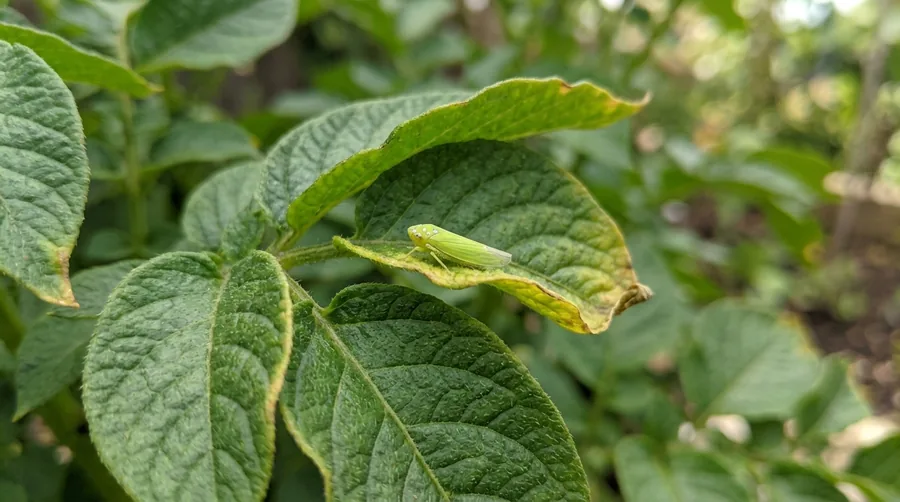
Tiny bright green wedge-shaped potato leafhopper on the underside of a bean leaf
Recommended Products


What it does
Potato leafhoppers are fast, jumping, sap-sucking insects that feed on the undersides of leaves. As they feed they inject saliva that disrupts the plant's vascular system, producing hopperburn: leaf tips and edges that yellow, curl, and brown, along with stunting. Damage can appear well before the tiny hoppers are noticed. They scatter and fly readily when disturbed.
Where it lives
This pest feeds on a wide range of crops, including potato, beans, alfalfa, clover, apple, and many vegetables, in fields and gardens. It cannot overwinter in cold northern climates and instead survives along the Gulf and southern states, migrating north on spring winds each year to reinfest the Midwest, Northeast, and beyond.
How it breeds
After migrating north, adults lay eggs inside leaf veins and stems. Nymphs, which look like smaller wingless adults, feed and molt through several stages over about two weeks, then mature into winged adults. Several overlapping generations occur through the growing season until cold weather ends the northern population each fall.
What it eats
Potato leafhoppers feed only on plant sap, drawn from the phloem on the undersides of the leaves of potatoes, beans, alfalfa, and many other broadleaf crops. They do not chew leaves or attack roots, fruit interiors, or anything indoors; the toxin in their saliva causes most of the damage.
Identification
Adults are tiny, about an eighth of an inch, bright pale green, and wedge-shaped, tapering toward the rear, and they run sideways or hop when disturbed. Nymphs are similar but smaller and wingless. Because the insects are so small and quick, the curling, browning hopperburn on leaf margins is often the first and clearest sign.
Signs of an infestation
- Yellowing, curling, and browning of leaf edges (hopperburn)
- Stunted, cupped growth on beans, potatoes, or alfalfa
- Tiny bright green insects darting on leaf undersides
- Nymphs running sideways when a leaf is turned over
- Reduced yield and vigor during warm mid-season weather
Prevention tips
- Scout leaf undersides early and often, before hopperburn appears
- Use floating row covers on young, susceptible garden plants
- Choose tolerant or resistant varieties where available
- Avoid over-succulent growth from excess nitrogen that attracts hoppers
- Encourage natural enemies and avoid needless broad-spectrum sprays
Professional solutions
In gardens, row covers and early scouting usually suffice, and tolerant varieties reduce losses. Because damage often shows only after feeding, catching infestations early matters. For alfalfa, potatoes, and other field crops, an advisor or licensed applicator can set treatment thresholds and recommend labeled insecticides timed to protect yield while sparing pollinators.
Health & safety
The potato leafhopper poses no health risk to people or pets; it does not bite, sting, or spread human disease. Its impact is agricultural: the toxin in its saliva causes hopperburn that stunts plants and can significantly cut yields of alfalfa, potatoes, beans, and other crops, making it one of the more economically important leafhoppers in the eastern US.
Relevant Products


Frequently asked questions
What is hopperburn?
Hopperburn is the yellowing, curling, and browning of leaf edges caused by potato leafhoppers feeding. As they suck sap, they inject saliva that disrupts the plant's plumbing, so leaves scorch and the plant stunts. The damage often shows up before you notice the tiny green insects themselves.
Where do potato leafhoppers come from each year?
They cannot survive cold northern winters, so they overwinter in the southern and Gulf states and migrate north on spring winds, reinfesting the Midwest and Northeast each season. That yearly arrival is why populations and damage can seem to appear suddenly in early summer.
How do I protect my beans and potatoes from leafhoppers?
Scout leaf undersides early, before hopperburn appears, and use floating row covers on young plants. Tolerant varieties and avoiding excess nitrogen help. For larger plantings, well-timed labeled insecticides based on scouting thresholds protect yield; preserving natural enemies keeps numbers down in the garden.
Fact-checked by Morgan Vance, Editorial Director (editorial review, not a professional pest-control or medical sign-off). Last reviewed June 4, 2026. We correct anything a reader shows us is wrong — see our corrections policy.