
Asparagus Beetle
Crioceris asparagi · also called common asparagus beetle, asparagus beetle
Quick answer
The common asparagus beetle (Crioceris asparagi) is a small, metallic blue-black beetle with cream spots and red margins that feeds only on asparagus. Adults and grub-like larvae chew spears and fern, and dark eggs stuck on spears reduce quality. It is harmless to people but the main insect pest of home and commercial asparagus.
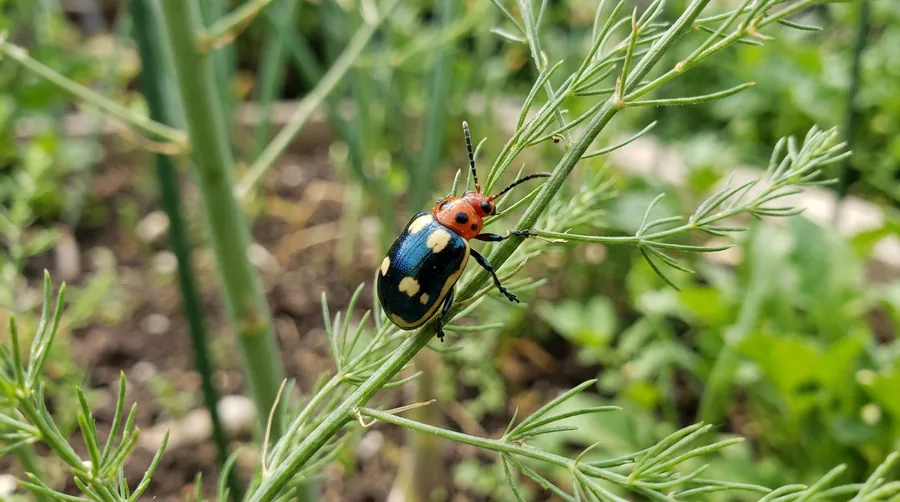
Metallic blue-black common asparagus beetle with cream spots and red margins on an asparagus spear
Recommended Products


What it does
Common asparagus beetles feed on emerging spears and the summer fern, chewing the surface and defoliating shoots. Their feeding scars and bends spears and cuts down the fern that the plant needs to store energy for next year. Adults are quick to drop or scurry to the far side of a stem when approached, making them easy to miss.
Where it lives
This beetle lives only where asparagus grows: home garden beds and commercial asparagus fields. It is found across the US wherever asparagus is cultivated. Adults overwinter in sheltered spots such as garden debris, hollow stems, and under bark near the planting, emerging in spring as the first spears appear.
How it breeds
There are two or more generations a year. Adults emerge in spring and lay dark, oval eggs standing on end in rows along the spears and fern. Slug-like gray larvae hatch and feed on the fern for one to two weeks, then drop to the soil to pupate. New adults emerge to continue the cycle, with the last generation overwintering.
What it eats
Both adults and larvae feed exclusively on asparagus, eating the spears and the ferny summer foliage. They attack no other garden plants. The loss of fern is the bigger long-term problem, since it weakens the crown and reduces the next season's harvest.
Identification
The adult is about a quarter inch, metallic blue-black with roughly six cream or yellow spots and reddish margins on the wing covers. The larvae are plump, slug-like, and gray to olive with a dark head. The upright rows of dark eggs on spears are a distinctive and easy-to-spot sign of this beetle.
Signs of an infestation
- Dark, oval eggs standing on end in rows on spears
- Metallic spotted beetles on spears and fern
- Brown scarring and bent, misshapen spears
- Gray, slug-like larvae feeding on the fern
- Defoliated, bare fern stems by late summer
Prevention tips
- Handpick adults, larvae, and eggs during regular garden checks
- Harvest spears frequently in season to remove eggs with the crop
- Cut down and remove old fern in fall to destroy overwintering sites
- Encourage lady beetles and parasitic wasps that attack the eggs and larvae
- Keep the bed and surroundings free of debris where adults overwinter
Professional solutions
Asparagus beetle is usually managed in the garden by handpicking, frequent harvest, and fall sanitation. For heavier infestations, a labeled insecticide such as spinosad can be applied to spears or fern following the product directions and pre-harvest intervals. Commercial growers may need a professional advisor to time sprays and protect beneficial insects.
Health & safety
Common asparagus beetles are harmless to people and pets; they do not bite, sting, or carry disease. Their impact is limited to asparagus plantings, where feeding scars spears and defoliates the fern, weakening the crown and reducing future harvests. Any beetles or eggs on harvested spears are easily rinsed off and are not a health concern.
Relevant Products


Frequently asked questions
What are the dark specks on my asparagus spears?
Those are usually the eggs of the common asparagus beetle, dark, oval, and standing on end in rows along the spear. They are harmless to eat and rinse off easily, but they signal the beetle is active. Handpicking adults and harvesting often helps keep numbers down.
How do I get rid of asparagus beetles?
Handpick adults, larvae, and eggs during frequent checks, and harvest spears often to remove eggs with the crop. Cut and remove old fern in fall to destroy overwintering beetles. For heavy pressure, a labeled spinosad spray works; encouraging lady beetles and parasitic wasps helps too.
Do asparagus beetles damage other vegetables?
No. Both the adults and larvae feed only on asparagus. They will not move to your tomatoes, beans, or other crops. The concern is confined to the asparagus bed, where losing the summer fern to feeding weakens the crown and lowers next year's spear harvest.
Fact-checked by Morgan Vance, Editorial Director (editorial review, not a professional pest-control or medical sign-off). Last reviewed June 9, 2026. We correct anything a reader shows us is wrong — see our corrections policy.