Leafhopper
Cicadellidae spp. · also called leafhoppers, sharpshooter, potato leafhopper
Quick answer
Leafhoppers are small, wedge-shaped insects, roughly 1/8 to 1/2 inch, that hop or run sideways and suck sap from leaves and stems. Feeding causes stippling, yellowing, and browning called hopperburn, and some species spread plant diseases such as aster yellows and curly top. They are a widespread garden and crop pest.
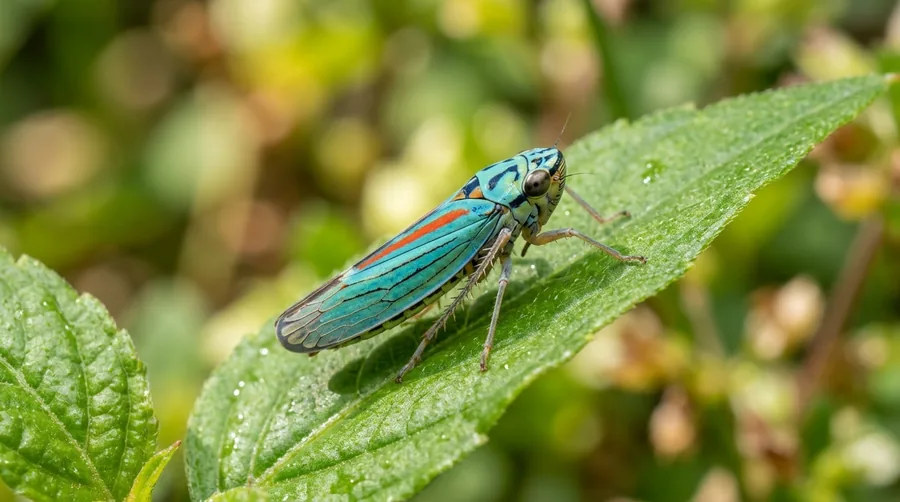
Slender green wedge-shaped leafhopper resting on the edge of a green leaf
Recommended Products


What it does
Leafhoppers suck sap from leaves and stems and are quick to hop or dart sideways when approached. Their feeding removes plant fluids and can inject saliva that damages tissue, causing stippling, yellowing, and the browned, scorched leaf edges known as hopperburn. Some species also spread plant pathogens as they feed.
Where it lives
Leafhoppers live outdoors on a huge range of plants: garden vegetables, fruit, ornamentals, grasses, trees, and weeds. They are found across the US and are most active in the growing season. Many overwinter as eggs or adults in plant debris and weeds, or, for some, migrate up from warmer southern areas.
How it breeds
Females insert eggs into leaf veins or stems. Wingless nymphs hatch and pass through about five stages, feeding as they grow and molting into winged adults. There are commonly two to several generations per season, depending on species and climate, so populations can build through the summer.
What it eats
Leafhoppers feed exclusively on plant sap from leaves and stems. Host plants vary widely by species and include beans, potatoes, grapes, apples, lettuce, grains, and many ornamentals and grasses.
Identification
Adults are slender, wedge-shaped insects, roughly 1/8 to 1/2 inch long, often green, brown, or yellow, sometimes with colorful markings. They hold their wings roof-like and move with a distinctive sideways scuttle. Nymphs are similar but wingless and also run sideways when disturbed.
Signs of an infestation
- Pale stippling or speckling on leaves from sap feeding
- Yellowed leaves with browned, scorched edges (hopperburn)
- Small wedge-shaped insects hopping off when plants are disturbed
- Cast white nymphal skins on leaf undersides
- Stunted or distorted growth, and disease symptoms on some crops
Prevention tips
- Remove weeds that host leafhoppers around gardens and fields
- Use floating row covers to protect vulnerable crops
- Encourage predators such as lady beetles, lacewings, and spiders
- Monitor with yellow sticky traps to catch build-ups early
- Clear plant debris where eggs and adults overwinter
Professional solutions
Many leafhopper populations are tolerable and controlled by natural enemies. When feeding damage or disease risk is high, insecticidal soap or neem can help against nymphs, and row covers exclude them. For crops where leafhoppers spread diseases like aster yellows or curly top, an extension advisor can recommend EPA-registered products and timing per the label.
Health & safety
Leafhoppers do not bite or sting people and carry no human diseases, so there is no direct health risk. Their importance is agricultural: heavy feeding causes hopperburn and stunting, and certain species transmit plant pathogens such as aster yellows and curly top virus that can seriously damage crops.
Relevant Products


Frequently asked questions
What is hopperburn?
Hopperburn is the yellowing and browning of leaf tips and edges caused by leafhoppers feeding and injecting saliva as they suck sap. It is common on beans, potatoes, and other crops, and severe cases can stunt plants and reduce yields.
Do leafhoppers harm people?
No. Leafhoppers do not bite, sting, or spread disease to humans. They matter because they damage plants through sap feeding and hopperburn, and some species transmit plant diseases like aster yellows and curly top that affect crops.
How do I control leafhoppers in my garden?
Remove weeds that host them, use floating row covers on vulnerable crops, and support natural predators. For active infestations, insecticidal soap or neem targeting nymphs helps, and monitoring with yellow sticky traps catches build-ups before they cause hopperburn.
Fact-checked by Morgan Vance, Editorial Director (editorial review, not a professional pest-control or medical sign-off). Last reviewed August 7, 2026. We correct anything a reader shows us is wrong — see our corrections policy.