Thrips
Order Thysanoptera · also called thrip, thunderflies, thunderbugs
Quick answer
Thrips are tiny, slender insects, often under 1/16 inch, that rasp plant tissue and suck the juices, leaving silvery streaks and black specks. They multiply fast and can spread damaging plant viruses like tomato spotted wilt. Thrips are mainly a garden, greenhouse, and crop pest and are not a meaningful human health threat.
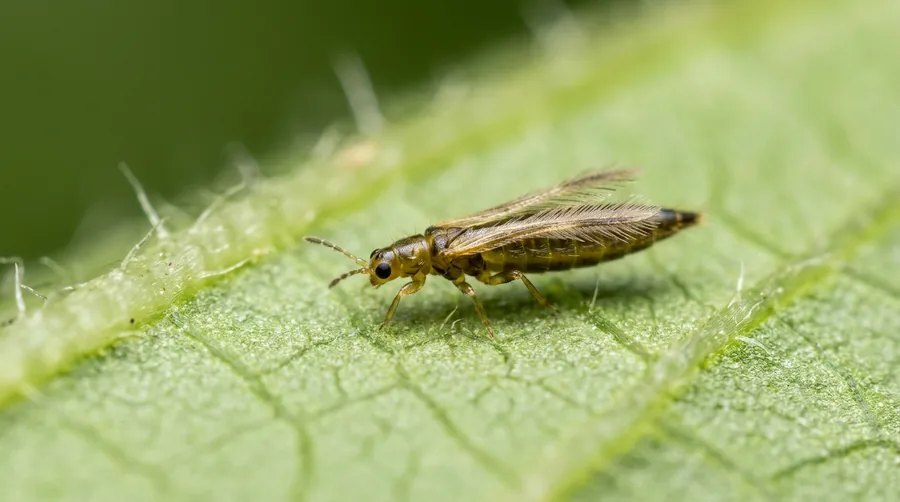
Extreme close-up of a slender yellow-brown thrips on a green leaf with silvery feeding scars
Recommended Products


What it does
Thrips use rasping-sucking mouthparts to scrape open plant cells and drink the sap. They feed on leaves, flowers, buds, and fruit, often hiding in tight, protected spots like unopened buds. Many species reproduce rapidly and build up unnoticed until the stippling and scarring they cause becomes obvious.
Where it lives
Thrips live outdoors on garden plants, field crops, and weeds, and thrive year-round in greenhouses and on houseplants. They favor flowers and new growth, and disperse easily on wind, plants, and clothing. Different species are found across the US, in gardens, farms, and indoor growing spaces.
How it breeds
Females insert eggs into plant tissue. The young pass through two feeding larval stages, then non-feeding prepupal and pupal stages, usually in the soil or leaf litter, before emerging as winged adults. In warm conditions a generation can finish in under two weeks, and many species can reproduce without mating.
What it eats
Thrips feed on plant sap from a wide range of hosts, including vegetables, fruit, flowers, and ornamentals. A few predatory species instead eat mites and other small insects, but the pest species damage leaves, petals, and developing fruit.
Identification
Adult thrips are very small and slender, often under 1/16 inch, ranging from pale yellow to brown or black, with narrow fringed wings. They are hard to see individually, so a hand lens helps. Tap a flower over white paper and look for tiny, fast-moving slivers to confirm them.
Signs of an infestation
- Silvery or whitish streaks and stippling on leaves and petals
- Tiny black specks of excrement on damaged surfaces
- Distorted, curled, or scarred new growth and buds
- Discolored streaks or silvering on fruit and flowers
- Tiny slivers that move when you tap a bloom over white paper
Prevention tips
- Inspect new plants for thrips before bringing them home
- Remove weeds and old plant debris that harbor thrips
- Use reflective mulch and blue or yellow sticky traps to monitor
- Keep plants healthy and avoid heavy nitrogen that spurs soft growth
- Encourage natural predators like minute pirate bugs and lacewings
Professional solutions
Light infestations often respond to insecticidal soap, horticultural oil, or neem, sprayed to reach hidden thrips and repeated as needed. Thrips resist many insecticides, so rotating products and using biological controls helps. For persistent greenhouse or crop problems, a licensed applicator or extension advisor can recommend an EPA-registered product and follow its label directions.
Health & safety
Thrips are a plant pest, not a human health risk. A few species will occasionally bite people during outbreaks, causing brief, minor skin irritation, but they do not feed on blood or transmit human disease. Their real significance is spreading plant viruses, such as tomato spotted wilt, that can ruin crops.
Relevant Products


Frequently asked questions
What are the tiny slivers damaging my plant leaves?
Thrips are likely. They are slender insects under 1/16 inch that rasp plant cells and cause silvery streaks, stippling, and black specks of frass. Tap an affected flower or leaf over white paper and watch for tiny, fast-moving slivers to confirm them.
Do thrips bite humans?
Thrips are plant feeders, not blood feeders. During heavy outbreaks a few species may land on skin and give a minor, prickly bite that causes brief irritation, but they do not live on people or spread human disease.
Why are thrips hard to get rid of?
They hide in tight buds and flowers, reproduce quickly, often without mating, and have developed resistance to many insecticides. Reaching them takes thorough, repeated sprays of products like insecticidal soap or neem, rotated with other controls, plus removing weeds and debris.
Fact-checked by Morgan Vance, Editorial Director (editorial review, not a professional pest-control or medical sign-off). Last reviewed July 8, 2026. We correct anything a reader shows us is wrong — see our corrections policy.