Mealybug
Pseudococcidae spp. · also called mealybugs, mealy bug, citrus mealybug
Quick answer
Mealybugs are small, soft, oval insects covered in a white, cottony wax that makes them look like specks of fluff on stems and leaf joints. They suck sap, weaken plants, and leave sticky honeydew and sooty mold. Common on houseplants, greenhouse crops, and outdoor plants, they rarely bother people directly.
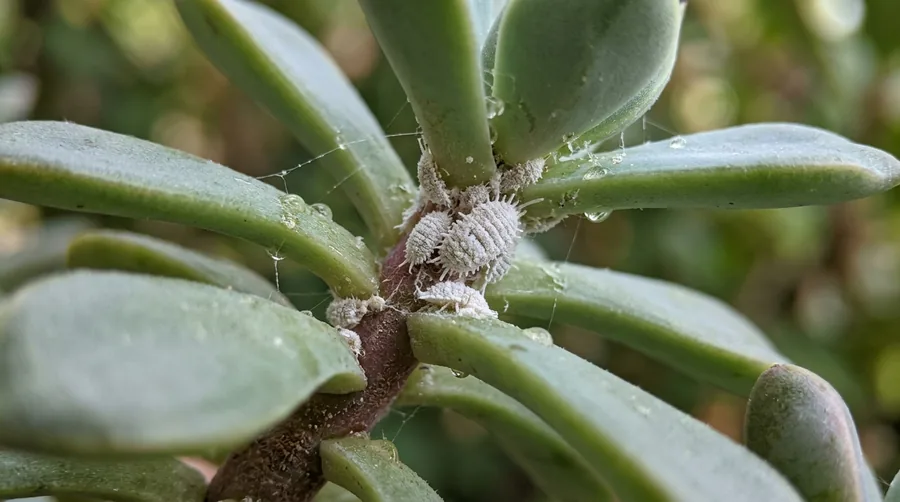
White cottony mealybugs clustered in the leaf joints of a green houseplant stem
Recommended Products


What it does
Mealybugs are slow-moving sap suckers that cluster in sheltered spots such as leaf joints, stem crotches, and leaf undersides. As they feed they weaken the plant and excrete sticky honeydew, which drips onto lower leaves and grows black sooty mold. Ants often tend and protect them for the honeydew.
Where it lives
Mealybugs thrive on houseplants and in greenhouses year-round, and on outdoor ornamentals and crops in warm weather. They hide in protected crevices, under leaves, on roots, and where stems meet, and spread on infested plants, tools, and hitchhiking ants. They are found on indoor plants nationwide.
How it breeds
Females lay dozens to hundreds of eggs, often in a cottony egg sac, or in some species give birth to live young. Mobile crawlers hatch and settle to feed, molting through several nymph stages. Generations overlap and can complete in about a month in warm conditions, so infestations build quickly indoors.
What it eats
Mealybugs feed on plant sap. They attack a wide range of hosts, including many houseplants, citrus, grapes, succulents, orchids, and greenhouse and tropical ornamentals, feeding on stems, leaves, and sometimes roots.
Identification
Mealybugs are small, soft, oval insects, about 1/8 inch long, coated in white, cottony or mealy wax, often with short filaments around the edge. They look like bits of white fluff on stems and leaf joints. White cottony egg masses and sticky honeydew nearby help confirm them.
Signs of an infestation
- White, cottony fluff in leaf joints and on stems
- Sticky honeydew on leaves and surfaces below
- Black sooty mold growing on the honeydew
- Yellowing, wilting, or stunted plant growth
- Ants trailing to and from an infested plant
Prevention tips
- Inspect new plants carefully before bringing them indoors
- Isolate new or gift plants for a few weeks to watch for pests
- Wipe down and inspect houseplants regularly
- Avoid over-fertilizing, which encourages soft, susceptible growth
- Control ants that protect and spread mealybugs
Professional solutions
Dab small infestations with a cotton swab dipped in rubbing alcohol, and treat plants with insecticidal soap, horticultural oil, or neem, repeating to catch protected crawlers. Heavy or root-infesting cases can be very hard to clear; a greenhouse or interior-plantscape professional can advise on systemic options and biological controls like the mealybug destroyer.
Health & safety
Mealybugs do not bite, sting, or transmit disease to people, so they pose no direct human health risk. They are a plant pest: sustained feeding weakens and can kill houseplants and crops, honeydew and sooty mold foul foliage, and a few species can spread plant viruses to grapes and other hosts.
Relevant Products


Frequently asked questions
What is the white cottony stuff on my houseplant?
It is very likely mealybugs. These soft, sap-feeding insects coat themselves in white, waxy fluff and gather in leaf joints and on stems. Sticky honeydew, black sooty mold, and trailing ants near the plant help confirm an infestation.
Are mealybugs harmful to humans?
No. Mealybugs do not bite, sting, or carry human disease. They only harm plants, weakening them by sucking sap, coating them in honeydew and sooty mold, and, for a few species, spreading plant viruses.
How do I get rid of mealybugs on plants?
Touch small clusters with a cotton swab dipped in rubbing alcohol, then treat the plant with insecticidal soap, horticultural oil, or neem and repeat every week or two to catch new crawlers. Isolate the plant and control ants that protect them.
Fact-checked by Morgan Vance, Editorial Director (editorial review, not a professional pest-control or medical sign-off). Last reviewed June 2, 2026. We correct anything a reader shows us is wrong — see our corrections policy.