
Whitefly
Aleyrodidae spp. · also called whiteflies, white fly, greenhouse whitefly
Quick answer
Whiteflies are tiny, moth-like insects about 1/16 inch long that cluster on the undersides of leaves and fly up in a white cloud when disturbed. They suck sap, coat plants in sticky honeydew and sooty mold, and can transmit plant viruses. They are a common garden, greenhouse, and houseplant pest.
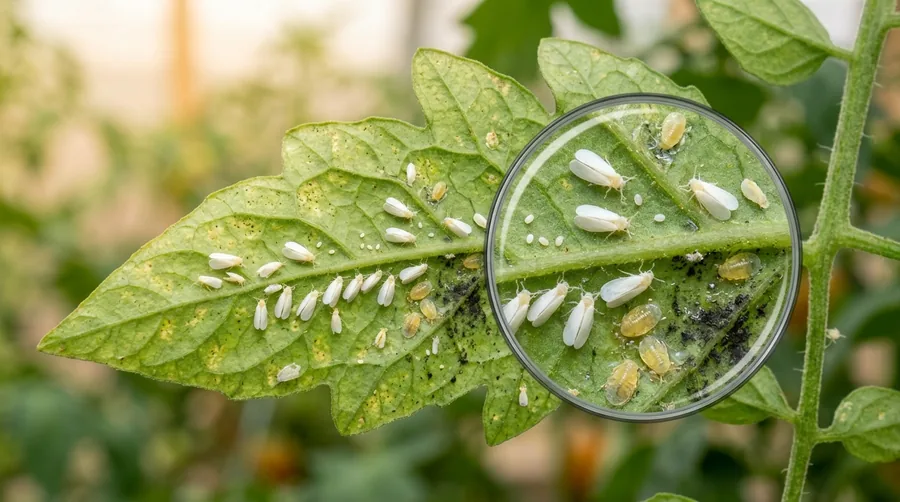
Many tiny white moth-like whiteflies clustered on the underside of a green leaf
Recommended Products


What it does
Whiteflies gather on the undersides of leaves and fly up in a small white cloud when a plant is disturbed. Both adults and their nymphs suck sap, weakening plants and causing yellowing and wilting. As they feed they excrete sticky honeydew that coats leaves and grows black sooty mold.
Where it lives
Whiteflies live on the undersides of leaves of many garden, greenhouse, and houseplants. They thrive in warm weather and stay active year-round in greenhouses and indoors. Outdoors they are worst in summer and in warm southern regions, but greenhouse species are a problem nationwide.
How it breeds
Females lay eggs on leaf undersides, often in a circle. Eggs hatch into a mobile crawler stage that soon settles, then passes through several sessile nymph stages before emerging as a winged adult. Generations overlap and can complete in about three to four weeks in warm weather, so numbers climb fast.
What it eats
Whiteflies feed only on plant sap, drawing it from the phloem of leaves. They attack a broad range of hosts, including tomatoes, peppers, squash and other cucurbits, beans, poinsettias, hibiscus, and many other vegetables and ornamentals.
Identification
Adults are tiny, moth-like insects about 1/16 inch long with powdery white wings held roof-like over the body. The immature stages look like flat, pale, oval scales fixed to the leaf underside. A cloud of tiny white insects rising from a disturbed plant is the classic sign.
Signs of an infestation
- Clouds of tiny white insects flying up when plants are disturbed
- Yellowing, wilting, or dropping leaves
- Sticky honeydew coating leaves and surfaces below
- Black sooty mold growing on the honeydew
- Flat white oval nymphs on the undersides of leaves
Prevention tips
- Inspect new and gift plants for whiteflies before bringing them in
- Remove and destroy heavily infested leaves early
- Use yellow sticky traps to detect and reduce adults
- Encourage natural enemies like lacewings, ladybugs, and parasitic wasps
- Avoid over-fertilizing, which promotes the soft growth they prefer
Professional solutions
Rinsing leaf undersides and applying insecticidal soap, horticultural oil, or neem can knock down light infestations when repeated regularly. Whiteflies resist many insecticides, so biological control matters, especially in greenhouses. For persistent crop or greenhouse infestations, a licensed applicator or extension advisor can recommend an EPA-registered product and correct label use.
Health & safety
Whiteflies do not bite, sting, or spread disease to people, so they pose no direct human health risk. Their impact is on plants: heavy feeding weakens and can kill hosts, honeydew and sooty mold foul foliage, and some species transmit damaging plant viruses to vegetable crops.
Relevant Products


Frequently asked questions
What are the tiny white bugs that fly off my plant?
They are almost certainly whiteflies. These tiny, moth-like sap feeders cluster on leaf undersides and fly up in a white cloud when the plant is shaken. Look for sticky honeydew, sooty mold, and flat white nymphs on the lower leaf surfaces to confirm.
Are whiteflies harmful to people?
No. Whiteflies do not bite, sting, or carry human disease. They are strictly a plant pest, damaging vegetables and ornamentals by sucking sap, coating them in honeydew and sooty mold, and sometimes spreading plant viruses.
How do I get rid of whiteflies?
Start by removing infested leaves and rinsing leaf undersides, then apply insecticidal soap, horticultural oil, or neem and repeat every several days. Yellow sticky traps and natural predators help, and greenhouse infestations often need biological controls to keep up.
Fact-checked by Morgan Vance, Editorial Director (editorial review, not a professional pest-control or medical sign-off). Last reviewed July 22, 2026. We correct anything a reader shows us is wrong — see our corrections policy.