
Sawtoothed Grain Beetle
Oryzaephilus surinamensis · also called saw-toothed grain beetle, grain beetle
Quick answer
The sawtoothed grain beetle (Oryzaephilus surinamensis) is a tiny, flat, dark-brown beetle named for the six tooth-like projections on each side of its thorax. Its slim body slips into packaging to infest cereal, flour, dried fruit, nuts, and pet food. A very common pantry pest, it does not bite or spread disease.
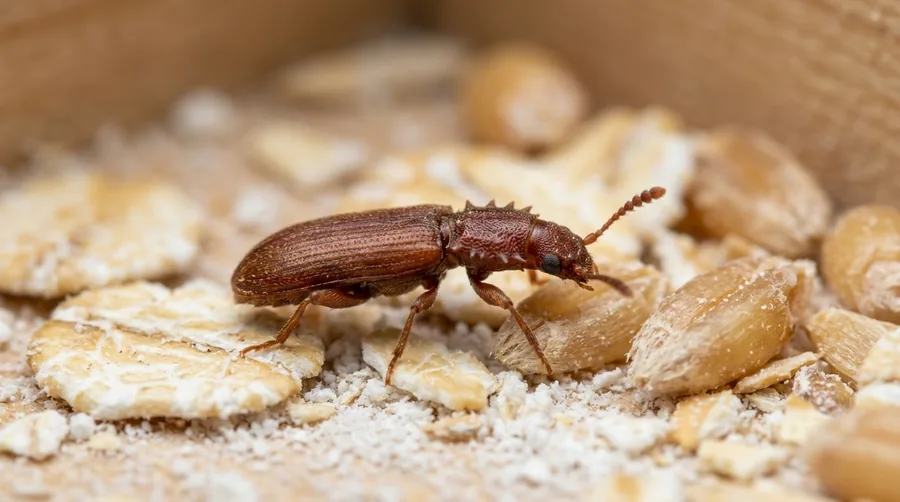
Tiny slender dark brown sawtoothed grain beetle showing tooth-like projections on its thorax
Recommended Products


What it does
The sawtoothed grain beetle is a very common stored-food pest whose tiny, flattened body lets it slip into packaging seams and cracks to reach dried goods. It feeds on a wide range of processed foods rather than whole grain and can build large numbers quickly. It does not fly, spreading instead by crawling and through infested products.
Where it lives
It infests home pantries, groceries, and warehouses, living in and around packages of cereal, flour, dried fruit, and other dry foods, and in spilled crumbs in cabinet cracks and shelf corners. It is found throughout the US and readily moves between an infested package and neighboring foods.
How it breeds
Females lay eggs loosely in or on food, and the slender larvae feed on the product before pupating, sometimes building a cocoon-like cell from food particles. In warm conditions a generation completes in a matter of weeks, so overlapping generations can develop rapidly in a neglected food source.
What it eats
It feeds on processed and dried plant foods, cereals, flour, oatmeal, dried fruit, nuts, sugar, pasta, birdseed, and dry pet food; it generally cannot attack sound, undamaged whole kernels.
Identification
Adults are tiny, about 2.5-3 mm, slender, flattened, and dark brown, with a diagnostic row of six saw-like tooth projections along each side of the section behind the head. The very similar merchant grain beetle is told apart only by subtle differences visible under magnification.
Signs of an infestation
- Tiny, slender brown beetles in or near dried foods
- Insects that slip into sealed-looking packaging seams
- Small beetles crawling in cabinet cracks and shelf corners
- Live insects found when sifting cereal, flour, or pet food
Prevention tips
- Store dried foods in airtight, hard-sided containers
- Clean up spills and vacuum cracks and corners in cabinets
- Rotate pantry stock and discard old or infested items
- Check newly bought dried goods for beetles before storing
Professional solutions
Management follows the standard pantry-pest approach: find and discard every infested package, clean the cracks and corners where crumbs collect, and store remaining food in airtight containers. Freezing or heating suspect items kills hidden stages. Persistent infestations in a home or business, where the source is elusive, can justify a professional inspection.
Health & safety
Sawtoothed grain beetles do not bite, sting, or spread disease, so they present no health hazard. Their significance is contamination and spoilage of stored dried foods, which should be discarded once infested. Accidentally consuming a few in food is not known to be harmful, but the affected products are best thrown out.
Relevant Products


Frequently asked questions
How do sawtoothed grain beetles get into sealed packages?
Their extremely small, flat bodies let them crawl through tiny gaps in packaging seams, folds, and closures that look sealed, including many bags and boxes. That is why transferring dried goods into airtight, hard-sided containers protects them far better than leaving food in its original packaging.
Are sawtoothed grain beetles harmful?
No. They do not bite, sting, or spread disease. The issue is contamination of stored cereals, flour, dried fruit, nuts, and pet food, which should be discarded once infested. Accidentally eating a few is not known to cause harm, but the food quality is compromised.
How do I get rid of sawtoothed grain beetles?
Search the pantry for infested packages, cereal, flour, dried fruit, nuts, or pet food, and throw them out. Clean cabinet cracks and corners where crumbs gather, and store remaining dried foods in airtight containers. Freezing or heating suspect items kills any hidden eggs and larvae.
Fact-checked by Morgan Vance, Editorial Director (editorial review, not a professional pest-control or medical sign-off). Last reviewed July 28, 2026. We correct anything a reader shows us is wrong — see our corrections policy.