
Foreign Grain Beetle
Ahasverus advena · also called foreign grain beetles, plaster beetle
Quick answer
The foreign grain beetle (Ahasverus advena) is a tiny reddish-brown beetle that feeds on mold, not grain itself. It appears in damp new homes and after moisture problems, so it signals excess humidity. It does not damage sound food or wood, and populations fade once the area dries out.
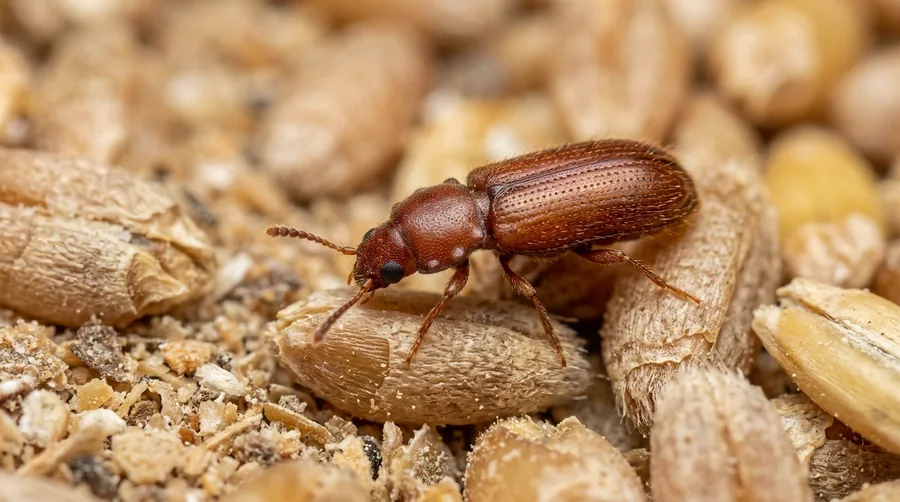
Tiny reddish-brown foreign grain beetle on a damp windowsill in a humid room
Recommended Products


What it does
Foreign grain beetles feed on microscopic mold rather than on grain, so their presence reflects damp, mold-prone conditions. Adults can fly and are drawn to lights and windows, where homeowners often first notice them. They surge when humidity is high and disappear as surfaces dry, making moisture the true target of control.
Where it lives
They are common in newly built or recently wetted homes, where fresh lumber and drywall stay damp and grow mold, and in damp basements, crawl spaces, and stored foods that have molded. They occur nationwide and are most abundant in warm, humid weather or wherever a moisture problem persists.
How it breeds
Females lay eggs where mold is developing. Larvae feed on the fungal growth and pupate nearby, completing a generation in a few weeks when warm and damp. Populations can spike quickly in a humid season or new structure, then collapse once the moisture and mold are gone.
What it eats
The beetle feeds primarily on molds and fungi growing on damp grain, other stored foods, and wet building materials. It does not eat sound, dry grain or wood, so it is an indicator of dampness rather than a direct destroyer of food or structure.
Identification
Adults are very small, about 1/16 inch, oval, and reddish-brown. A useful clue is a slight knob or projection at each front corner of the pronotum (the shield behind the head), visible under magnification, distinguishing it from similar small stored-product beetles.
Signs of an infestation
- Swarms of tiny beetles at windows in a new or damp home
- Beetles appearing during humid weather, then fading
- Visible mold or musty odor in affected areas
- Beetles in stored foods that have gone moldy
- Recurring numbers tied to a moisture problem
Prevention tips
- Lower indoor humidity with ventilation or a dehumidifier
- Fix leaks and dry out damp building materials
- Run fans and allow new construction to dry fully
- Discard moldy stored foods and clean the area
- Improve airflow in basements and crawl spaces
Professional solutions
These beetles rarely need chemical treatment; the fix is correcting moisture and letting the area dry, after which they vanish on their own. Call a professional if you cannot find or resolve the dampness, if mold is extensive, or to confirm the beetle and rule out a wood- or food-damaging species.
Health & safety
Foreign grain beetles do not bite, sting, spread disease, or damage sound food, wood, or fabric. They are a nuisance and, more usefully, a warning sign of excess indoor moisture and mold, which itself can affect air quality. Addressing the dampness solves both the beetles and the underlying condition.
Relevant Products


Frequently asked questions
Why do I suddenly have tiny beetles in my new house?
Foreign grain beetles feed on the mold that grows on damp new lumber and drywall, so they are common in newly built homes that are still drying out. They usually fade within the first year as materials dry. Running a dehumidifier and improving ventilation speeds this up.
Do foreign grain beetles damage food or the house?
No. They feed on mold, not on sound grain, wood, or fabric, so they cause no structural or real food damage. Their value is as an indicator that an area is too damp and growing mold, which is the actual problem to fix.
How do I get rid of foreign grain beetles?
Reduce moisture: ventilate, dehumidify, fix leaks, and let damp materials dry. Discard any moldy stored food and clean the area. Because they depend on mold, they disappear once humidity drops, so insecticides are rarely necessary.
Fact-checked by Morgan Vance, Editorial Director (editorial review, not a professional pest-control or medical sign-off). Last reviewed June 28, 2026. We correct anything a reader shows us is wrong — see our corrections policy.