
Mediterranean Flour Moth
Ephestia kuehniella · also called Mediterranean flour moths, mill moth, flour moth
Quick answer
The Mediterranean flour moth (Ephestia kuehniella) is a pale gray moth with wavy black lines across its forewings, and a major pest of flour mills and bakeries. Its larvae spin silk that mats flour and clogs milling machinery. The caterpillars feed on flour, cereals, and grain products, contaminating them with webbing and frass.
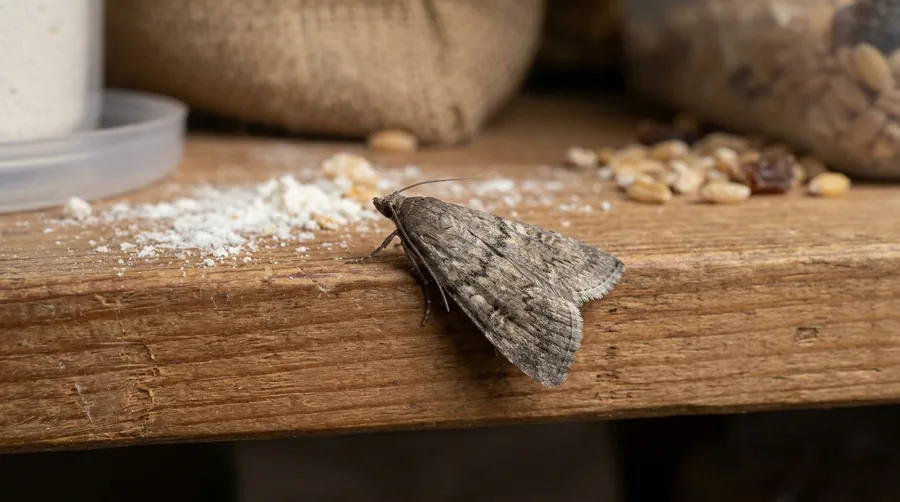
Pale gray Mediterranean flour moth with wavy black forewing lines resting near milled flour
Recommended Products
See the full ranking →

What it does
The larvae are the feeding stage and are notorious for the dense silk they spin as they tunnel through flour and meal. This webbing binds flour into lumps and, in mills, clogs sifters, chutes, and machinery, sometimes forcing shutdowns for cleaning. Adults rest by day and become active at dusk, and mature larvae wander to pupate.
Where it lives
It is chiefly a pest of flour mills, bakeries, food-processing plants, and warehouses, and can infest cereals and grain products in commercial storage. It favors warm, floury environments where milled grain accumulates. Found across the US, it is far more a commercial and industrial pest than a typical home invader.
How it breeds
A female lays a few hundred eggs on or near flour and grain. Larvae hatch, feed and web for several weeks, then spin cocoons to pupate, often away from the food. In warm facilities generations overlap and continue year-round, so infestations can be persistent and hard to break without thorough sanitation.
What it eats
Larvae feed on flour, meal, cereals, bran, and other milled and whole grain products, and occasionally on nuts and dried goods. Milled flour is the classic target, which is where their heavy silk webbing causes the most disruption.
Identification
Adults have a roughly 1-inch wingspan, with pale leaden-gray forewings crossed by wavy dark transverse lines and paler hindwings. Larvae are whitish to pinkish caterpillars with dark heads. Heavy silk webbing matting flour and clogging equipment is a hallmark of this species in mills.
Signs of an infestation
- Silk webbing clumping flour and cereal
- Webbing clogging sifters, chutes, or machinery
- Pale gray moths flying in mills or storage at dusk
- Whitish caterpillars in flour or milled grain
- Cocoons on walls, beams, and equipment
Prevention tips
- Maintain rigorous sanitation and remove flour accumulations
- Clean machinery, chutes, and cracks where flour collects
- Rotate stock and store products in sealed containers
- Use pheromone traps to monitor and time control
- Inspect incoming ingredients for infestation
Professional solutions
Because this moth thrives in the hidden flour buildup of mills and plants, control usually requires professional integrated pest management: intensive sanitation, pheromone monitoring, and targeted or facility-wide treatments. Home occurrences are rare and handled by discarding infested flour and cleaning; commercial cases need specialists.
Health & safety
Mediterranean flour moths do not bite, sting, or transmit disease. Their harm is contamination and economic loss: larvae foul flour and grain with webbing and droppings and can shut down milling equipment. Contaminated product should be discarded, and eating a small amount accidentally is not considered dangerous.
Relevant Products


Frequently asked questions
Why is the Mediterranean flour moth such a problem in mills?
Its larvae spin unusually dense silk as they feed in flour, which mats the product into lumps and clogs sifters, chutes, and machinery. In a flour mill or bakery this can disrupt operations and force shutdowns for cleaning, making it a serious commercial pest.
Is the Mediterranean flour moth common in homes?
It is much more a pest of mills, bakeries, and food plants than of homes. If it does appear in a pantry, it behaves like other flour-infesting moths, so the response is to discard infested flour and grain products and clean the storage area thoroughly.
How do you control Mediterranean flour moths?
In commercial settings, control centers on intensive sanitation to remove hidden flour buildup, pheromone monitoring, and professional integrated pest management. Discarding infested product and cleaning cracks and machinery where flour collects is essential, since the larvae breed in those accumulations.
Fact-checked by Morgan Vance, Editorial Director (editorial review, not a professional pest-control or medical sign-off). Last reviewed June 1, 2026. We correct anything a reader shows us is wrong — see our corrections policy.