


The single most effective defense against pantry pests, rodents, and ants in the kitchen is how you store food. Good storage denies pests the meal they came for and contains any that hitchhike in before they can spread. This guide lays out a practical, room-by-room storage system, complementing the pantry-moth and weevil prevention in this section.
Airtight Is the Core Principle
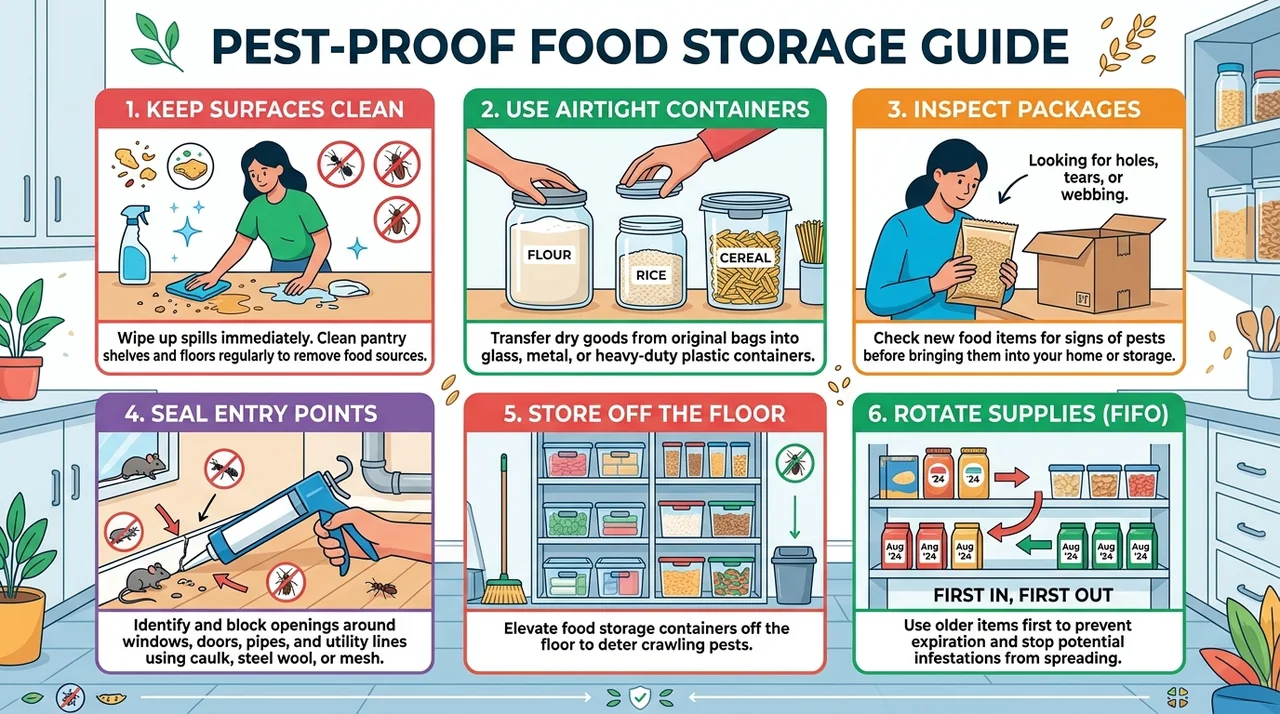
Original paper bags and cardboard boxes offer almost no protection, insects chew through them easily, and they let odors escape that attract ants and rodents. Transfer dry goods into containers that seal completely:
- Glass, metal, or hard, thick plastic with tight-fitting or gasketed lids. These keep new pests out and trap any eggs or larvae that arrived in the original packaging, stopping an outbreak from spreading jar to jar.
- Prioritize the high-risk staples: flour, cornmeal, rice, cereal, oats, pasta, dried beans, nuts, dried fruit, spices, baking mixes, and pet food.
- Label containers with the date so you can rotate stock and use older items first.
Build Habits That Reinforce Storage
Containers work best inside a clean, dry, well-managed kitchen:
- Wipe up crumbs and spills promptly, especially flour and sugar, and sweep the pantry floor and shelf corners.
- Keep it dry: fix leaks and reduce humidity, since many pests need moisture. Do not store food where condensation collects.
- Rotate stock and buy perishable dry goods in quantities you will use within a reasonable time.
- Freeze vulnerable items (flour, grains, nuts) for several days after purchase to kill any eggs before they hatch, then move them to airtight containers.
- Take out food trash regularly in a lidded bin, and rinse recyclables.
Cover the Rest of the Kitchen
Pantry pests are not the only concern; ants and rodents follow food anywhere.
- Store pet food in sealed containers, not left in an open bag or bowl, a very common overlooked attractant.
- Keep ripening fruit managed to avoid fruit flies, refrigerating or using it before it over-ripens.
- Keep counters clear of open food overnight, and store bread and baked goods in sealed containers or the fridge.
- For rodent-prone spaces like garages and basements, store bulk food and pet food in heavy metal or thick-plastic bins with secure lids, since rodents chew through bags and thin plastic.
This storage system does most of the pest-prevention work without any chemicals. If a specific pest problem still requires a pesticide, choose one labeled for the setting, follow the EPA-approved label exactly, and keep it away from food and food-contact surfaces. For any accidental exposure, call Poison Control at 1-800-222-1222.