

What a fresh wasp sting looks like
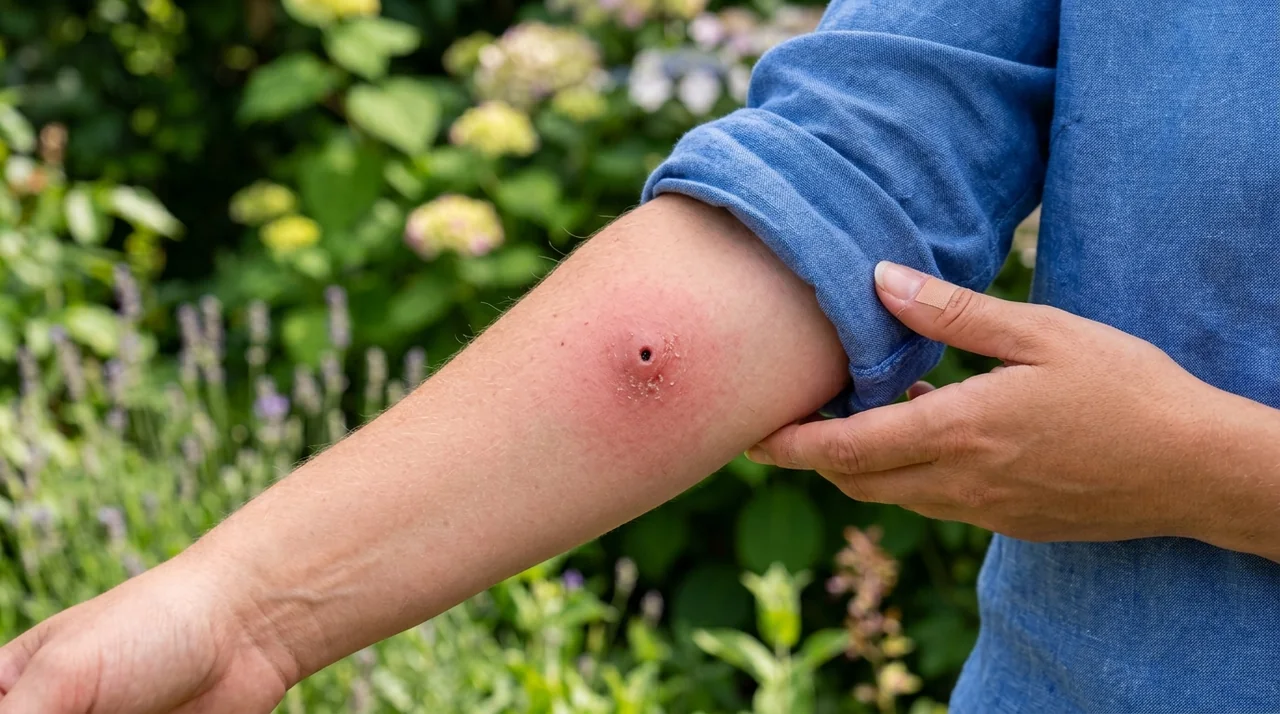
A wasp sting leaves a fairly distinctive mark. It looks much the same whether it came from a yellowjacket/" style="color: var(--pine-700, #1E5B3E); font-weight: 600; text-decoration: underline;">yellowjacket (Vespula) or a paper wasp (Polistes). Within the first minutes to hours you will typically see:
- A red, raised bump or welt
- A tiny central puncture point where the stinger went in
- Swelling, warmth, and tenderness around the spot
- Sharp or burning pain that gradually turns to itching
How the sting changes over hours and days
Most stings look and feel worst in the first several hours, then steadily improve. The redness and swelling often appear a bit larger the next morning before settling down. Over the next one to three days, the welt flattens and the color fades. Mild itching may take over as the skin heals. A small, firm bump can persist a little longer, which is normal.
Normal reaction versus a large local reaction
Doctors often describe two non-emergency patterns:
- Normal local reaction: a coin-sized area of redness, swelling, and pain that improves within a day or two.
- Large local reaction: swelling that spreads several inches around the sting over a day or so, then slowly settles. It can look alarming and feel uncomfortable, and it may last several days. On its own, though, it is generally not dangerous. People who get one large local reaction may get them again with future stings.
How is a wasp sting different from a bee sting?
The marks look similar, but there are clues. A honeybee usually leaves its barbed stinger and venom sac behind in the skin. You may see a tiny dark barb, which should be scraped or brushed out. Wasps keep their stinger, so there is nothing embedded. A single wasp can also sting several times, sometimes leaving more than one welt close together.
Signs of a severe allergic reaction
A small number of people react to wasp venom with a whole-body allergic response called anaphylaxis. This is a medical emergency. Call 911 immediately if, after a sting, you notice:
- Hives or itching spreading across the body
- Swelling of the face, lips, tongue, or throat
- Trouble breathing, wheezing, or chest tightness
- Dizziness, fainting, or a rapid heartbeat
Caring for a sting and when to see a doctor
For an ordinary sting:
- Wash the area with soap and water.
- Apply a cold pack wrapped in a cloth to ease pain and swelling.
- Consider an over-the-counter antihistamine or anti-itch cream per the label.
- Avoid scratching, which can break the skin and lead to infection.
This is general information, not medical advice. For reactions or medication questions, seek care or call Poison Control at 1-800-222-1222. If repeated stings trace back to a nest near your home, a licensed pest control professional can remove it safely. That is the best way to prevent future stings.