Yellowjacket
Vespula spp. · also called yellowjackets, yellow jacket, meat bee
Quick answer
Yellowjackets (Vespula and Dolichovespula species) are black-and-yellow wasps that nest underground or in wall voids. Aggressive scavengers, they swarm sugary drinks and picnic food in late summer and sting repeatedly when disturbed. They are the most common cause of insect stings and a serious risk to people allergic to wasp venom.
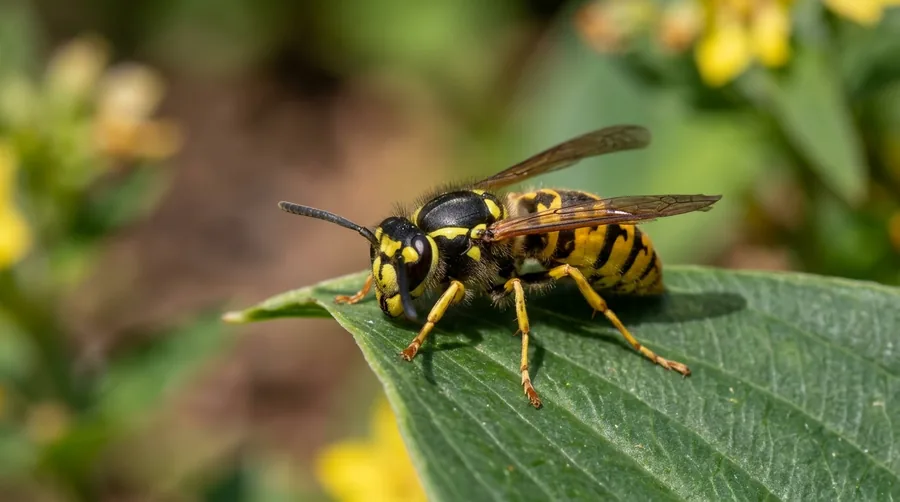
Black and yellow yellowjacket wasp feeding on a piece of fruit on an outdoor table
Recommended Products


What it does
Yellowjackets are social, aggressive, and defensive, stinging repeatedly if their nest is disturbed. Early in the season they hunt insects, but by late summer, as the colony peaks and natural food dwindles, they aggressively scavenge sugary drinks, fruit, and meat, making them a picnic and trash-can nuisance. Vibration near a hidden nest often triggers an attack.
Where it lives
Most species nest underground in abandoned rodent burrows, but they also nest in wall voids, attics, under decks, in dense shrubs, and in wall or foundation cavities. A single nest can hold thousands of wasps by late summer. They are found nationwide and are especially troublesome around yards, parks, and outdoor dining in the fall.
How it breeds
A lone queen starts the nest in spring; workers then expand it rapidly through summer, and large colonies can reach a few thousand wasps. In fall the colony produces new queens and males; only mated queens overwinter, and the nest, workers, and old queen die at frost. Nests are not reused the following year.
What it eats
Larvae are fed protein such as insects, carrion, and meat scraps, while adults crave sugars, especially in late summer, seeking nectar, fruit, soda, and sweets. This late-season shift toward human food and sugary drinks is what makes yellowjackets such an aggressive picnic pest.
Identification
Yellowjackets are about 1/2 inch, stocky, with crisp bright-yellow and black banding and a short, tight waist. They fold their wings lengthwise at rest and fly with legs tucked in, unlike the dangling-legged paper wasp. Rapid, darting flight and streams of wasps from a ground hole or wall gap are strong clues.
Signs of an infestation
- A steady stream of wasps entering a hole in the ground or a wall gap
- Aggressive wasps around garbage, food, and sweet drinks in late summer
- Multiple wasps darting around a deck, shrub, or lawn area
- Buzzing or rustling heard inside a wall void
- Painful stings when mowing or working near a hidden nest
Prevention tips
- Keep garbage cans tightly covered and rinse recyclables
- Cover food and sweet drinks at outdoor gatherings
- Seal cracks and gaps into wall voids, soffits, and vents
- Fill abandoned rodent burrows in the yard in spring
- Check inconspicuous areas for early-season nests before they grow
Professional solutions
Ground and wall-void yellowjacket nests are risky to treat because the colony is large and highly defensive, and disturbed wasps sting en masse. Nests in walls should be handled by a professional, since sealing the hole can drive wasps indoors. Anyone with a sting allergy should never attempt DIY treatment and should call a pro.
Health & safety
Yellowjackets are the leading cause of insect stings in the US and can sting repeatedly, injecting venom that causes intense pain and swelling. Multiple stings or a venom allergy can cause a severe, life-threatening reaction. Anyone with trouble breathing, throat or facial swelling, dizziness, or many stings needs emergency care immediately.
Relevant Products




Frequently asked questions
Why are yellowjackets so aggressive in late summer?
By late summer the colony is at its largest and the workers' natural insect prey has dwindled, so they aggressively scavenge sugary and protein-rich human food. Combined with a big, well-defended nest, this makes late summer and early fall the peak season for yellowjacket stings around picnics and trash.
How do I find a yellowjacket nest?
Watch for a steady, two-way stream of wasps returning to a single point, often a hole in the ground, a gap in siding, or a wall void. Observe from a safe distance during the day. Do not probe or seal the opening yourself, especially for a wall nest, since that can drive wasps into your living space.
Are yellowjackets dangerous?
They can be. Yellowjackets sting repeatedly and are the most common cause of insect stings in the US. For most people stings are very painful but not dangerous, but multiple stings or an allergy to wasp venom can be life-threatening. Seek emergency care for breathing trouble, swelling, or many stings at once.
Fact-checked by Morgan Vance, Editorial Director (editorial review, not a professional pest-control or medical sign-off). Last reviewed June 4, 2026. We correct anything a reader shows us is wrong — see our corrections policy.