
Paper Wasp
Polistes spp. · also called paper wasps, umbrella wasp, Polistes wasp
Quick answer
Paper wasps (Polistes species) are slender, long-legged wasps that build open, umbrella-shaped nests under eaves, railings, and grills. Brown to reddish with yellow markings, they are beneficial caterpillar hunters and fairly docile, but they will sting to defend the nest, which can be dangerous for people allergic to wasp venom.
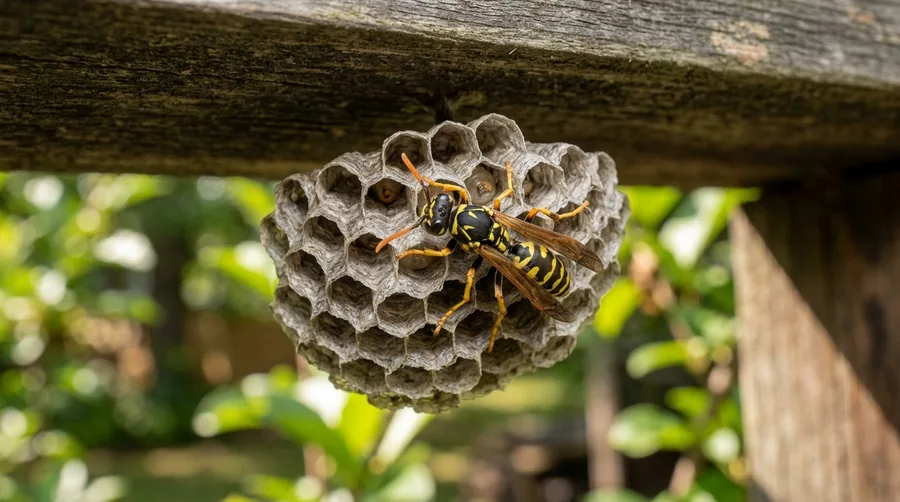
Brown and yellow paper wasp on an open umbrella-shaped nest under a wooden eave
Recommended Products


What it does
Paper wasps are semi-social and generally calm, hunting caterpillars and other soft insects to feed their larvae, which makes them useful garden predators. They fly with their long legs dangling. They are not naturally aggressive but will defend their nest, so most stings happen when a nest near a doorway or eave is disturbed.
Where it lives
They build open, paper nests shaped like an upside-down umbrella, attached by a single stalk under eaves, soffits, porch ceilings, railings, deck furniture, grills, and inside sheds and attics. Nests are common around homes nationwide, especially in sheltered spots close to human activity where they can go unnoticed until large.
How it breeds
A single overwintered queen starts a nest in spring, raising the first workers alone. The colony grows through summer to a few dozen wasps. In fall, new queens and males are produced; only the mated queens survive winter in sheltered spots, while the old nest and remaining wasps die off and the nest is not reused.
What it eats
Adults sip nectar and other sugars for energy, while the larvae are fed chewed caterpillars and other soft-bodied insects the workers capture. This predatory habit makes paper wasps beneficial for controlling garden pests.
Identification
Paper wasps are slender, 3/4 to 1 inch, brown to reddish-brown with yellow (sometimes reddish) markings and a distinctly pinched waist. In flight, their long hind legs hang below the body. The open, cellular, umbrella-shaped nest with visible hexagonal cells is the easiest way to identify them.
Signs of an infestation
- An open, umbrella-shaped nest hanging from a single stalk
- Wasps flying with their long legs dangling
- A few wasps repeatedly entering the same eave or railing
- Visible hexagonal paper cells on the underside of a nest
- Increased wasp activity around a porch or deck in summer
Prevention tips
- Knock down small starter nests in early spring before they grow
- Seal gaps and cracks around eaves, soffits, and attic vents
- Keep sweet drinks, food, and garbage covered outdoors
- Hang decoy nests, which may deter new queens from nesting nearby
- Inspect porches, grills, and playsets regularly in spring and summer
Professional solutions
Small, reachable nests can be treated at dusk with a wasp aerosol from a safe distance, but nests near entrances, in high or hidden spots, or that are large are safer for a professional. Anyone with a known wasp-sting allergy should not attempt DIY removal and should have a pro handle the nest.
Health & safety
Paper wasps sting to defend the nest and can sting more than once, causing sharp pain and swelling. For most people the sting is painful but not dangerous, but for those allergic to wasp venom it can trigger a serious, even life-threatening allergic reaction. Anyone with trouble breathing, swelling, or dizziness after a sting needs emergency care.
Relevant Products




Frequently asked questions
Are paper wasps aggressive?
Paper wasps are generally docile and focus on hunting caterpillars, but they will defend their nest if it is threatened. Most stings happen when someone gets too close to a nest near a door, eave, or railing without noticing it. Away from the nest, they usually ignore people.
Should I remove a paper wasp nest?
If a nest is in a low-traffic spot, it is often fine to leave it, since paper wasps help control garden pests and the colony dies off at frost. Remove nests near doorways, play areas, or high-traffic spots. Treat small reachable nests at dusk, or call a pro, and never attempt removal if you are allergic to stings.
What's the difference between a paper wasp and a yellowjacket?
Paper wasps are slimmer with longer dangling legs and build open, umbrella-shaped nests you can see the cells of. Yellowjackets are stockier, brighter yellow-and-black, more aggressive, and usually nest hidden underground or in wall voids. Yellowjackets are far more likely to sting unprovoked.
Fact-checked by Morgan Vance, Editorial Director (editorial review, not a professional pest-control or medical sign-off). Last reviewed June 8, 2026. We correct anything a reader shows us is wrong — see our corrections policy.