Bald-Faced Hornet
Dolichovespula maculata · also called bald-faced hornets, white-faced hornet, bald hornet
Quick answer
The bald-faced hornet (Dolichovespula maculata) is a large black-and-white wasp, actually a type of yellowjacket, that builds a gray, football-shaped paper nest in trees, shrubs, and on buildings. It aggressively defends the nest and can sting repeatedly, so an established nest is a job best left to a professional.
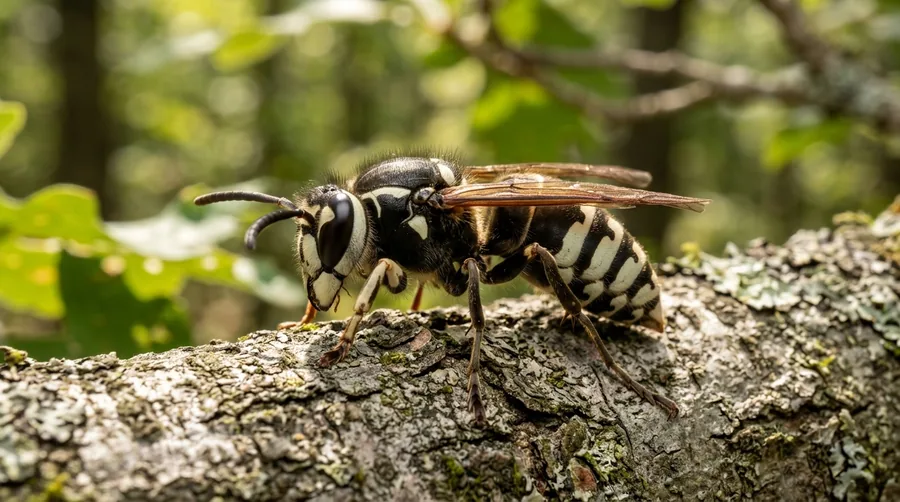
Black and white bald-faced hornet on a large gray football-shaped paper nest in a tree
Recommended Products


What it does
Bald-faced hornets are highly defensive of their large aerial nests and will swarm and sting repeatedly if the nest is disturbed or vibrated, even by a lawnmower nearby. Unlike honey bees, they can sting many times. Away from the nest they hunt flies and other insects and are far less confrontational.
Where it lives
They build enclosed, gray, papery nests shaped like an inverted teardrop or football, usually in trees and tall shrubs but also under eaves, on sheds, and on the sides of buildings. A mature nest can be basketball-sized and hold hundreds of workers. They are found across the US and southern Canada.
How it breeds
A lone overwintered queen builds a small nest in spring and raises the first workers, who then expand the nest and take over foraging and defense. The colony peaks in late summer at several hundred wasps. New queens and males emerge in fall; only mated queens overwinter, and the nest is abandoned and not reused.
What it eats
Adults feed on nectar, tree sap, and sugary liquids, and prey on flies, caterpillars, and other insects to feed the developing larvae. In late summer they are drawn to sweets and can scavenge at picnics and garbage, like their yellowjacket relatives.
Identification
Workers are 13-20 mm, mostly black with a distinctive white or ivory face and white markings on the rear of the abdomen. They are larger and more robust than a typical yellowjacket. The big, enclosed, gray paper nest with a single bottom entrance is the clearest identifying sign.
Signs of an infestation
- A large gray, football-shaped paper nest in a tree, shrub, or eave
- Black-and-white wasps entering and leaving a single bottom hole
- Aggressive wasps when you mow or work near a tree or shrub
- A steady stream of hornets around an enclosed papery nest
- Chewed, weathered wood or plant fibers used in nest paper
Prevention tips
- Inspect trees, shrubs, and eaves for small nests in late spring
- Seal openings into wall voids, soffits, and sheds
- Keep outdoor food, sweet drinks, and garbage covered in late summer
- Avoid disturbing or vibrating areas where a nest may be hidden
- Address small starter nests early rather than after they grow
Professional solutions
Because the colony is large and highly defensive, bald-faced hornet nests are best removed by a professional, especially nests that are elevated, near entrances, or bigger than a softball. Pros treat the nest at dusk with protective gear and proper equipment. DIY removal risks a swarm of repeated stings and is not recommended, particularly for anyone with a sting allergy.
Health & safety
Bald-faced hornets deliver a painful sting and can sting many times, and a defensive nest can inflict multiple stings quickly. For most people this means significant pain and swelling; for those allergic to wasp venom, stings can cause a severe, life-threatening reaction. Seek emergency care for trouble breathing, widespread swelling, dizziness, or many stings at once.
Relevant Products




Frequently asked questions
Is a bald-faced hornet a true hornet?
No. Despite the name, the bald-faced hornet is actually a type of aerial yellowjacket, not a true hornet. It earns the 'hornet' label from its large size and big enclosed paper nest. The only true hornet established in North America is the European hornet.
How dangerous is a bald-faced hornet nest?
The wasps themselves are very defensive and can sting repeatedly, so a disturbed nest can deliver many painful stings fast. For most people that is painful but not dangerous, but multiple stings or a sting allergy can be serious. Large or hard-to-reach nests are best left to a professional.
When is it safest to remove a bald-faced hornet nest?
If removal is necessary, it is safest at night or dusk when the colony is calm and most hornets are inside the nest. Even then, a large or elevated nest is a professional job. The colony naturally dies off at the first hard frost, and the nest is not reused.
Fact-checked by Morgan Vance, Editorial Director (editorial review, not a professional pest-control or medical sign-off). Last reviewed July 28, 2026. We correct anything a reader shows us is wrong — see our corrections policy.