


How do I spot ticks on my dog?
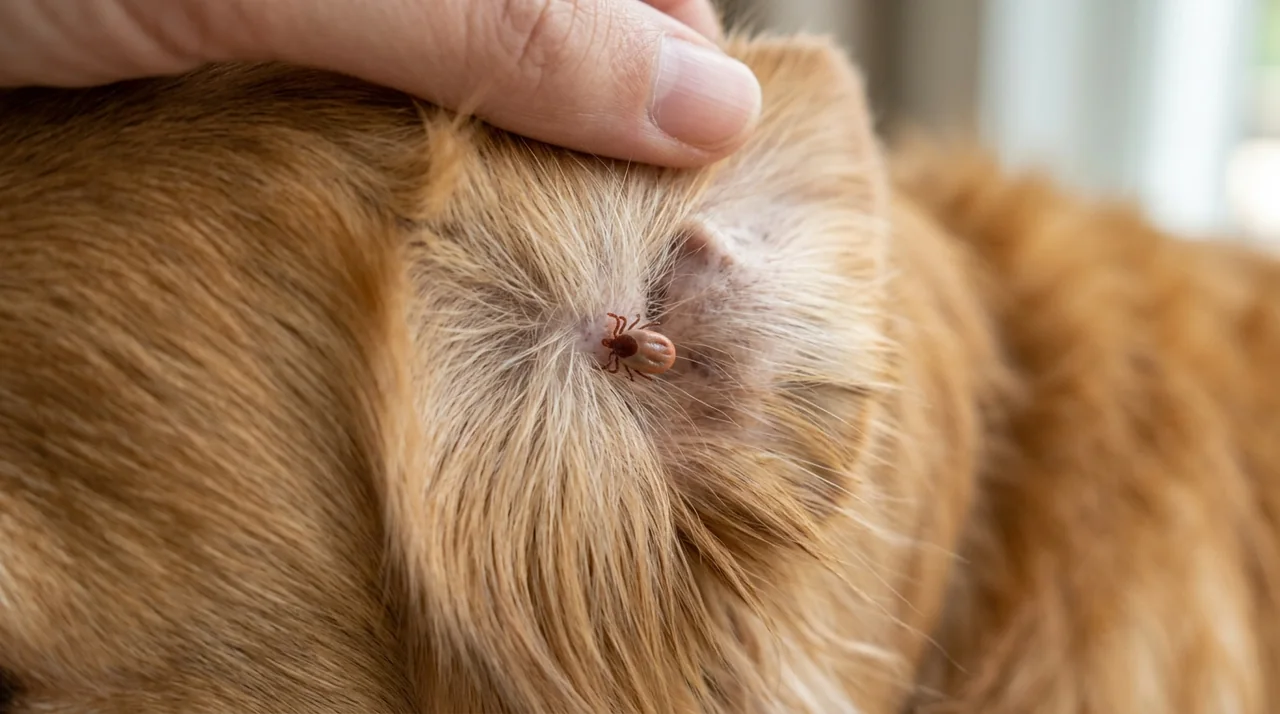
A tick on a dog usually feels like a small, hard lump attached to the skin. It is easy to mistake for a wart, skin tag, or scab until you look closely. Before feeding, a tick such as the American dog tick or brown dog tick is flat and oval. It is about the size of a sesame or apple seed. Its color ranges from brown to black. As it feeds on blood, it swells. It can become round and grayish, sometimes as large as a small pea. You may see its legs where it grips the skin.
How can I tell a tick from a skin tag or wart?
The differences become clear on close inspection:
- A tick has legs near where it attaches to the skin; a skin tag or wart does not
- A tick's body sits on the surface, while skin tags grow from the skin itself
- An engorged tick feels firm and rounded and may be grayish or tan
- Skin tags and warts are usually the same color as surrounding skin and have no separate body
Where do ticks hide on a dog?
Ticks favor warm, sheltered spots where they are hard to see and hard for the dog to reach:
- Ears and the folds around them
- Neck, under the collar, and the chest
- Armpits and the groin area
- Between the toes and around the pads
How do I safely remove a tick from my dog?
Ticks do not fly or jump. They climb aboard when a dog brushes through grass or brush. This is much as fleas exploit passing hosts. To remove one:
- Use fine-tipped tweezers and grasp the tick as close to the skin as possible
- Pull straight out with steady, even pressure; do not twist or squeeze the body
- Clean the area with mild soap and water or an antiseptic afterward
- Wash your hands and monitor the spot for irritation
How do I protect my dog from ticks?
Because ticks can spread disease to dogs, prevention is worth the effort:
- Talk with your veterinarian about vet-recommended tick-preventive products suited to your dog and region
- Keep grass trimmed and clear brush and leaf litter around the yard
- Check your dog for ticks after every outing in tick habitat
- See your veterinarian if your dog seems tired, feverish, lame, or unwell after a bite