
Blacklegged (Deer) Tick
Ixodes scapularis · also called deer tick, blacklegged tick, bear tick
Quick answer
The blacklegged or deer tick (Ixodes scapularis) is a small reddish-brown tick with dark legs and the main carrier of Lyme disease in the eastern US. Nymphs are poppy-seed sized and easy to miss. It waits on vegetation, latches onto passing hosts, and can transmit several diseases, so prompt, proper tick removal is important.
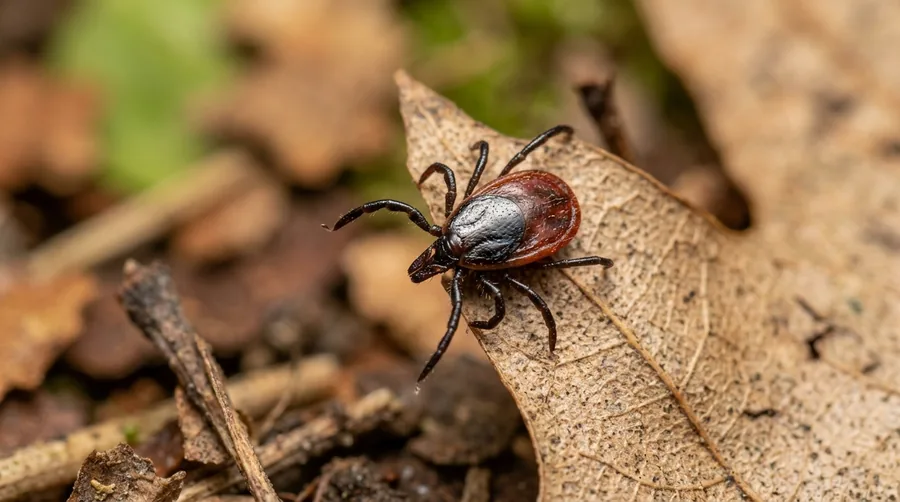
Small reddish-brown blacklegged deer tick with dark legs on a green blade of grass
Recommended Products
See the full ranking →

What it does
Blacklegged ticks 'quest' by climbing low vegetation and holding out their front legs to grab a passing host, since they cannot jump or fly. Once attached, they feed slowly over several days. Disease transmission risk generally rises the longer a tick stays attached, which is why prompt detection and removal matter.
Where it lives
They live in wooded and brushy areas, leaf litter, tall grass, and shaded edges where deer, rodents, and other hosts travel, including the margins of yards. They are established in the Northeast, upper Midwest, and parts of the Southeast, and are expanding their range.
How it breeds
The life cycle spans about two years through four stages: egg, larva, nymph, and adult. Each active stage takes a single blood meal before molting or laying eggs. Ticks pick up pathogens by feeding on infected hosts, often as larvae or nymphs, then transmit them at later feedings, driving human risk in the nymph stage.
What it eats
All feeding stages take blood from a host. Larvae and nymphs feed mostly on small mammals and birds, while adults prefer larger animals such as deer, though any stage may bite people and pets. Between meals ticks do not feed at all; they wait for the next host.
Identification
Adults are reddish-brown with darker legs and no white markings; females have a dark shield near the head with a reddish rear. Nymphs are about the size of a poppy seed and easily overlooked. Unlike some ticks, blacklegged ticks lack ornate patterning, and engorged ticks swell gray.
Signs of an infestation
- A small attached tick found on skin, scalp, or a pet
- A poppy-seed-sized nymph that is easy to overlook
- A spreading or bull's-eye rash days to weeks after a bite
- Fever, fatigue, headache, or joint aches after outdoor exposure
- Ticks after time in wooded, brushy, or tall-grass areas
Prevention tips
- Use an EPA-registered repellent with DEET or picaridin on skin
- Treat clothing and gear with permethrin per label directions
- Wear long pants tucked into socks and stay on cleared trails
- Do full-body tick checks on people and pets after being outdoors
- Keep grass mowed and create a mulch or gravel barrier along yard edges
Professional solutions
For tick-heavy yards, a pest professional can apply EPA-labeled acaricide treatments to lawn edges and wooded borders and advise on landscape changes that reduce tick habitat. Veterinarians provide approved tick preventives for pets. For a bite, remove the tick promptly and consult a doctor about disease risk.
Health & safety
Blacklegged ticks can transmit Lyme disease, anaplasmosis, babesiosis, and other pathogens, making them a significant health concern. Remove an attached tick promptly with fine-tipped tweezers, pulling straight out, and clean the area. Watch for rash or flu-like illness and see a doctor; you can call Poison Control at 1-800-222-1222 for guidance.
Relevant Products


Frequently asked questions
How do I safely remove a blacklegged tick?
Use fine-tipped tweezers to grasp the tick as close to the skin as possible and pull straight out with steady pressure, without twisting or crushing it. Clean the bite and your hands afterward. Avoid folk methods like burning or petroleum jelly. Watch for rash or illness and see a doctor.
How long must a tick be attached to transmit Lyme disease?
Risk generally increases the longer a blacklegged tick stays attached, and transmission of the Lyme bacterium typically requires a prolonged attachment, often stated as roughly 36 to 48 hours. That is why prompt daily tick checks and quick removal significantly lower the risk of infection.
What should I watch for after a deer tick bite?
Watch for an expanding or bull's-eye rash, fever, fatigue, headache, or joint aches in the days to weeks after a bite. See a doctor if any of these appear or if the tick was attached a long time. You can call Poison Control at 1-800-222-1222 for guidance.
Fact-checked by Morgan Vance, Editorial Director (editorial review, not a professional pest-control or medical sign-off). Last reviewed June 7, 2026. We correct anything a reader shows us is wrong — see our corrections policy.