
Chigger
Eutrombicula alfreddugesi · also called harvest mite, red bug, berry bug
Quick answer
Chiggers are the tiny larvae of harvest mites (Eutrombicula alfreddugesi) found in grassy, brushy, and wooded areas. They attach to skin, inject digestive fluid, and feed on liquefied skin cells, leaving intensely itchy red welts, often around the ankles and waistband. In the US they are an itchy nuisance, not disease carriers.
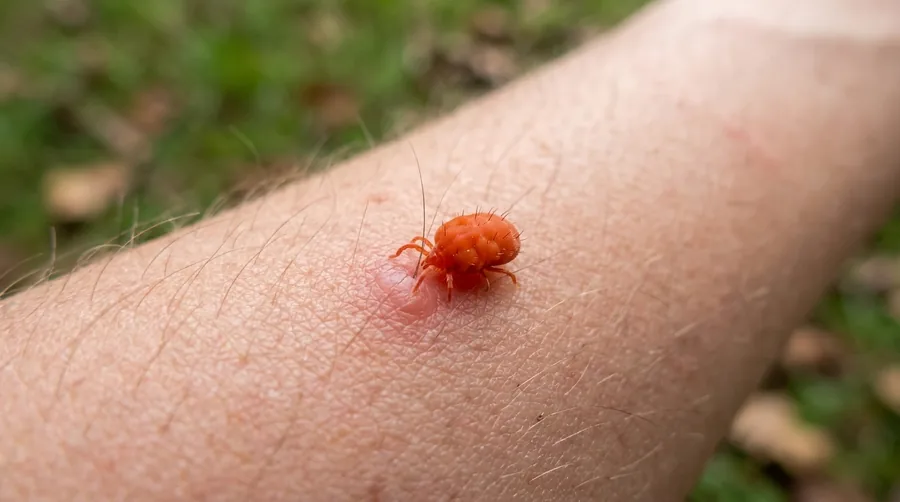
Macro close-up of a tiny bright red chigger mite on a blade of grass in a field
Recommended Products
See the full ranking →


What it does
Only the larval stage bites; larvae wait on low vegetation and climb onto passing hosts, then attach where clothing is snug, like ankles, waist, and behind knees. They do not burrow into skin. They inject saliva that liquefies skin cells, feed for a few days if undisturbed, then drop off.
Where it lives
Chiggers concentrate in tall grass, weedy fields, brushy edges, berry patches, and damp wooded and streamside areas. They favor warm, humid, low-lying vegetation. In the US they are most abundant in the Southeast, South-Central, and Midwest, and are common on farms, trails, and overgrown yards.
How it breeds
Adults and nymphs are free-living soil predators; only the larvae are parasitic. Females lay eggs in soil, larvae hatch and seek a host to feed once, then drop off to mature into nymphs and adults. There are typically one to several generations from late spring into fall.
What it eats
Larval chiggers feed on liquefied skin-cell tissue from birds, reptiles, mammals, and people. The free-living nymphs and adults are predators that feed on small insects and insect eggs in the soil, not on people.
Identification
Chiggers are near-microscopic (about 0.3 mm) and bright red or orange, usually noticed only as itchy welts rather than by sight. The bites appear as clusters of small red bumps in bands where clothing fits tightly, developing intense itch several hours after exposure.
Signs of an infestation
- Clusters of intensely itchy red welts, often around ankles and waist
- Itching that peaks a day or two after time in grass or brush
- Bite lines following sock tops, waistbands, and other snug clothing
- Small red bumps with a central bright dot in some cases
- Recent hiking, yard work, or field activity in warm months
Prevention tips
- Wear long pants tucked into socks in grassy or brushy areas
- Apply an EPA-registered repellent with DEET or picaridin to skin
- Treat clothing and gear with permethrin per label directions
- Shower and wash clothes promptly after being in chigger habitat
- Keep lawns mowed short and clear brush and weeds near the yard
Professional solutions
Chiggers rarely need professional pest control. For heavily used yards with a persistent problem, a professional can apply an EPA-labeled area treatment to grassy and shaded zones. For most people, personal repellents, protective clothing, and keeping vegetation trimmed are the practical defenses.
Health & safety
In the US, chigger bites cause intense itching and welts but are not known to transmit disease (unlike some Asian relatives that carry scrub typhus). The main risks are severe itching and secondary infection from scratching. Bites resolve in one to two weeks; see a doctor for signs of infection.
Relevant Products




Frequently asked questions
Do chiggers burrow under your skin?
No, that is a myth. Chiggers attach to the skin surface and feed through a tube they form, then drop off; they do not burrow in or lay eggs under the skin. Showering and scrubbing after exposure helps dislodge any that are still attached.
Why are chigger bites so itchy?
Chiggers inject a saliva that breaks down skin cells so they can feed, and your body reacts strongly to it. That reaction causes the intense, delayed itching, which often peaks a day or two after exposure and can last one to two weeks.
How do I avoid chigger bites?
Wear long pants tucked into socks, use an EPA-registered DEET or picaridin repellent, and treat clothing with permethrin before entering tall grass or brush. Shower and launder clothes soon after, and keep your lawn mowed and edges cleared of weeds and brush.
Fact-checked by Morgan Vance, Editorial Director (editorial review, not a professional pest-control or medical sign-off). Last reviewed July 15, 2026. We correct anything a reader shows us is wrong — see our corrections policy.