Rodent Mite
Ornithonyssus bacoti · also called tropical rat mite, rat mite, mouse mite
Quick answer
Rodent mites (Ornithonyssus bacoti and related species) are tiny blood-feeding mites that live in rat and mouse nests. When a rodent host dies or is removed, hungry mites wander indoors and bite people, causing itchy dermatitis. They are barely visible, feed mainly at night, and clear up once the rodent source is eliminated.
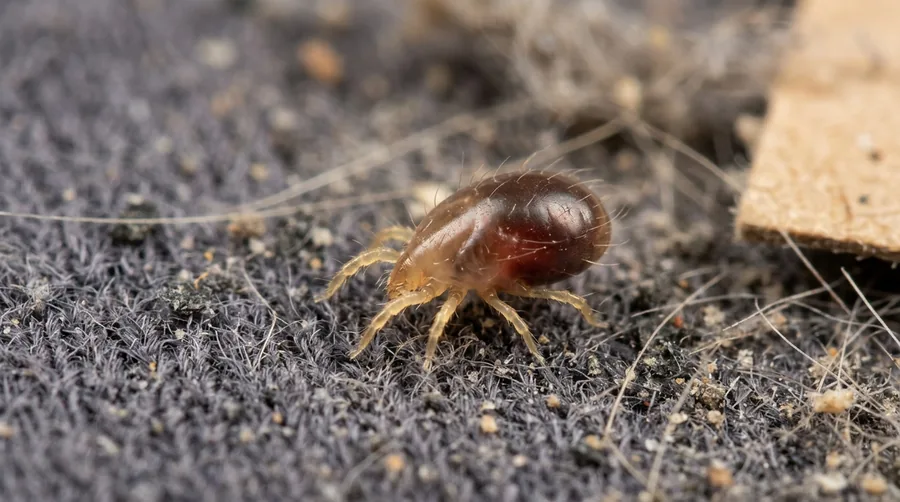
Extreme close-up of a tiny pale rodent mite crawling on a light surface near a wall crack
Recommended Products
See the full ranking →


What it does
Rodent mites are nest parasites that stay on their rodent host mainly to feed, resting nearby the rest of the time. They bite people opportunistically, most often after the rodents that fed them die or are trapped, driving hungry mites out of wall voids and nests to search for a new blood source.
Where it lives
They live wherever rats or mice nest: wall voids, attics, behind appliances, and around old rodent burrows and bird nests. Indoors they concentrate near the former nest, then spread along walls into bedrooms and living areas. They are found nationwide, tied closely to rodent activity.
How it breeds
Under warm conditions the full egg-to-adult cycle can complete in one to two weeks, so populations build quickly in an active nest. Females lay eggs in the nest material; larvae and nymphs develop there, and adults take intermittent blood meals to reproduce.
What it eats
Adults and nymphs feed on the blood of rodents and, when a host is unavailable, will bite humans and pets. They do not eat household food.
Identification
Rodent mites are pinpoint-sized (0.5-1 mm), whitish to tan, turning darker or reddish after a blood meal. They are just visible to the naked eye as slow-moving specks. Because they are so small, an itchy rash with no visible insect, following a known rodent problem, is often the first clue.
Signs of an infestation
- Itchy red bumps or a rash, often on the trunk and arms
- Bites that begin soon after mice or rats are removed
- Tiny moving specks on skin, bedding, or light-colored walls
- A known current or recent rodent infestation in the home
- Bites with no bed bug or flea evidence found
Prevention tips
- Find and eliminate the rodent infestation feeding the mites
- Remove and bag old rodent nests, then clean the area
- Seal exterior gaps to keep rodents from re-nesting
- Vacuum thoroughly along baseboards and affected rooms
- Wash and hot-dry bedding and clothing from bitten rooms
Professional solutions
The lasting fix is removing the rodent host, not just the mites. A pest professional can locate the nest, treat harborage areas with an EPA-labeled miticide, and address the underlying rodent problem. DIY control works when the rodent source is clearly identified and eliminated together with cleaning.
Health & safety
Rodent mite bites cause itchy dermatitis that usually fades within about two weeks once the source is gone. In the US these mites are not considered significant disease vectors, so the main issues are itching and secondary skin infection from scratching. See a doctor for severe or persistent reactions.
Relevant Products




Frequently asked questions
Why am I getting bitten but can't find any bugs?
Rodent mites are near-microscopic, so itchy bites with no visible insect, especially after mice or rats were recently removed, are a classic sign. The mites leave the empty nest looking for a new blood source. Confirming and eliminating the rodent problem is the key to stopping the bites.
Do rodent mites live on humans?
No. Rodent mites are nest parasites that need a rodent host to reproduce. They bite people opportunistically but cannot sustain a population on humans, so infestations end once the rodents and their nests are removed and the area is cleaned.
Are rodent mite bites dangerous?
In the US, rodent mite bites are mainly an itchy nuisance and are not considered a significant disease risk. The bites can be intensely irritating, and scratching can cause secondary infection, so see a doctor if a reaction is severe or does not settle.
Fact-checked by Morgan Vance, Editorial Director (editorial review, not a professional pest-control or medical sign-off). Last reviewed August 7, 2026. We correct anything a reader shows us is wrong — see our corrections policy.