


How long a wasp lives depends on its role
Social wasps include yellowjackets (Vespula) and paper wasps (Polistes). For them, lifespan is tied to the wasp's job in the colony rather than a single fixed number.
Workers
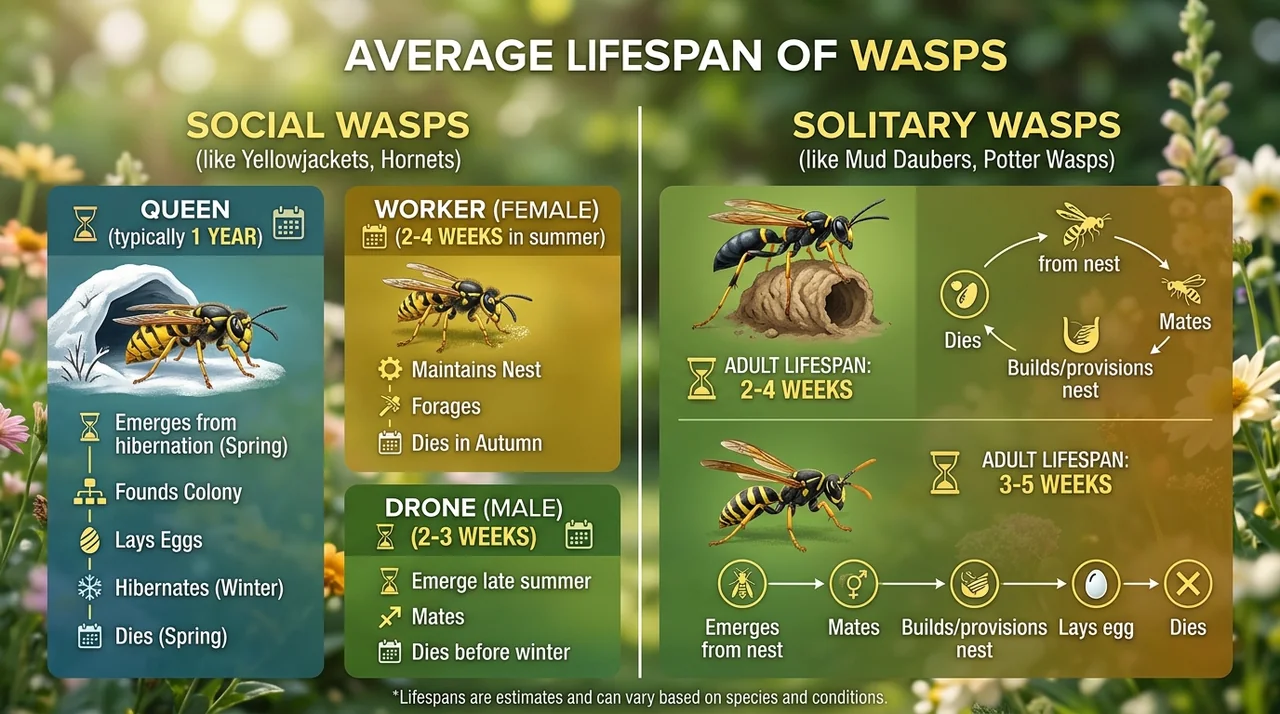
Workers are sterile females, and they make up most of the wasps you see. They typically live only a few weeks. They spend those short lives foraging for food, building and defending the nest, and caring for the young. New workers keep emerging through the season to replace those that die.
Males (drones)
Males exist mainly to mate. They are produced later in the season and live only long enough to reproduce. Then they die, usually in fall. They do not overwinter.
Queens
Queens live the longest, often around a year. A new queen mates in fall and finds a sheltered spot to overwinter. She emerges in spring to found a fresh colony on her own. She does this before her first workers hatch and take over the labor.
The seasonal colony cycle
This division of lifespans explains why wasp activity follows the calendar. A single queen starts a nest in spring. The colony grows through summer as workers expand it. Numbers peak in late summer and early fall, which is when wasps become most noticeable around food, drinks, and trash. As cold weather arrives, the workers and males die off, and the old nest is abandoned. Only newly mated queens survive the winter to begin the cycle again. Old nests are not reused the following year.
Do solitary wasps live differently?
Not all wasps live in colonies. Solitary wasps, such as mud daubers and cicada killers, do not have a worker caste. A single female builds and provisions her own nest cells. The next generation typically overwinters as larvae or pupae inside those cells, then emerges as adults the following season. Their adult lives are still relatively short, but the seasonal timing and behavior differ from the social wasps most people worry about. Solitary wasps are also generally far less defensive, since they have no large colony to protect.
Why lifespan matters for dealing with a nest
Understanding the cycle helps you decide what to do about a nest:
- Late-season nests fade on their own. A social colony dies off by winter and will not be reused. So a nest in an out-of-the-way spot late in the year may not need treatment at all.
- High-traffic nests are a hazard now. A nest near doorways, walkways, decks, or other busy areas is a stinging risk throughout the active season, regardless of the eventual die-off.
- Waiting is not the same as safe. A large, active nest in summer will keep producing wasps for months before nature takes its course.
When to call a professional
For large nests, nests in awkward or hard-to-reach places, or any situation where someone in the home is allergic to stings, a licensed pest control professional is the safest option. If you decide to treat a nest yourself, use an EPA-registered wasp product and follow the label directions exactly. Treat in the evening, when wasps are less active, and keep well clear if you are allergic to stings. For general first-aid or medication questions after a sting, you can call Poison Control at 1-800-222-1222.