


How long does an adult gnat live?
For most of the tiny flies people call gnats, the adult stage is brief. It often lasts only about one to two weeks. In warm indoor conditions they may live toward the shorter end of that range. That short adult life is telling. The real question is usually not how long one gnat lives, but why the swarm keeps going.
What "gnat" actually means
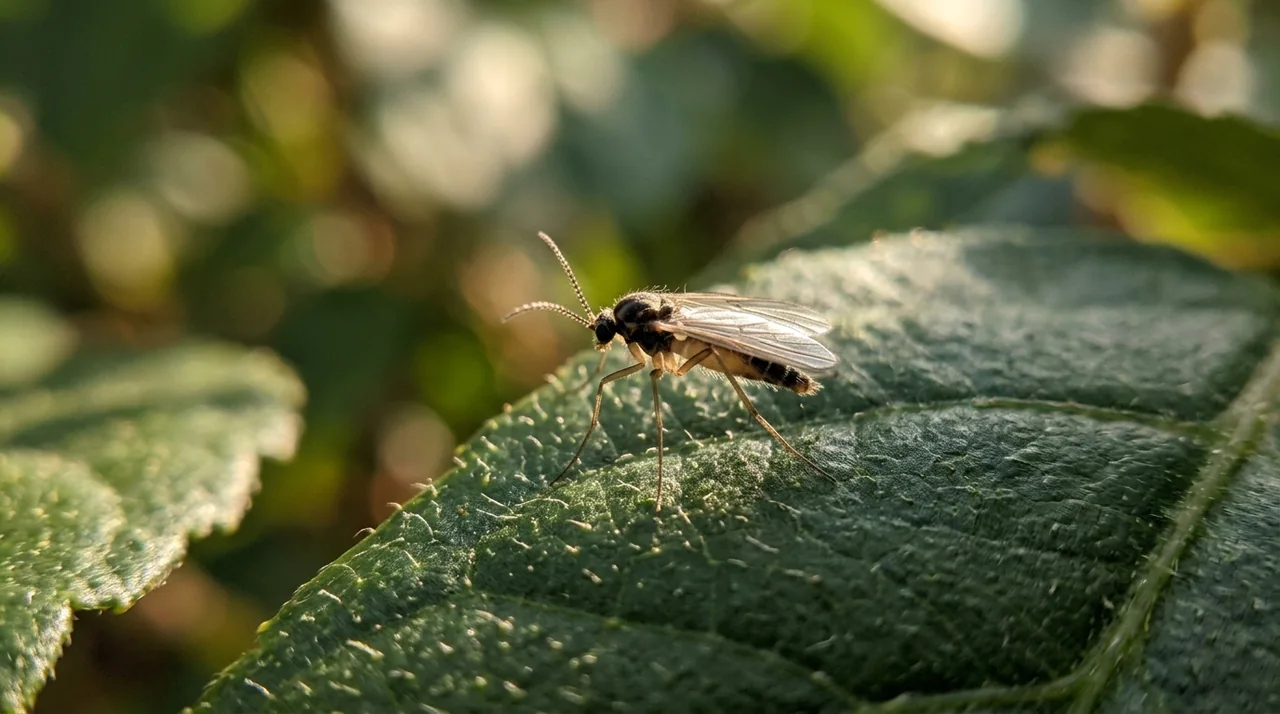
"Gnat" is a catch-all term, not a single species. The most common indoor culprits are:
- Fungus gnats (family Sciaridae), the small dark flies that hover around houseplants
- Fruit flies (Drosophila), the tan flies drawn to ripe and fermenting produce
- Drain flies (family Psychodidae), fuzzy little moth-like flies that breed in the gunk inside slow drains
The full life cycle: egg to adult
Gnats develop through egg, larva, pupa, and adult stages. Under warm conditions, that whole journey often takes only about one to two weeks. A single female can lay dozens of eggs in a suitable spot. That spot might be damp potting soil, fermenting fruit, or the organic film in a drain.
Why the swarm never seems to end
The cycle is short and a female lays many eggs, so generations overlap. As older adults die off, a fresh batch is already emerging to replace them. To your eye, the cloud of gnats looks continuous. Yet the individual insects are constantly turning over. This is the key insight. Killing the adults you can see does little if the breeding sites keep producing new ones.
How to break the cycle for each type
Adults are so short-lived that control works best by removing where the larvae develop.
Fungus gnats
Let the top inch or two of houseplant soil dry out between waterings, since the larvae need consistently damp soil. Avoid overwatering, improve drainage, and consider bottom-watering. Yellow sticky cards help capture and monitor adults.
Fruit flies
Remove overripe fruit and vegetables, take out the trash and recycling regularly, and wipe up spills, juice residue, and sticky spots. Check for forgotten produce, damp sponges, and the film in drains and around bottle caps.
Drain flies
Use a brush to physically clean the slimy organic layer inside slow or seldom-used drains, then flush with plenty of water. Simply pouring liquid in usually is not enough. The larvae cling to the buildup on the pipe walls.
General steps that help with all gnats
- Fix leaks and reduce excess moisture around sinks, plants, and appliances.
- Empty and rinse trash and recycling bins.
- Use targeted traps, such as a small cup of cider vinegar with a drop of dish soap, to knock down visible fruit flies.
When to call for help
Sometimes gnats persist despite cleaning up moisture and food sources. That can point to a hidden problem, such as a leak inside a wall, a cracked drain line, or a large infestation in overwatered soil. A licensed pest control professional can help locate the source and confirm which fly you are dealing with. That is the fastest way to stop the cycle for good.