

How does Dawn actually kill fleas?
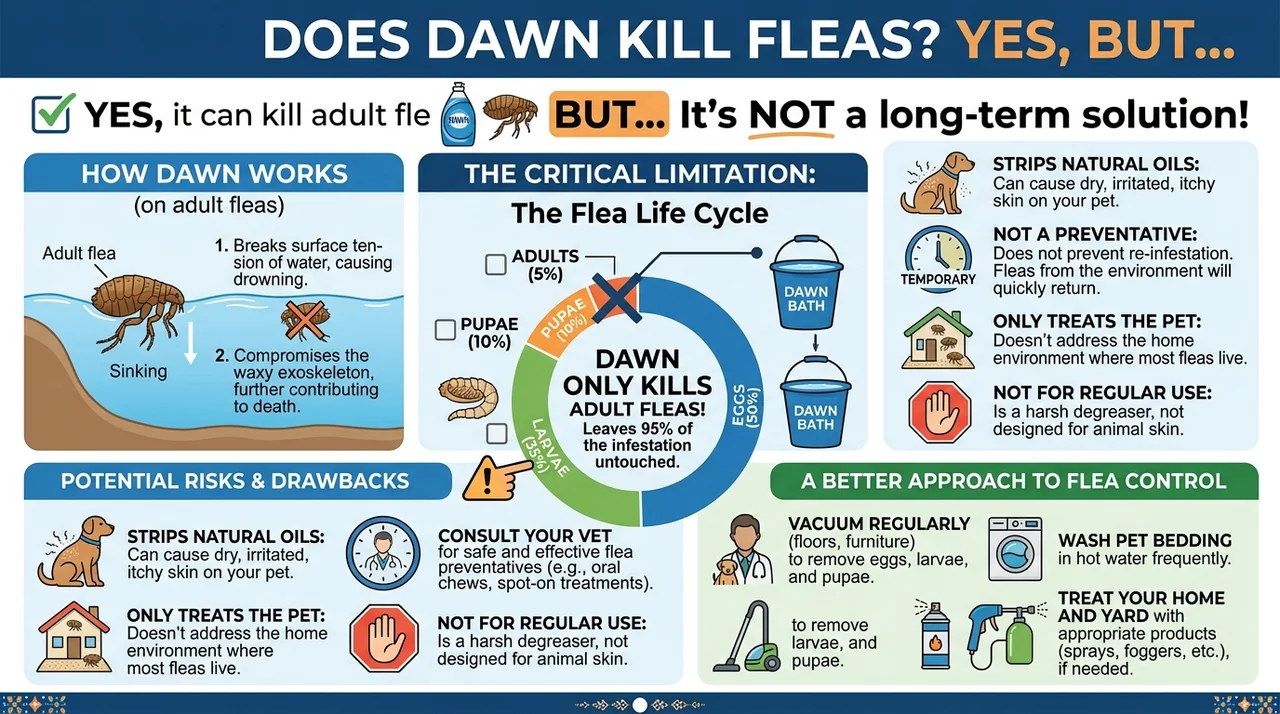
A warm bath with a few drops of Dawn can kill the adult fleas on a pet right then. Dish soap is a surfactant. That means it breaks the water's surface tension and strips the thin waxy layer that keeps a flea afloat and protected. Fleas that would normally float and cling now sink and drown. This can bring an itchy pet some quick relief.
The catch is that the effect ends the moment the pet is rinsed and dried. Dawn leaves no residue that keeps working. So any flea in the environment can hop right back on.
Is a Dawn bath safe for my pet?
For an occasional bath, a small amount of mild dish soap is usually gentle. But it is not a substitute for a proper flea product. Used often, it can also dry out the skin and coat. Keep the suds out of the eyes, ears, nose, and mouth, and rinse well. Never assume a soap bath protects your pet going forward. Always talk to your veterinarian before starting any flea regimen. The right product depends on your pet's species, age, weight, and health.
Why a soap bath alone won't end an infestation
Most of a flea problem is not on your pet at all. The adult fleas you can see are only a small part of the population. The rest are eggs, larvae, and pupae tucked into carpet, bedding, cracks, and upholstery. A soap bath does nothing to those stages, so the fleas simply keep emerging.
To break the cycle, you usually need to treat the pet and the home, and keep it up for several weeks:
- Use a veterinarian-recommended flea treatment chosen for your specific pet.
- Wash pet bedding in hot water on a regular schedule.
- Vacuum floors, rugs, and furniture often, and empty or discard the bag or canister afterward.
- Treat the indoor environment as directed if the infestation is well established.
What about a "Dawn and water" flea trap?
A popular DIY trick is a shallow bowl of soapy water set under a small night-light. Some adult fleas jump toward the light and warmth, land in the water, and drown. It can help you gauge whether fleas are present. But it catches only some of the adults and never touches the eggs and larvae. Treat it as a monitoring aid, not a cure.
When should I see a vet or call a pro?
Talk to your veterinarian if your pet is scratching heavily, losing hair, or has scabs or signs of a flea-allergy reaction. Do the same if fleas keep coming back despite treatment. Never use a product labeled for dogs on a cat, because some ingredients are toxic to cats. For any household flea pesticide, follow the EPA-registered label exactly. If a pet or person is exposed and reacts, call your vet, your doctor, or Poison Control at 1-800-222-1222. For a heavy or stubborn home infestation, a licensed pest control professional can treat the environment more thoroughly than DIY steps alone. You can learn more about the pests involved in our cat flea library entry and dog flea library entry.