

Do white ants fly?
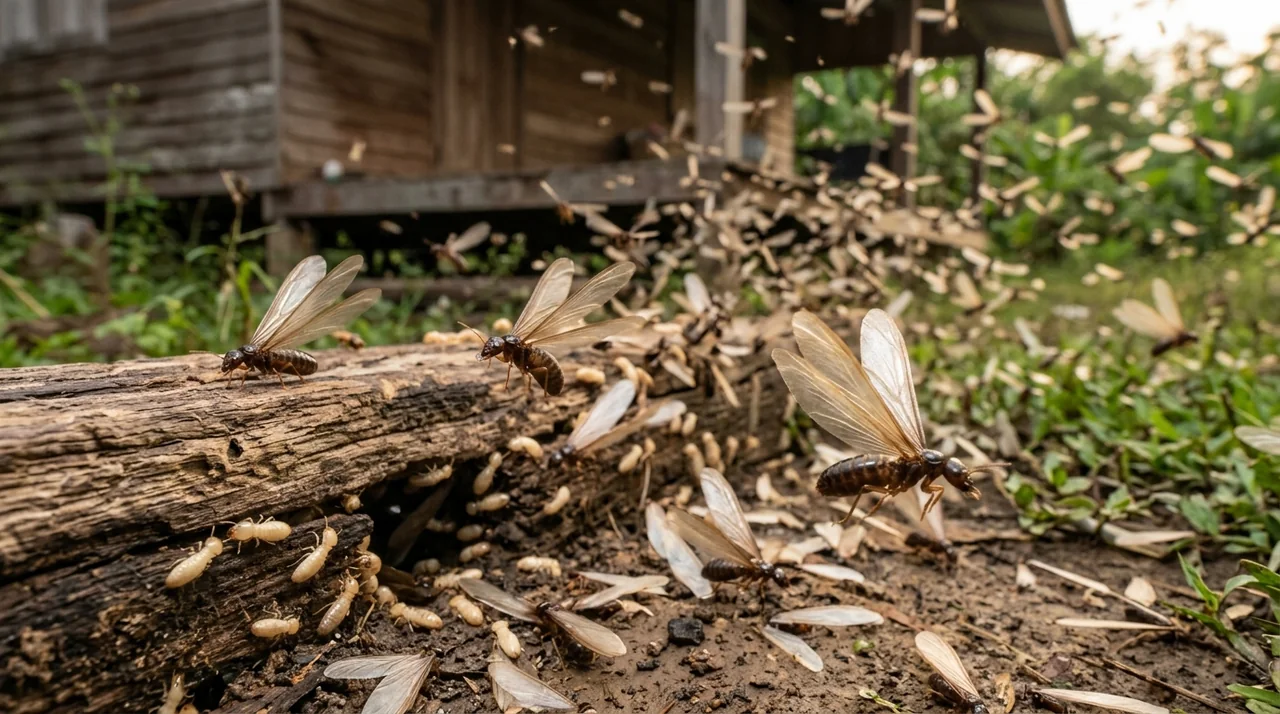
"White ants" is a common nickname for termites. They look pale and antlike, but they are actually a separate group of insects. At specific times of year, mature termite colonies produce winged reproductive termites known as swarmers or alates. This includes the destructive subterranean termite (Reticulitermes) and others. These do fly. They leave the nest in a swarm to mate and establish new colonies. So yes, "white ants" fly, but only the reproductive caste, and only for a brief window.
What termite swarmers look like and do:
- Pale to dark bodies with two pairs of wings that are equal in length
- Emerge in large swarms, frequently in spring or after warm rain
- Fly only a short distance, then shed their wings and pair off to start a colony
Why are they suddenly swarming my house?
A swarm is a colony's way of reproducing. When a mature nest is ready to expand, it releases winged reproductives all at once. This is often triggered by warmth and humidity. You might see a swarm indoors, or find a pile of discarded, translucent wings on windowsills, near light fixtures, or on the floor. Either one strongly suggests an active colony in or very near the structure.
Flying termites versus flying ants: how do I tell them apart?
This is the single most useful thing to know, because it changes how seriously you should react. Both swarm, but they look different on close inspection:
- Waist: termites have a straight, broad body with no pinch; flying ants have a narrow, pinched waist
- Antennae: termites have straight, bead-like antennae; ants have bent (elbowed) antennae
- Wings: termite wings are all the same length; a flying ant's front wings are noticeably longer than its back wings
Why do flying termites matter so much?
Because of what termites do the rest of the time. Termites feed on wood and cellulose. Over months and years, a colony can cause significant structural damage to a home. That makes them fundamentally different from nuisance ants that merely raid your pantry. A visible swarm is often the first outward sign of a hidden termite problem that has been developing out of sight. That is why it should never be ignored.
What should I do if I see them?
Do not rely on a can of spray. Killing the swarmers you see does nothing about the colony hidden in the soil or wood. Termite damage is a serious, specialized issue. So the right move is to have a licensed termite or pest professional inspect and confirm the situation. Save a few of the insects or wings in a bag to help with identification. Early detection genuinely matters here. Catching termites sooner rather than later can prevent extensive and costly repairs. Other wood-damaging termites swarm too, such as the drywood termite and Formosan termite. A professional can tell you which one you have and what treatment fits.