

Do fruit flies have a stinger?
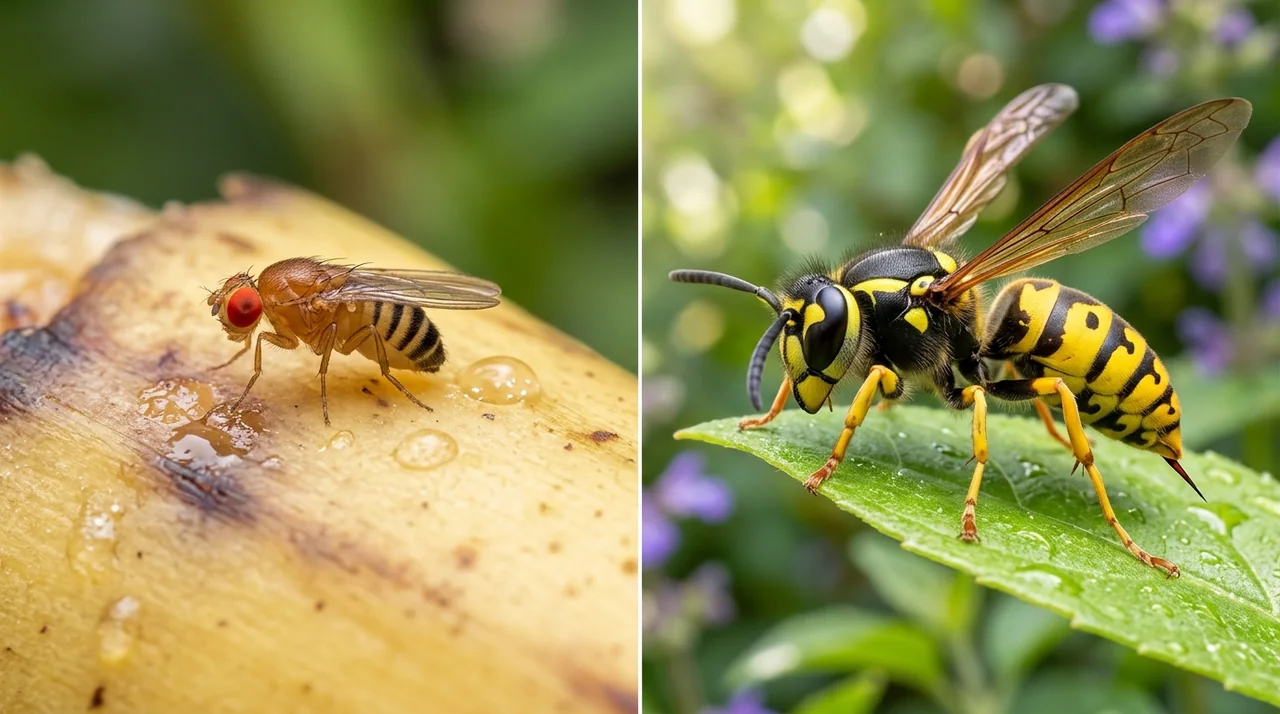
No. Fruit flies (Drosophila) have no stinger at all. A stinger is a specialized structure. In most stinging insects it is a modified ovipositor, or egg-laying organ. It evolved in a specific branch of insects that fruit flies are simply not part of. The entire body plan of a fruit fly is built for lapping up liquid food with a soft, sponge-tipped mouth. It is not built for injecting venom. When a fruit fly lands on you, the worst it can do is tickle as it walks.
What insects actually sting, then?
True stinging is limited mostly to certain members of the order Hymenoptera. That group is the bees, wasps, hornets, and some ants. In these insects, the sting is used for defense or to subdue prey, and it can inject venom. Fruit flies are true flies (order Diptera), a completely separate group. Their females use the egg-laying structure only to place eggs on soft, fermenting food, never to sting. So fruit flies in your kitchen carry no risk of being stung.
Can fruit flies harm you in other ways?
Since they cannot sting or bite, fruit flies pose no direct physical threat. The genuine concern is hygiene. Fruit flies move between drains, trash, overripe produce, and fresh food. In doing so, they can carry bacteria from one surface to another. That makes them worth controlling around food-prep areas. But it is a cleanliness issue rather than a safety emergency. There is no venom, no wound, and no sting to worry about.
Are the tiny flies "stinging" me actually something else?
Say you feel a sharp little sting or prick near the kitchen and see small flies. Those flies are probably not the cause. Biting midges ("no-see-ums") are tiny and do bite. They are easy to confuse with fruit flies at a glance. Fungus gnats and drain flies look similar too, but they do not bite or sting. Here is the quick tell. A true fruit fly is drawn to your fruit bowl and drains, not to your skin. If something is genuinely biting you, look for a different insect.
How do I get rid of fruit flies?
Fruit flies breed in moist, fermenting residue. So control means removing those sources:
- Remove overripe fruit and store produce in the refrigerator.
- Empty and rinse trash and recycling frequently.
- Clean drains, garbage disposals, and the gaps under appliances where damp film collects.
- Set an apple-cider-vinegar trap — a little vinegar with a drop of dish soap in a cup — to catch the adults already flying around.
When is it worth calling a professional?
Do you keep seeing large numbers of small flies that never fully disappear despite good sanitation? There may be a hidden moisture or organic source that a home cleanup cannot reach. Think of a cracked drain line, a forgotten spill inside a cabinet, or decaying material in a wall void. A licensed pest control professional can help locate it. See our guide on when to call an exterminator. If you do use a pesticide spray indoors, follow the EPA-registered product label carefully, especially around food-preparation areas.