

Do ants bite people?
Many ants can bite, pinching the skin with their mandibles (jaws). But for most common household ants, the bite is so minor it goes unnoticed. Ants generally bite defensively. That happens when their nest is disturbed, when they are pressed against skin, or when they feel trapped. Some ants add a second weapon. They may deliver a sting from the rear of the body, or spray formic acid that produces a brief burning or itchy sensation.
How much you feel depends heavily on the species:
- Common house ants such as the odorous house ant: mild or unnoticeable bites
- Carpenter ants (Camponotus): a noticeable pinch, and they may spray formic acid into the wound
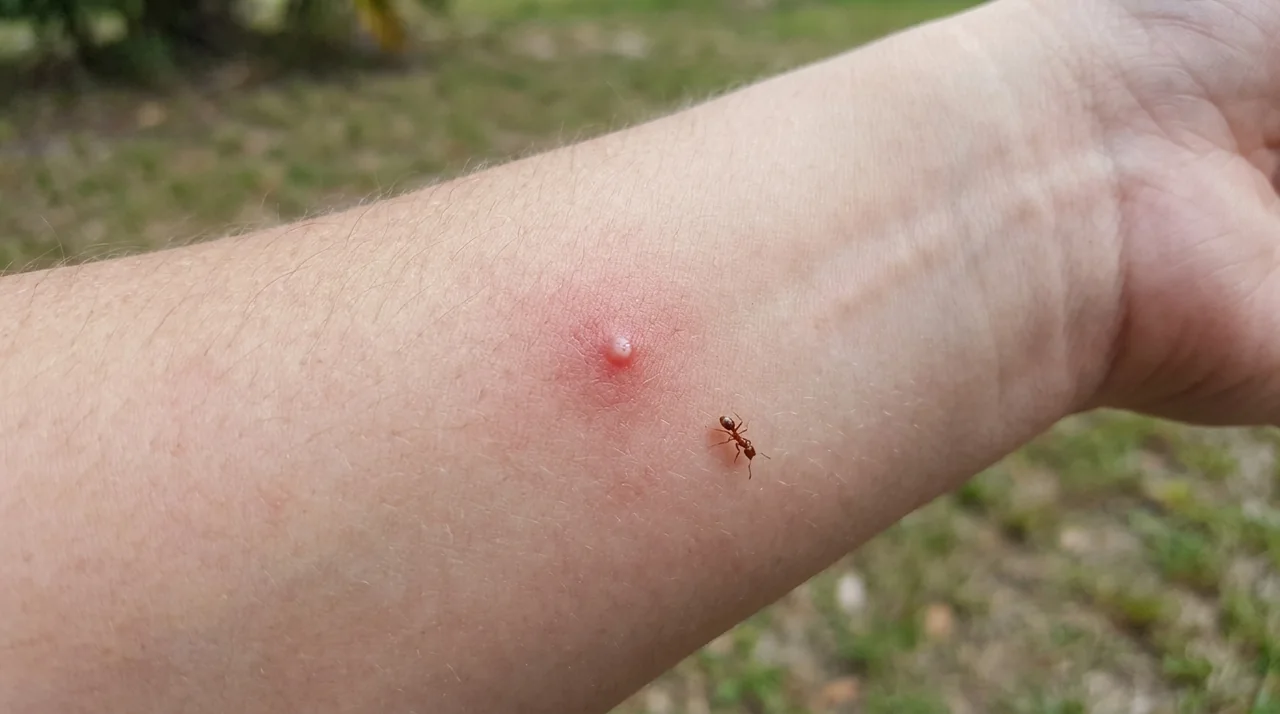
- Red imported fire ants (Solenopsis invicta): they bite to anchor themselves, then sting repeatedly, causing burning pain and itchy blisters
Bite versus sting: what is the difference?
It is a common mix-up. A bite comes from the ant's jaws at the front. A sting comes from a stinger at the rear and injects venom. Fire ants do both at once, which is why their attack feels so intense. The bite holds them in place while they pivot and sting in a circle, often leaving a ring of welts.
What does a fire ant sting look and feel like?
Fire ant stings usually produce an immediate burning sensation. Within a day or two, small raised bumps appear. They often fill with fluid and become intensely itchy. They tend to appear in clusters or a loose ring, because the ant stings several times. The pustules are a normal reaction for most people. The concern is scratching them open, which can lead to a secondary skin infection.
How do I treat ant bites and stings?
For ordinary bites and most stings, simple home care is enough:
- Wash the area with soap and water
- Apply a cold pack to ease swelling and burning
- Use an over-the-counter anti-itch cream or antihistamine if needed
- Avoid scratching, which can break the skin and invite infection
When is an ant sting an emergency?
A small number of people are allergic to insect venom and can have a serious, whole-body reaction. Call 911 and seek emergency care right away if, after being stung, someone shows trouble breathing, swelling of the face, lips, or throat, widespread hives, dizziness, or fainting. These are signs of a potentially life-threatening allergic reaction. For milder questions, such as how to treat a reaction or concerns about a child, you can call Poison Control at 1-800-222-1222.
How do I reduce ant encounters?
To limit indoor run-ins, remove the food and water ants forage for. Wipe up spills and crumbs, store food in sealed containers, and seal entry points along baseboards and windows. Slow-acting baits, used per the EPA-registered label, let workers carry the product back to the colony. For fire ants, or large and recurring infestations, a licensed pest professional can treat the colonies safely. Fire ant mounds in particular are best handled carefully to avoid mass stings.