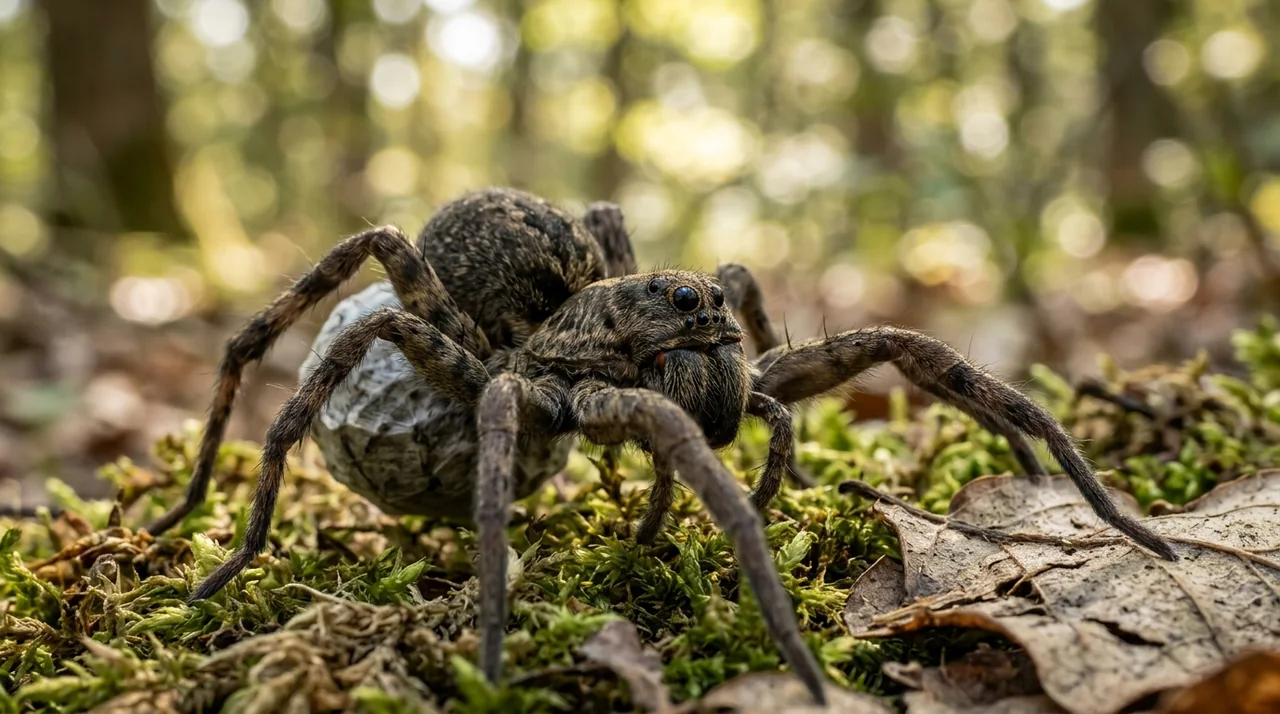


Are wolf spiders dangerous to humans?
Wolf spiders (family Lycosidae) look alarming. They are large, fast, and hairy. You often spot them sprinting across a floor rather than sitting in a web. Despite the intimidating appearance, they are not medically significant to people. They are shy, solitary hunters that would rather escape than confront you. They do not seek out humans. A wolf spider bites only defensively. This usually happens when it is squeezed inside clothing, pressed against skin, or grabbed. For the vast majority of people, a wolf spider in the house is startling but harmless.
Do wolf spiders bite, and what happens if one does?
They can bite, but bites are uncommon and usually minor. When a bite does occur, the typical effects are:
- Localized pain roughly comparable to a bee sting
- Mild redness and swelling around the bite
- Some itching that fades over a day or two
Are wolf spiders venomous or poisonous?
Like nearly all spiders, wolf spiders do have venom. They use it to subdue insect prey. But "venomous" is not the same as "dangerous." Their venom is weak in its effect on humans. It is not known to cause the serious tissue damage or systemic illness linked to a few other species. They are not poisonous either. That means there is no danger from simply touching one, or from a pet mouthing one, aside from the possibility of a defensive bite.
When should I be cautious about a spider bite?
Serious reactions to a wolf spider are rare. But individual sensitivity varies, and any bite can occasionally become infected. Seek medical care if you notice spreading redness, worsening or severe pain, an open sore, fever, or signs of an allergic reaction such as difficulty breathing. For exposure questions you can call Poison Control at 1-800-222-1222. It is also worth remembering that people frequently misidentify spiders. A wound blamed on a wolf spider may have another cause entirely. Unlike a black widow (Latrodectus) or brown recluse (Loxosceles), wolf spiders pose little risk.
Why are wolf spiders in my house, and are they useful?
Wolf spiders wander indoors while hunting or seeking shelter. This happens more noticeably as temperatures drop in fall. They are actually beneficial. They prey on crickets, ants, roaches, and other insects. So a stray one outdoors is doing helpful work in the garden. They hunt rather than build webs to catch food. Seeing one roaming does not mean your home is dirty.
How do I keep wolf spiders out?
To reduce how often they turn up indoors:
- Seal gaps around doors, windows, vents, and pipe entries, and repair torn screens
- Reduce clutter in basements, garages, and storage areas where they hide
- Manage the insects they feed on, since fewer prey means fewer spiders
- Move woodpiles, leaf litter, and debris away from the foundation