
Black Widow Spider
Latrodectus spp. · also called black widow, southern black widow, western black widow
Quick answer
Black widows (Latrodectus species) are glossy black spiders with a red hourglass mark on the underside of the abdomen. Females build tangled webs in dark, sheltered outdoor spots and bite defensively when pressed against skin. Their venom is medically significant, causing painful muscle cramps and other symptoms, so a suspected bite warrants medical advice.
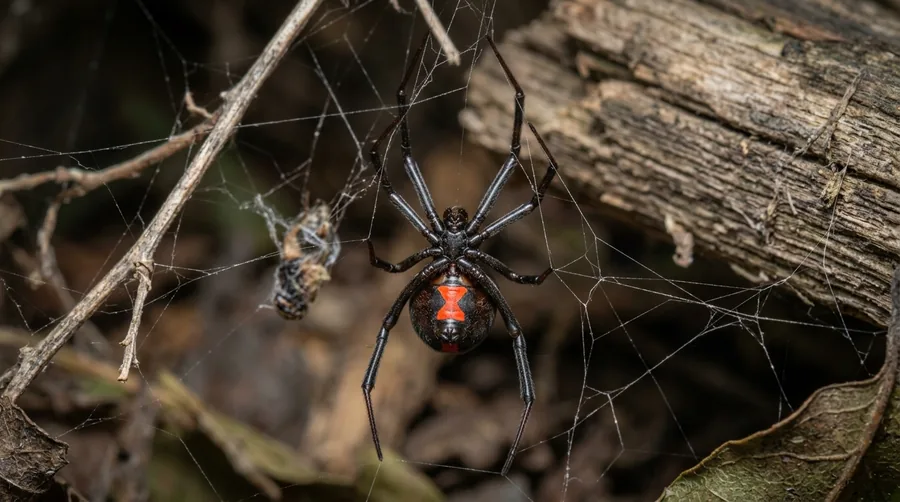
Glossy black widow spider showing a red hourglass mark on its underside in a tangled web
Recommended Products
See the full ranking →


What it does
Black widows are shy and stay in their irregular, strong webs, hanging belly-up to display the hourglass. They are not aggressive and bite only when trapped against skin, such as inside a shoe or glove or when reaching into a hidden space. Females guard papery, round egg sacs in the web.
Where it lives
They favor dark, undisturbed, protected spots: garages, sheds, woodpiles, crawl spaces, under outdoor furniture, in meter boxes, and among clutter and debris. They are found across the US, most abundant in the South and West. Bites often happen when people reach into stored items or handle firewood.
How it breeds
A female produces several tan, papery egg sacs, each holding roughly 100-400 eggs. Spiderlings hatch and disperse, maturing over a few months. Females can live one to three years; males are smaller, much less venomous, and are sometimes eaten after mating, giving the widow its name.
What it eats
Black widows are predators that eat insects and other small arthropods, such as beetles, flies, and other spiders, caught in their sticky webs. They subdue prey with venom and do not feed on people; bites are purely defensive.
Identification
Mature females are glossy jet-black with a red or orange hourglass on the underside of a round abdomen; some show red or white markings on top. Males and juveniles are smaller, browner, and often marked. The strong, irregular, three-dimensional web is a good identifier.
Signs of an infestation
- A glossy black spider hanging upside down in a tangled web
- The distinctive red hourglass mark on the underside
- Strong, irregular webs in garages, sheds, and woodpiles
- Round, papery tan egg sacs suspended in the web
- Spiders sheltering in stored, seldom-moved items
Prevention tips
- Wear gloves when moving woodpiles, boxes, and debris
- Reduce clutter in garages, sheds, and storage areas
- Seal gaps around doors, windows, vents, and the foundation
- Knock down webs and egg sacs with a vacuum or broom
- Shake out shoes, gloves, and stored items before use
Professional solutions
For repeated sightings, a pest professional can apply EPA-labeled treatments to harborage areas, remove webs and egg sacs, and advise on decluttering and sealing. DIY control through web removal, gloves, and sanitation is often adequate, but professional help is wise for heavy activity in living areas.
Health & safety
Black widow venom is medically significant: a bite can cause intense pain, muscle cramps, abdominal rigidity, sweating, and rising blood pressure (a syndrome called latrodectism). Deaths are very rare with modern care. If bitten, stay calm, apply ice, seek medical care, and you can call Poison Control at 1-800-222-1222.
Relevant Products




Frequently asked questions
How dangerous is a black widow bite?
Black widow venom is medically significant and can cause severe muscle cramps, pain, sweating, and elevated blood pressure. Serious outcomes are uncommon and deaths are very rare with prompt care. If bitten, apply ice, seek medical attention, and you can call Poison Control at 1-800-222-1222.
How do I identify a black widow?
Look for a glossy jet-black spider with a round abdomen and a red or orange hourglass on the underside, hanging upside down in a strong, tangled web. They are usually found in dark, sheltered spots like garages, sheds, and woodpiles.
Are black widows aggressive?
No. Black widows are shy and prefer to stay in their webs. Almost all bites happen defensively when the spider is pressed against skin, such as in a shoe, glove, or when reaching into a hidden space. Wearing gloves and shaking out items prevents most bites.
Fact-checked by Morgan Vance, Editorial Director (editorial review, not a professional pest-control or medical sign-off). Last reviewed May 11, 2026. We correct anything a reader shows us is wrong — see our corrections policy.