
Yellow Sac Spider
Cheiracanthium inclusum · also called yellow sac spider, black-footed spider, sac spider
Quick answer
The yellow sac spider (Cheiracanthium inclusum) is a small, pale yellow to greenish spider that hunts at night and rests by day in a silk sac tucked into wall-and-ceiling corners. A common indoor spider nationwide, it accounts for many household bites. Bites can be painful with mild local reaction, but are generally not medically serious.
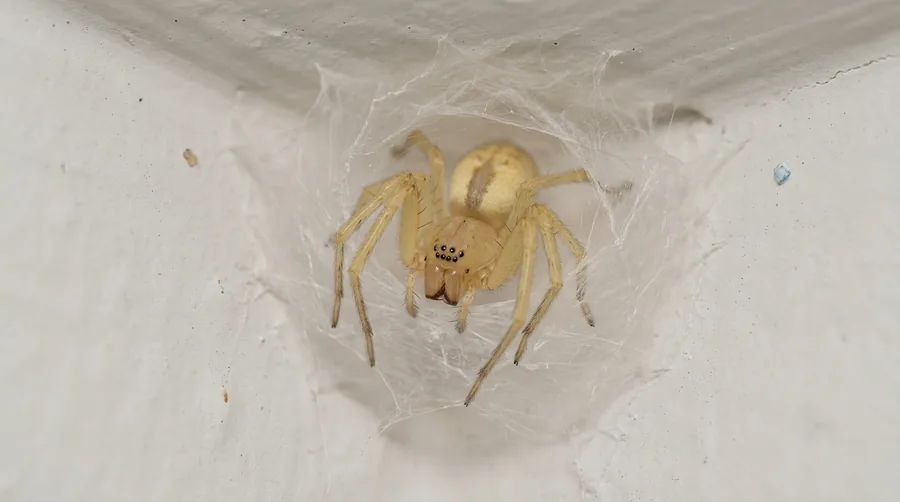
Pale yellowish-green sac spider with dark feet crawling on a white wall near the ceiling
Recommended Products
See the full ranking →


What it does
Yellow sac spiders are active nocturnal hunters that do not build capture webs; instead they roam walls and ceilings at night for prey and spin a small silk sac to hide in by day. They are a frequent cause of indoor spider bites, usually when one becomes trapped against skin in bedding or clothing.
Where it lives
Indoors they rest in silk sacs where walls meet ceilings, behind pictures, along trim, and in folds of stored fabric. Outdoors they shelter under leaves, bark, and debris and in rolled leaves. They are common throughout the US and readily move indoors, especially as outdoor temperatures fall.
How it breeds
A female builds a silk sac in a sheltered spot and lays her eggs inside, guarding them until they hatch. Spiderlings disperse and mature over the warm season. Yellow sac spiders generally live about a year, remaining active indoors year-round where conditions stay warm.
What it eats
Yellow sac spiders prey on small insects, insect eggs, and other spiders as active night hunters. They contribute to controlling household and garden pests. They do not feed on people; bites are defensive and occur mainly when the spider is pinned against skin.
Identification
They are small and pale, ranging from cream to yellow or light green, with a slightly darker stripe on the abdomen and characteristically dark feet at the leg tips. They lack bold patterns. Look for their small daytime silk retreats in upper wall and ceiling corners as a helpful clue.
Signs of an infestation
- Small pale spiders on walls and ceilings after dark
- Small silk sac retreats in upper corners and along trim
- Spiders with noticeably dark feet
- Bites appearing overnight with a painful pinprick sensation
- Increased indoor sightings in fall
Prevention tips
- Remove silk sacs from wall and ceiling corners with a vacuum
- Seal gaps around windows, doors, and the foundation
- Reduce clutter and shake out stored clothing and bedding
- Move firewood, leaves, and debris away from the house
- Keep beds away from walls and bedding off the floor
Professional solutions
For repeated bites or heavy indoor activity, a pest professional can apply EPA-labeled perimeter and crack-and-crevice treatments, remove sacs, and advise on sealing and sanitation. DIY sac removal, vacuuming, and exclusion manage most situations, but persistent problems in bedrooms are worth a professional evaluation.
Health & safety
Yellow sac spider bites can sting and cause redness, mild swelling, and itching, and were historically over-blamed for necrotic lesions, which is now doubted. Most bites resolve on their own within days. Watch for signs of infection, and seek medical care or call Poison Control at 1-800-222-1222 if a reaction worsens.
Relevant Products




Frequently asked questions
Are yellow sac spider bites dangerous?
Bites can be painful and cause redness, mild swelling, and itching, but they are generally not medically serious. They were once over-blamed for necrotic wounds, which current evidence questions. Most bites heal within days; seek care or call Poison Control at 1-800-222-1222 if a reaction worsens.
How do I know if I have yellow sac spiders?
Look for small pale yellow or greenish spiders on walls and ceilings at night and their small silk-sac retreats in upper corners and along trim. Dark feet at the leg tips are a helpful clue. Sightings often increase indoors as outdoor temperatures drop in fall.
How do I keep yellow sac spiders out of the bedroom?
Vacuum away silk sacs in corners, seal gaps around windows and doors, reduce clutter, and shake out clothing and bedding. Keep beds a few inches from walls and bedding off the floor so spiders cannot climb up, which also reduces the chance of a defensive bite.
Fact-checked by Morgan Vance, Editorial Director (editorial review, not a professional pest-control or medical sign-off). Last reviewed July 16, 2026. We correct anything a reader shows us is wrong — see our corrections policy.