
Brown Widow Spider
Latrodectus geometricus · also called brown widow, brown button spider, grey widow
Quick answer
The brown widow (Latrodectus geometricus) is a relative of the black widow, mottled tan to brown with an orange hourglass underneath and a distinctive spiky-surfaced egg sac. Established across the southern US, it favors human-made structures. Its venom is potent, but brown widows tend to inject little and are timid, so bites are usually milder than a black widow's.
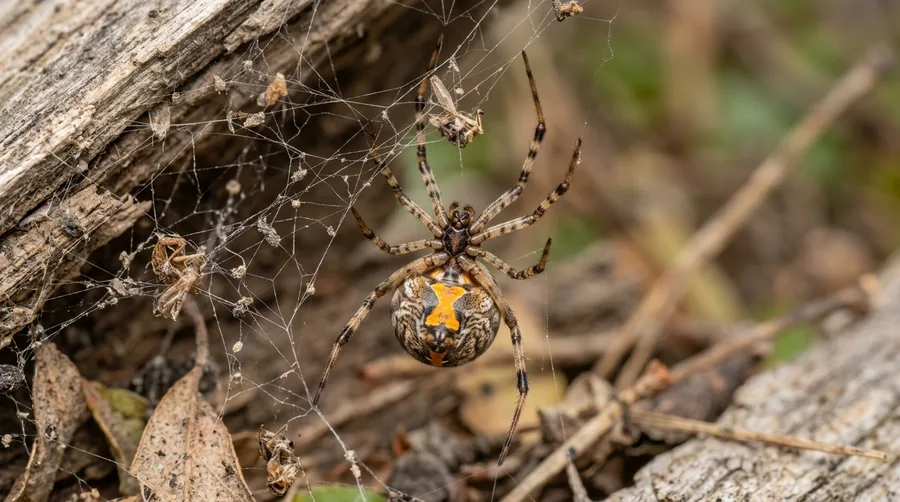
Mottled tan-brown brown widow spider with an orange hourglass beside a spiky-edged egg sac
Recommended Products
See the full ranking →


What it does
Brown widows build irregular tangled webs and hang belly-up like other widows, but they are notably timid, often curling up or dropping and fleeing when disturbed rather than biting. They favor human-made structures and can build up in high numbers around a home, yet bites are relatively uncommon because of their shy nature.
Where it lives
They shelter in sheltered, structural nooks: under patio furniture, railings, mailboxes, playground equipment, eaves, and the rims of empty flowerpots and buckets. Established across the southern US, from the Southeast and Gulf Coast to the Southwest, brown widows have spread widely and often displace black widows around buildings.
How it breeds
Females produce distinctive spherical egg sacs covered in silk spikes or points, each holding many eggs, and make numerous sacs over their life. Spiderlings disperse and mature over a couple of months. The spiky egg sac is a reliable identifier and signals an established, reproducing population nearby.
What it eats
Brown widows are predators that feed on insects and other small arthropods caught in their tangled webs, such as beetles, flies, and ants. They subdue prey with venom and do not feed on people; bites occur only defensively when the spider is pressed against skin.
Identification
Coloring ranges from light tan to dark brown, mottled, with an orange (rather than deep red) hourglass beneath the abdomen and often banded legs and a patterned back. The best confirmation is the egg sac, which is round with spiky, pointed silk projections, unlike the smooth sac of a black widow.
Signs of an infestation
- A mottled tan-to-brown spider with an orange hourglass beneath
- Round egg sacs covered in spiky silk projections
- Tangled webs under furniture, railings, and eaves
- Multiple spiders clustered around structural nooks outdoors
- Sightings concentrated across the southern US
Prevention tips
- Wear gloves when clearing under furniture, pots, and railings
- Remove egg sacs and knock down webs with a vacuum or broom
- Reduce clutter and empty containers around the yard and patio
- Seal gaps around doors, windows, and the foundation
- Check and clear playground equipment and outdoor storage regularly
Professional solutions
For heavy populations around a home, a pest professional can apply EPA-labeled treatments to harborage areas, remove egg sacs and webs, and advise on reducing clutter and structural nooks. DIY web and sac removal plus gloves and sanitation handle many cases, but persistent activity near living spaces warrants professional help.
Health & safety
Brown widow venom is potent like a black widow's, but bites are usually milder because these timid spiders tend to inject little venom and rarely bite. Reactions are often limited to local pain and redness. If bitten and symptoms spread or worsen, seek medical care or call Poison Control at 1-800-222-1222.
Relevant Products




Frequently asked questions
Is a brown widow as dangerous as a black widow?
Brown widow venom is comparably potent drop for drop, but bites are usually less severe because brown widows are timid and tend to inject little venom. Reactions are often limited to local pain and redness. Seek care or call Poison Control at 1-800-222-1222 if symptoms spread.
How do I tell a brown widow from a black widow?
Brown widows are mottled tan to brown with an orange (not deep red) hourglass and often banded legs, while black widows are glossy black with a red hourglass. The surest sign is the egg sac: brown widow sacs are round with spiky silk points.
Why are there so many brown widows around my patio?
Brown widows favor human-made structures and sheltered nooks like the undersides of furniture, railings, mailboxes, and pot rims, and they lay many egg sacs, so numbers build quickly. Regularly clearing webs and spiky egg sacs and reducing clutter keeps populations down.
Fact-checked by Morgan Vance, Editorial Director (editorial review, not a professional pest-control or medical sign-off). Last reviewed August 4, 2026. We correct anything a reader shows us is wrong — see our corrections policy.